Manaslu Expedition 2026: My Personal Diary from the Season No One Summited
A first-hand diary of the 2026 Manaslu expedition: Base Camp life, climbing to Camp 2, avalanches, an evacuation and a season that ended with no summits.

On the morning of 19 September I woke at Camp 2, 6,400 metres up Manaslu, to find my tent buried in snow. It was meant to be summit push day. Instead the radio was calling every Sherpa on the mountain: “Get everyone down to Base Camp immediately.” There was a huge avalanche risk at Camp 2 and Camp 3.
That night an avalanche at Camp 3 claimed the lives of two climbers. We had been there a few hours earlier.
Manaslu (8,163m) was meant to be my first 8,000m peak and the end point of a year of climbing across Nepal, Ladakh and Kazakhstan. Nobody summited Manaslu in autumn 2026. Hundreds of climbers came for one of the most popular 8,000ers, the season closed early.
This is my diary from those three and a half weeks, written in teahouses and tents most nights. It covers the trek in, life at Base Camp, climbing to Camp 2, the evacuation and the decision not to go back up. It also covers what I photographed and what I learned without reaching the top.
Expedition at a glance
| Dates | 2–23 September 2026 |
| Operator | 8K Expeditions |
| Climbing guide | Temba Sherpa |
| Route | Kathmandu → Dharapani → Bimthang → Larkya La → Samdo → Samagaun → Base Camp → Camp 1 → Camp 2 → Camp 3 |
| Highest point reached | Camp 3, 6,800m |
| Camps | Base Camp 4,880m · Camp 1 5,800m · Camp 2 6,400m · Camp 3 6,800m · Camp 4 7,400m · Summit 8,163m |
| Outcome | No summit. Evacuated from Camp 2 on 19 September |
| Season | 480 permits issued, no summits, four deaths, season closed early (The Himalayan Times, ExplorersWeb) |
Planning Manaslu? I’m happy to share what my expedition cost and my full packing and equipment list. Get in touch and ask.
Contents
- A year of preparation
- Kathmandu and the road in
- Trekking in over Larkya La
- Life at Manaslu Base Camp
- Climbing to Camps 1 and 2
- The evacuation
- Out by helicopter
- Photographing an 8,000m expedition
- Manaslu FAQs
- Final thoughts
A year of preparation
Manaslu was the tip of the iceberg. Between March and August 2026 I climbed three 6,000m peaks and crossed more than a dozen high passes and summits across three countries. Each one was a step towards an 8,000m mountain.
| Country | Peak or pass | Height |
|---|---|---|
| Nepal | Island Peak | 6,189m |
| Nepal | Lobuche East | 6,119m |
| Nepal | Larkya La | 5,106m |
| Nepal | Everest Base Camp | 5,364m |
| Nepal | Tserko Ri | 4,984m |
| Nepal | Poon Hill | 3,210m |
| India (Ladakh) | Kang Yatse II | 6,200m |
| India (Ladakh) | Kongmaru La | 5,260m |
| India (Ladakh) | Ganda La | 4,970m |
| Kazakhstan | Big Almaty Peak | 3,680m |
| Kazakhstan | Sky Peak | 3,400m |
| Kazakhstan | Panorama Peak | 3,200m |
| Kazakhstan | Tourist Peak | 3,100m |
| Kazakhstan | Furmanov Peak | 3,050m |
The training wasn’t only on mountains. I watched my diet. I slept well, ate well and trained for hundreds of hours in the gym. Island Peak and Lobuche East were with Temba Sherpa, who would be my climbing guide on Manaslu. By the time we reached Base Camp we knew each other well.
You can read about some of these climbs in my posts on living in the Sherpa camp at Everest Base Camp, the Kang Yatse II expedition and Langtang and Tserko Ri.
Kathmandu and the long road in (Days 1 to 2)
I spent the last week before the expedition in Kathmandu, back from Ladakh. I packed, bought the last bits of kit, went to the gym and rested. Two days before departure I moved to Hotel Tibet in Lazimpat, where the team was gathering.
Nepal was in mourning. On 26 August a glacier collapse sent flash floods through the Rasuwa region and across the border in Tibet, killing hundreds and leaving more than a thousand missing (Al Jazeera).
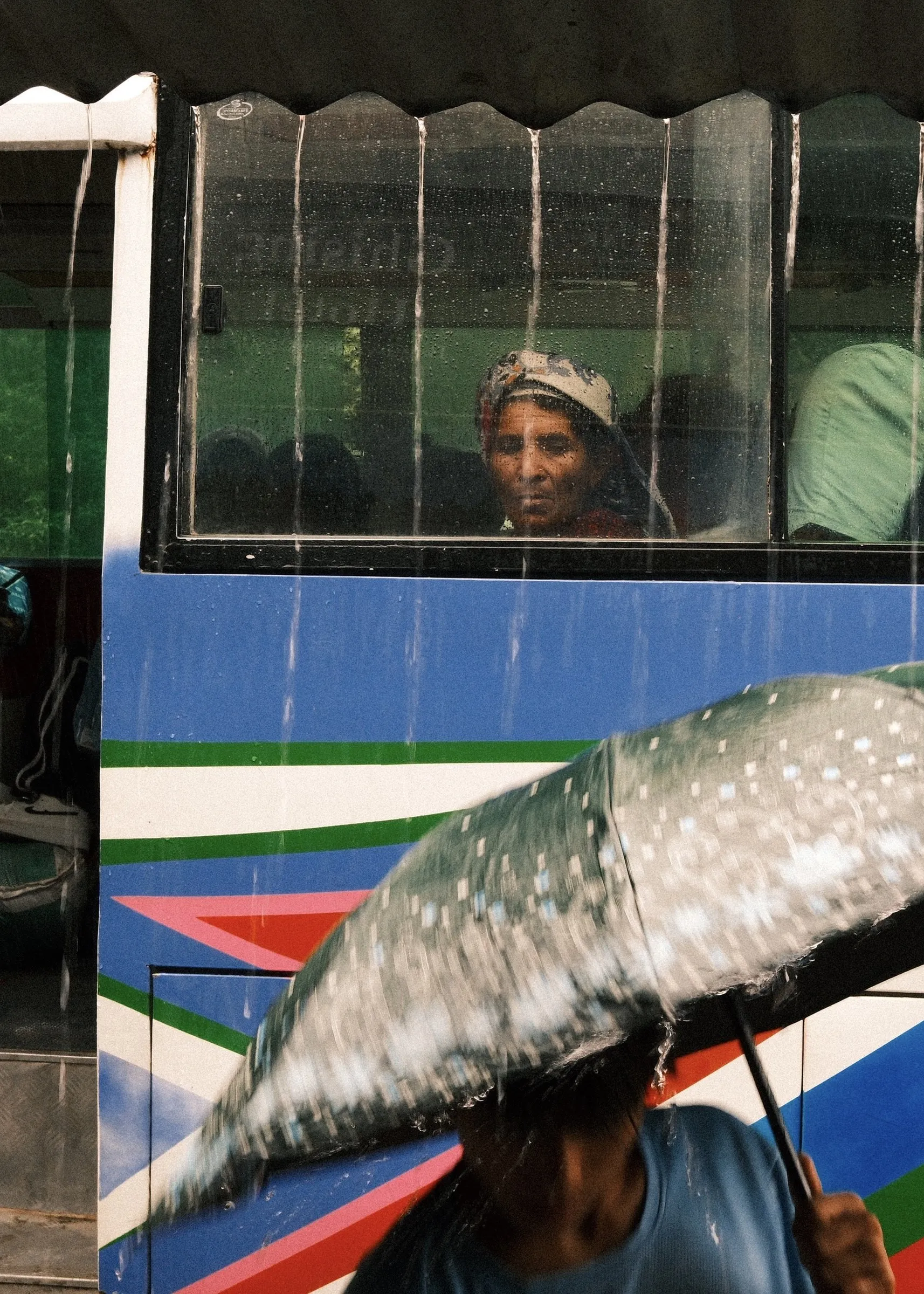
Leaving Kathmandu in the rain
The hotel filled with climbers of many nationalities: from the UK, France, Germany, Switzerland, Norway, Taiwan, Greenland, Canada, Greece, Thailand, Malaysia and India.
Day 1, 2 September: Kathmandu to Chitwan. We checked out at 5:30am, took a group photo and left by bus. The sky was clear when we set off, but the downpour started soon after we got out of Kathmandu. The floods had closed the usual road to Besisahar, so we took a detour south. After six hours we were barely out of Kathmandu, stuck in single-file traffic with thousands of vehicles. Lunch was instant noodles at a river crossing nine hours in. After 17 hours on the road we stopped in Chitwan instead of Besisahar, for a few hours’ sleep.
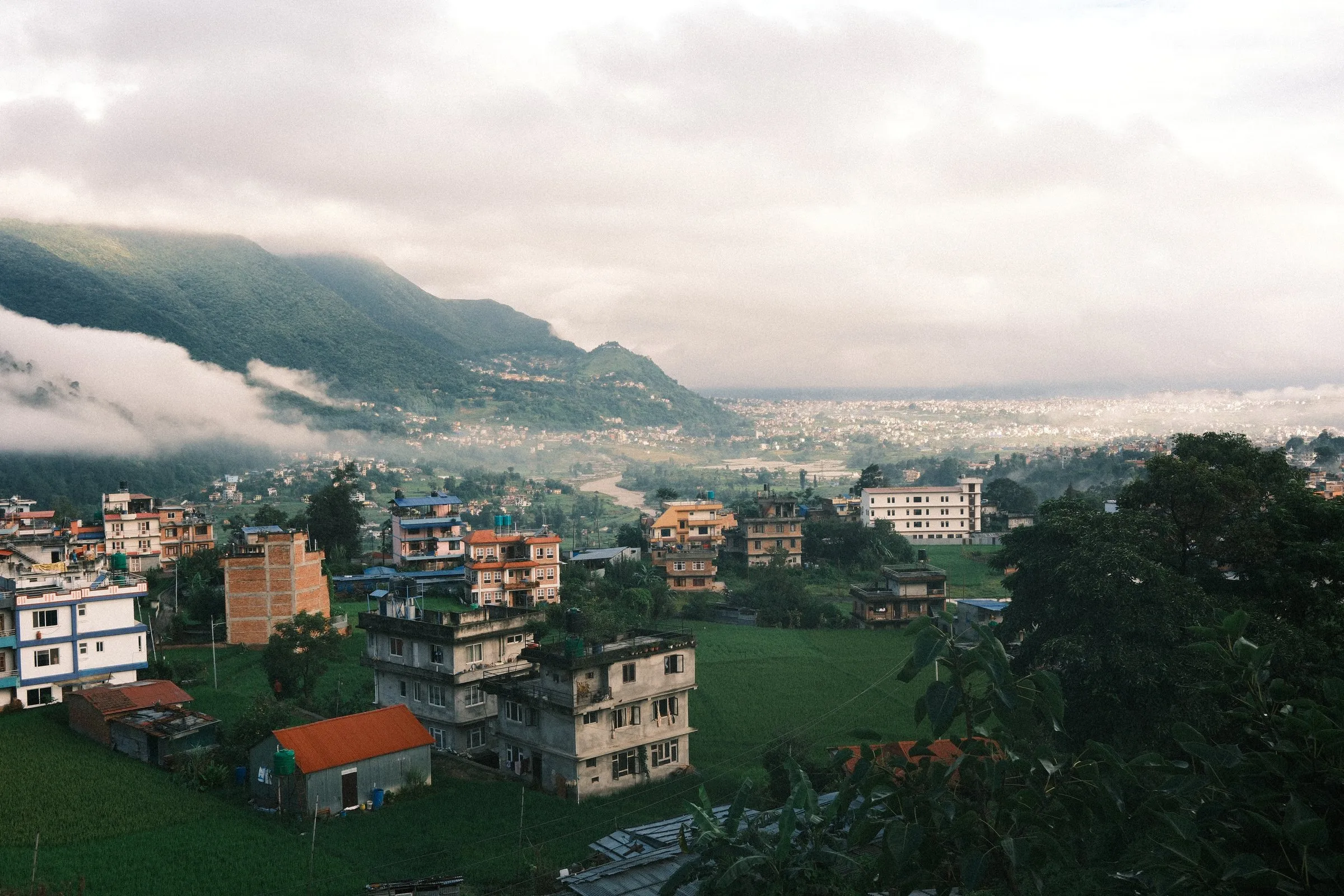
Clear skies over the Kathmandu Valley, shortly before the downpour
Day 2, 3 September: Chitwan to Goa. We left at 6am, reached Besisahar four hours later, repacked and moved into jeeps for Dharapani. The delays meant we couldn’t reach Bimthang, so we stopped at a village called Goa for the night.
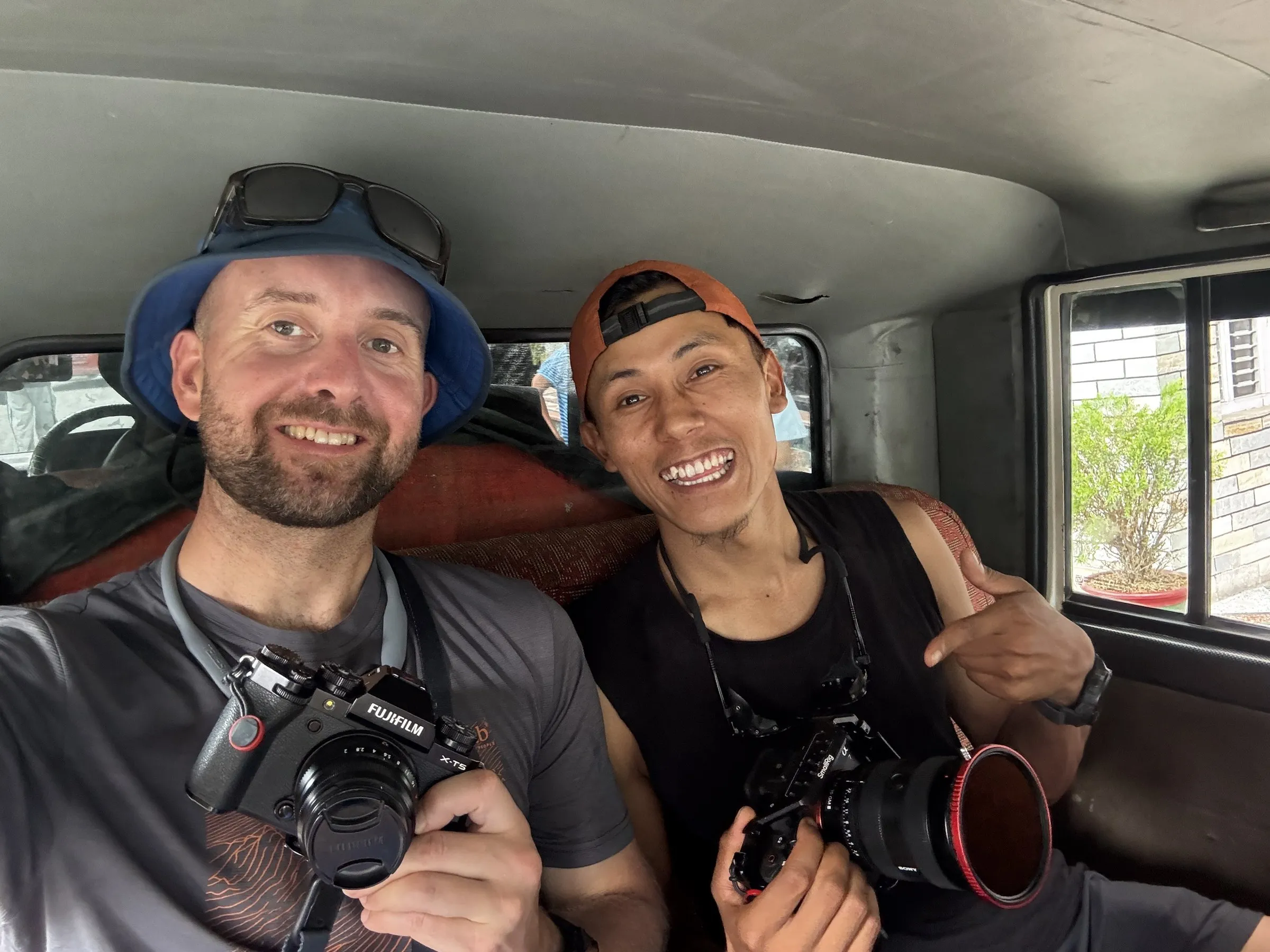
With Pasang Arya Sherpa, the expedition's photographer and videographer, who also appeared in the recent film Tenzing
The monsoon had been heavy this year, and floods had cut off both ends of the Manaslu region. We were booked to fly out by helicopter at the end, and I was already hoping for better weather on the mountain.
Trekking in over Larkya La (Days 3 to 7)
We walked into Manaslu the opposite way to most trekkers, over Larkya La from the Annapurna side. I’d done the Manaslu Circuit in spring 2025 in the other direction, so parts of the valley felt familiar. In September it was greener, and the lakes I’d seen frozen in April were open and luminous blue.
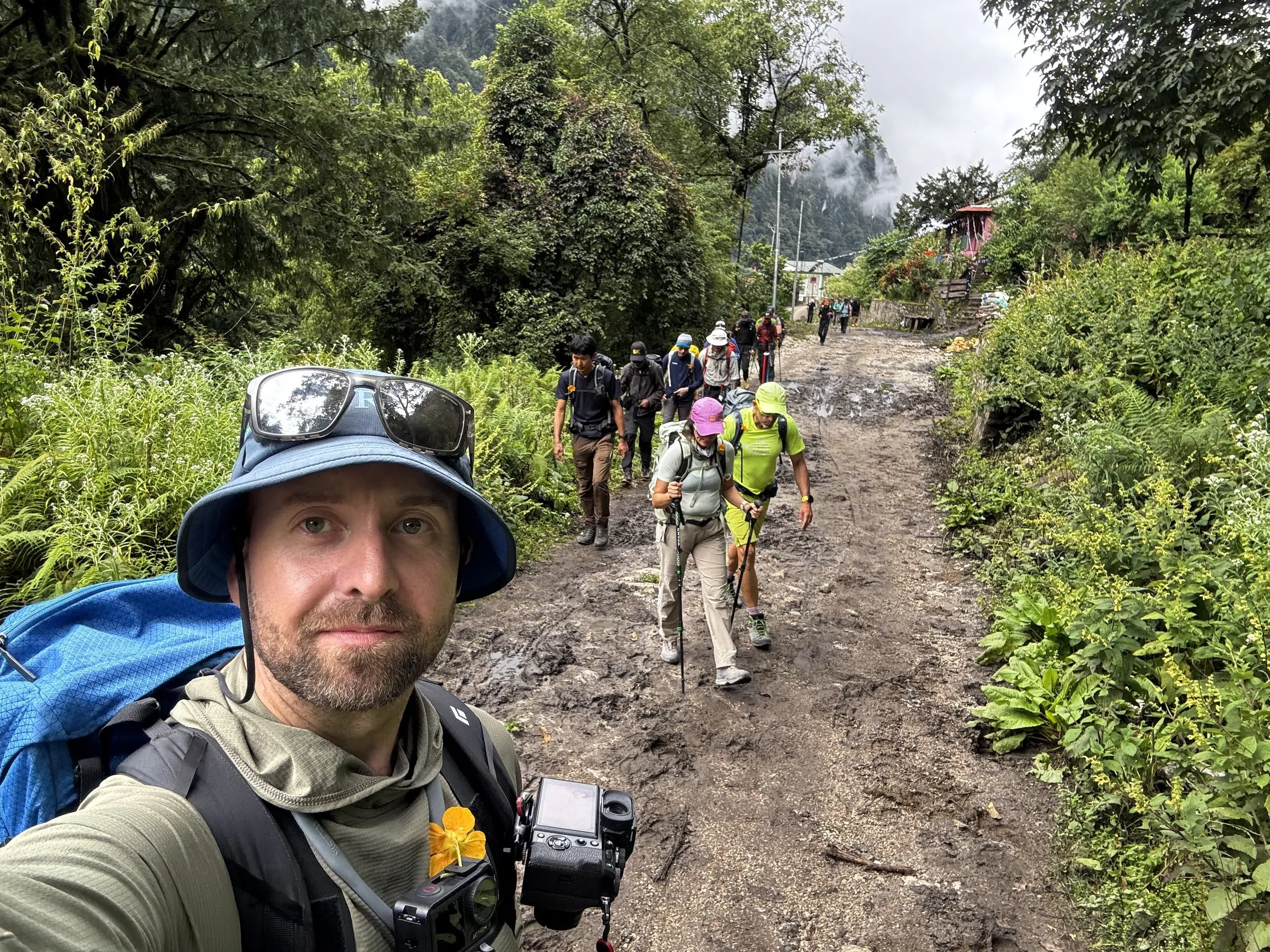
Setting off from Goa on the first morning of the trek
Day 3, 4 September: Goa to Bimthang (15.7 km, 6h51m, +1,496m). Fog drifted through the valley, and every few minutes it opened on a waterfall or a peak. Porters loaded bags outside the teahouse while people filmed and photographed the first morning of the trek. Lunch took a long time to arrive, but the room was warm and full of the group. Heavy rain followed us all afternoon.
The monsoon rain and floods had destroyed whole sections of the trail, and the risk of landslides was high.
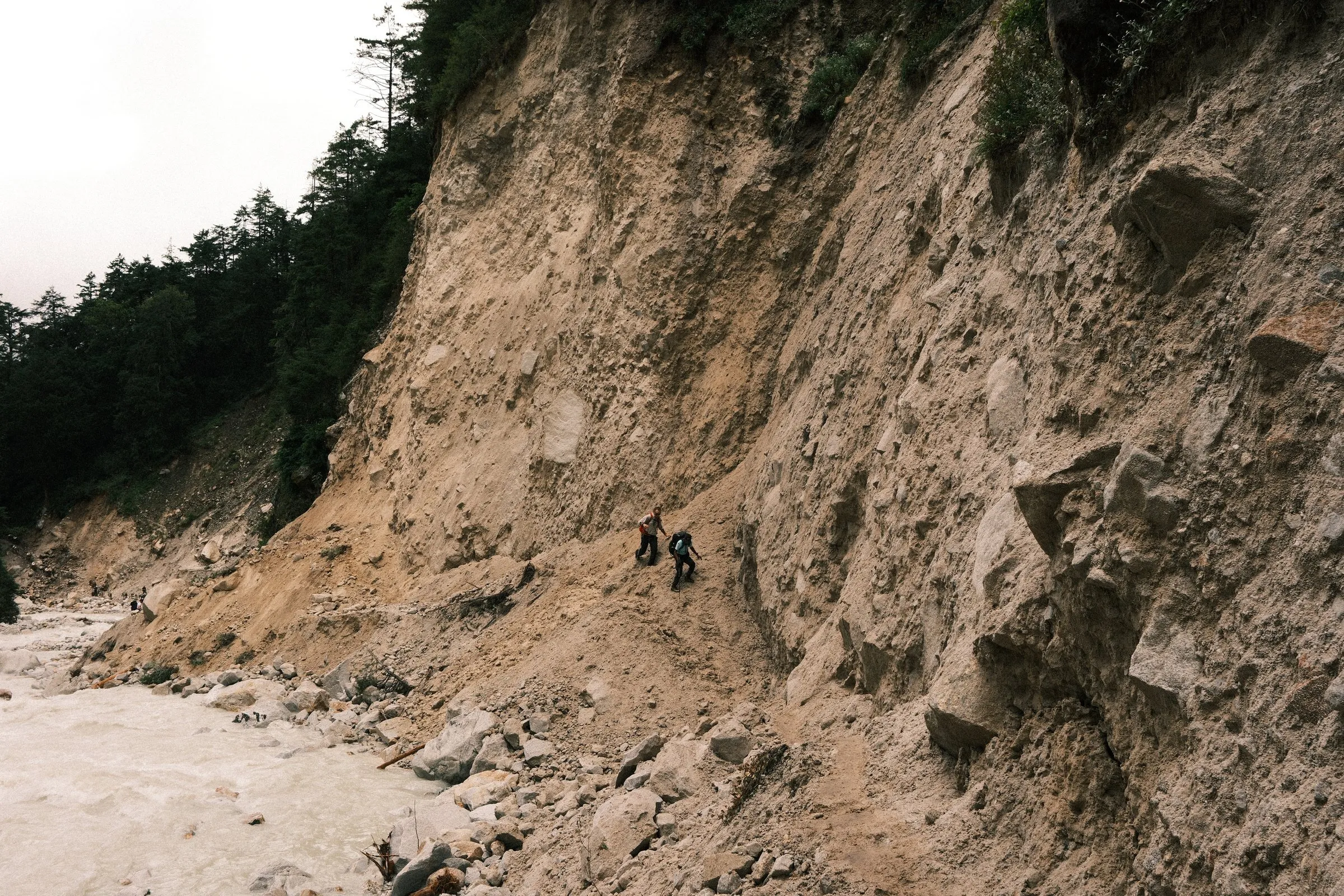
Landslides had wiped out sections of the trail
Day 4, 5 September: rest in Bimthang. A short acclimatisation hike to Ponkar Lake, a glacial lake above the village, then food, rest and an early night.
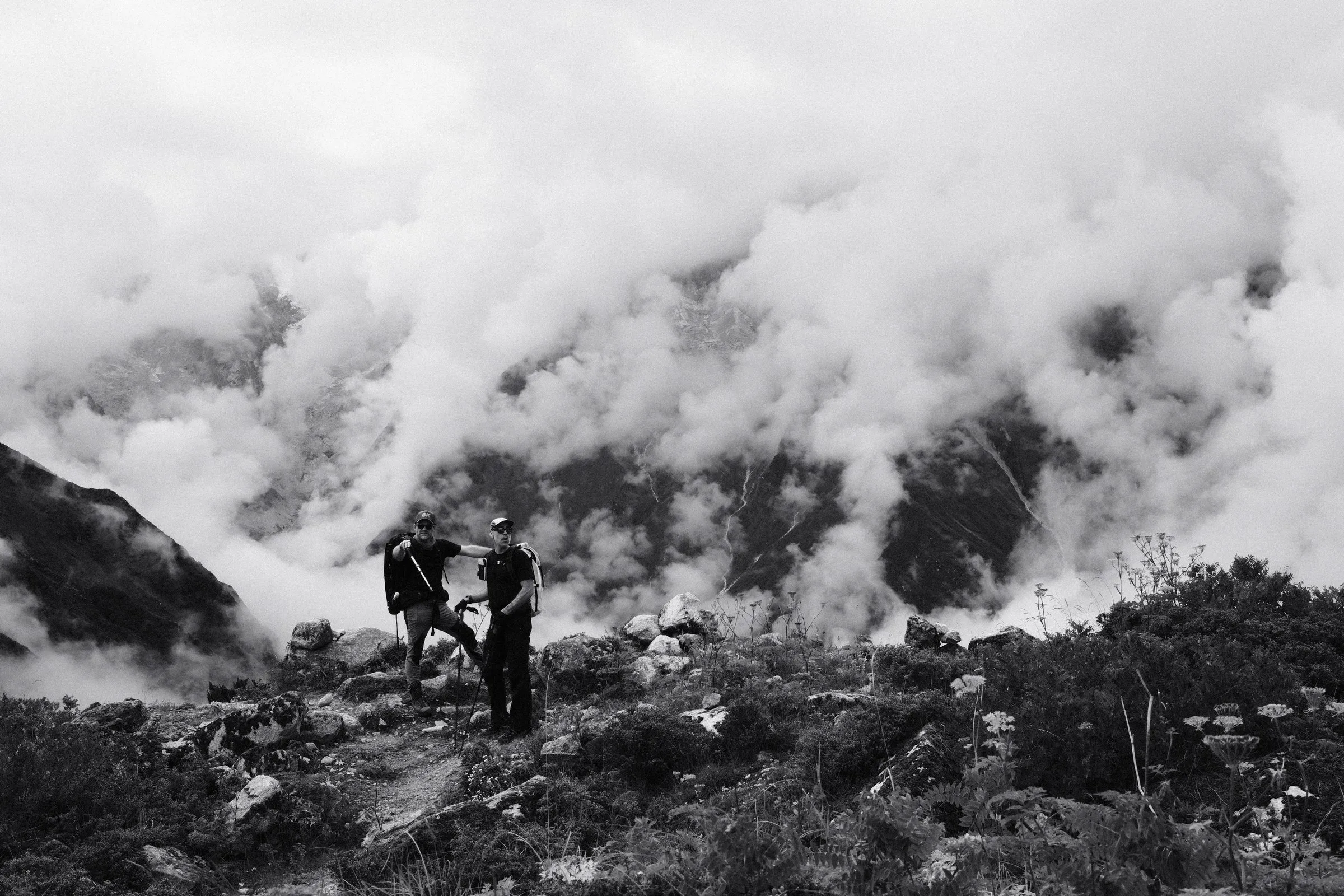
Cloud rolling over the moraine above Bimthang
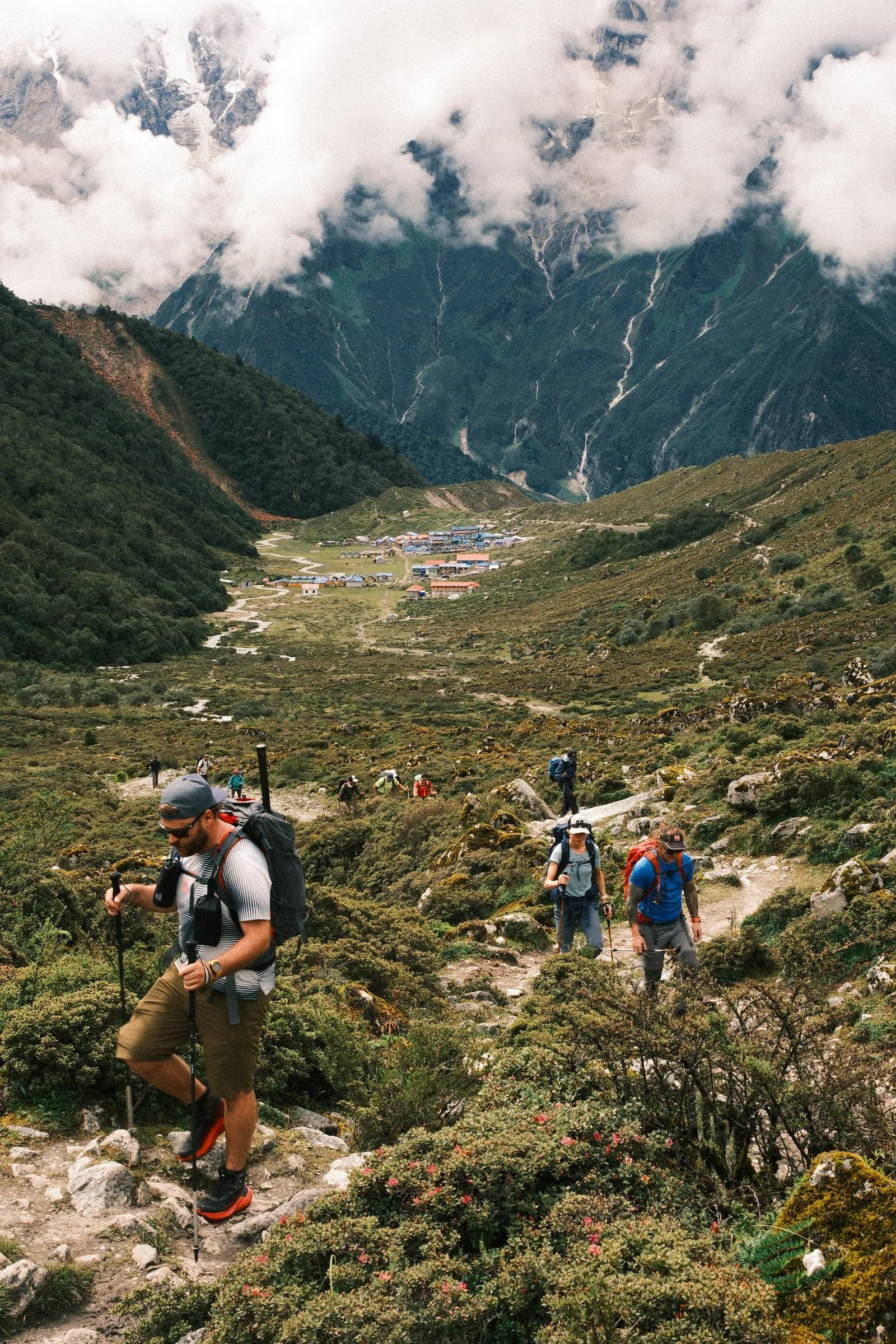
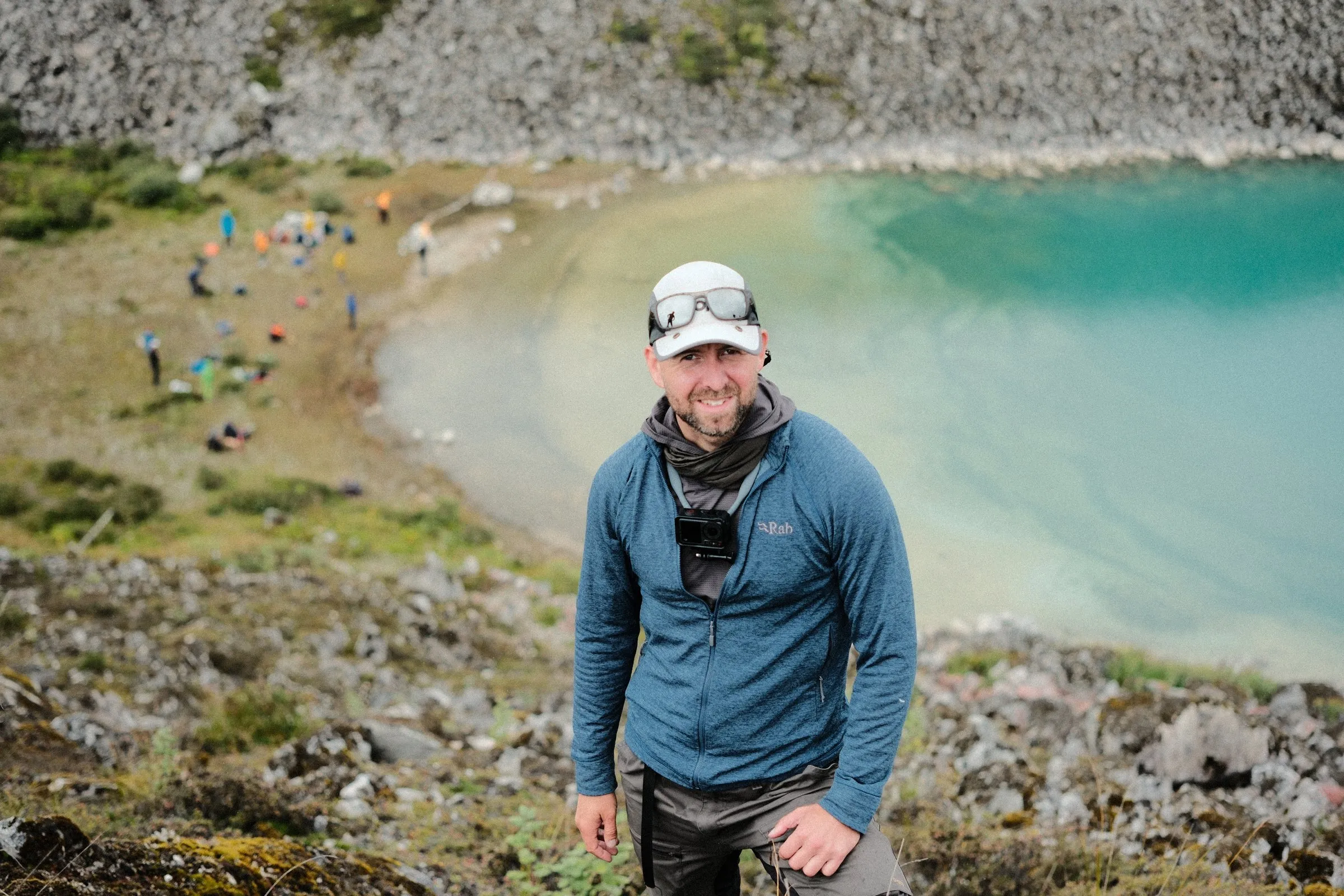
Climbing to Ponkar Lake, and at the lake
Day 5, 6 September: over Larkya La to Samdo (23.2 km, 10h20m, +1,601m). We met at 3am for a quick breakfast and walked out in the dark. The weather was poor for the climb to Larkya La at 5,106m, but the landscape kept opening up: glacial valleys, lakes and huge Himalayan walls. I recovered well afterwards, which gave me confidence in my fitness.
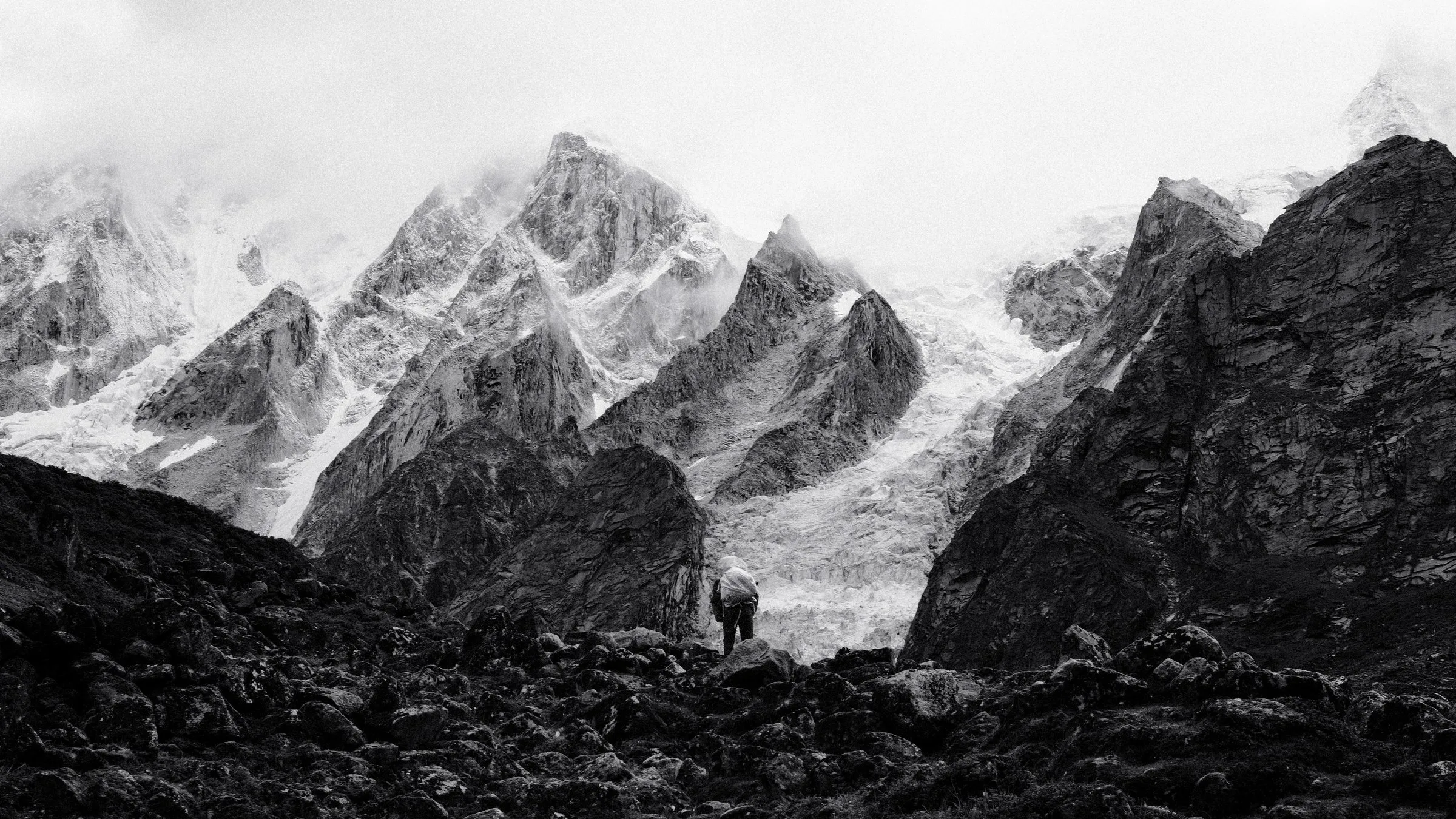
Below the peaks on the approach to the pass
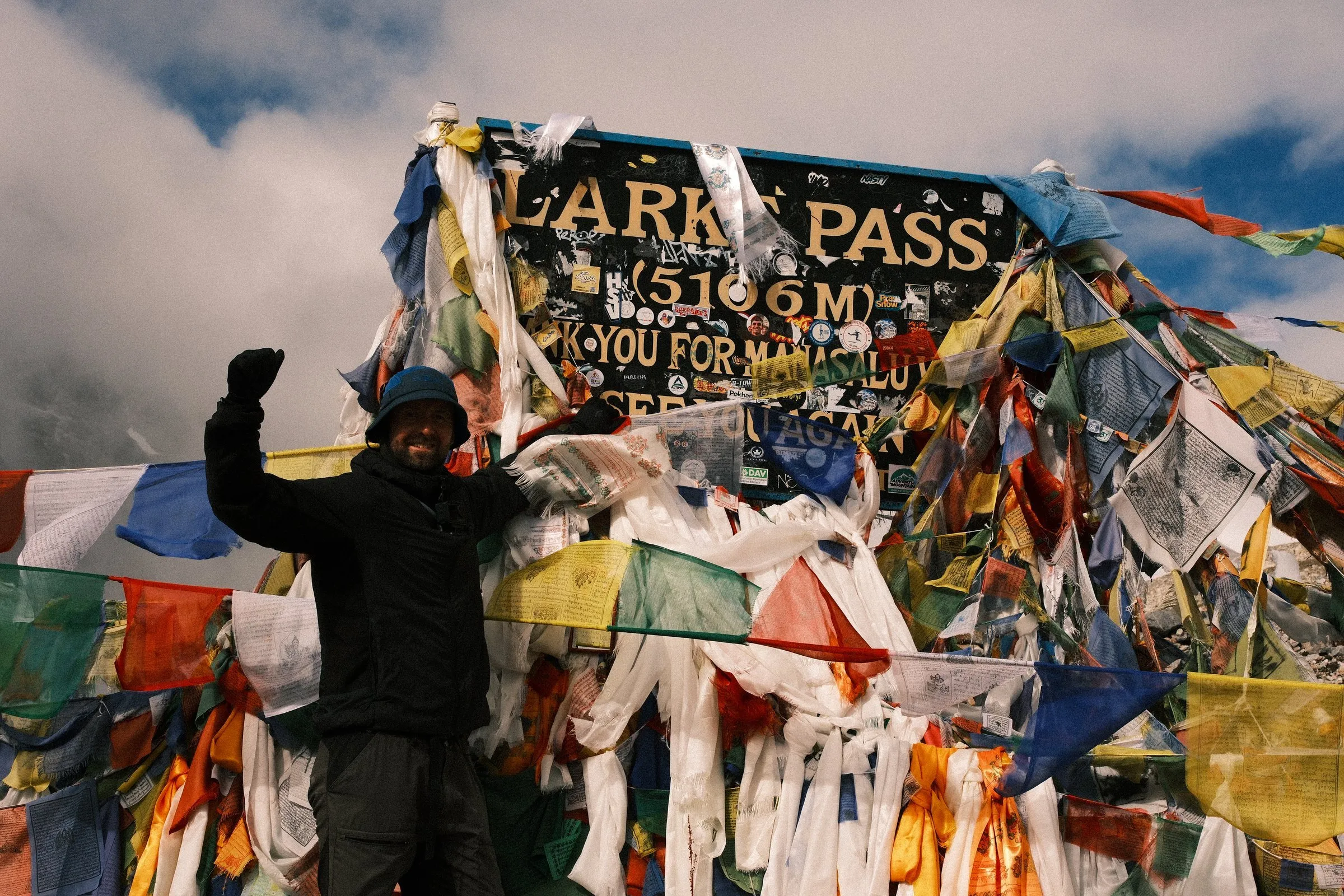
Larkya La, 5,106m
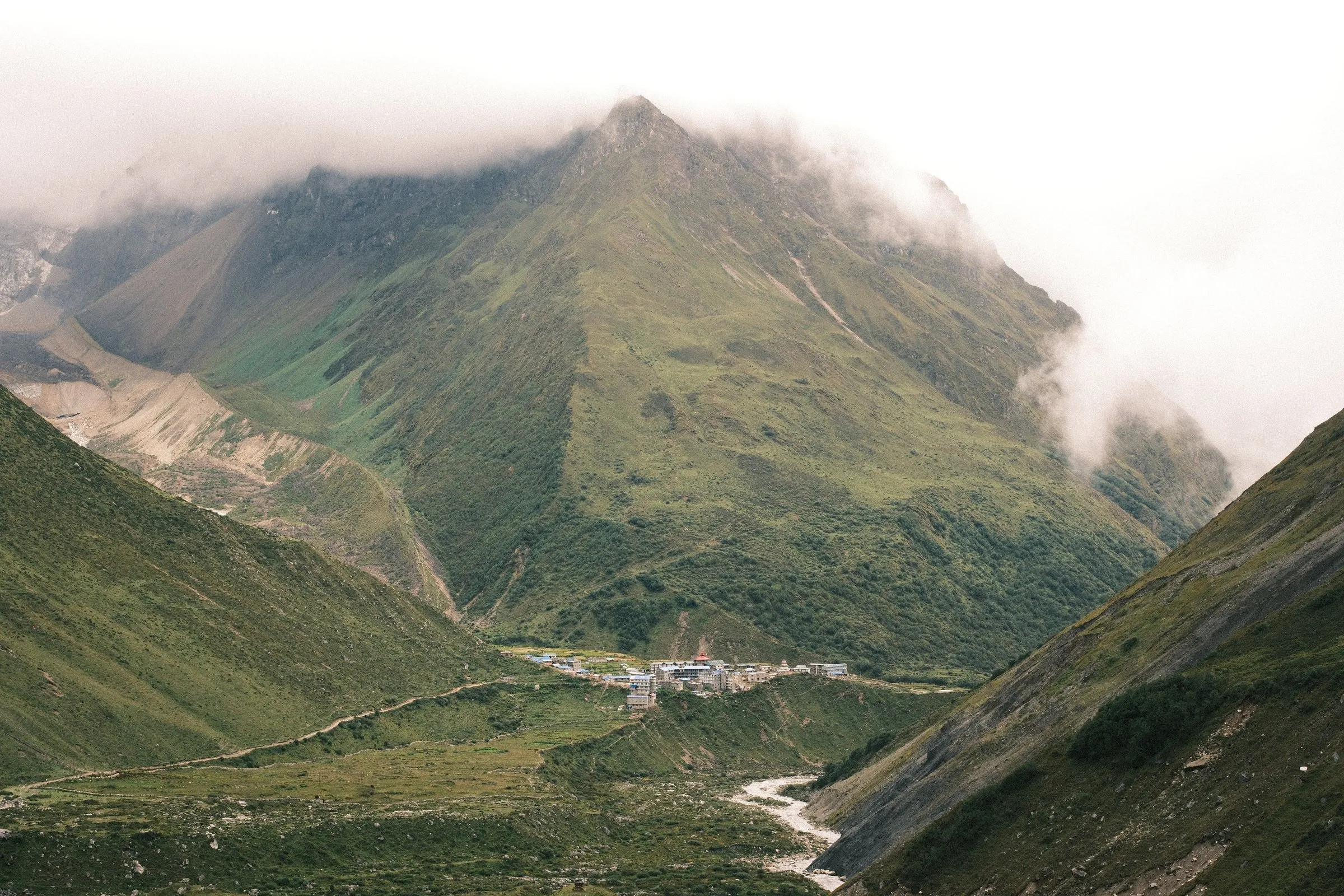
The first sight of Samdo after hours of trekking
Day 6, 7 September: Samdo to Samagaun (8.1 km, 2h16m). An easy walk along the valley to a good teahouse. When the rain returned we found the village snooker hall, full of locals playing at a decent standard. I played a few frames.
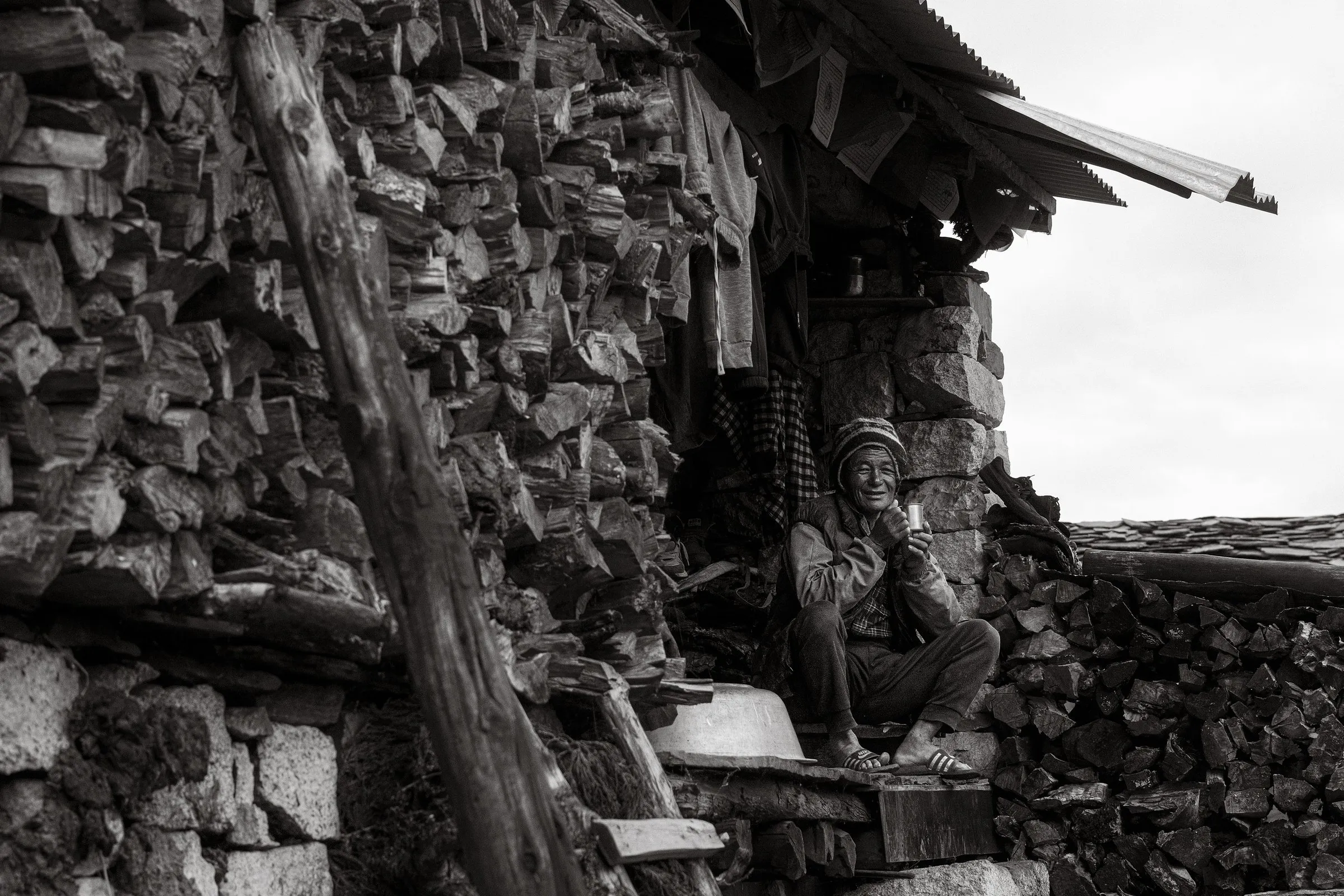
A local in Samdo having a morning cup of tea
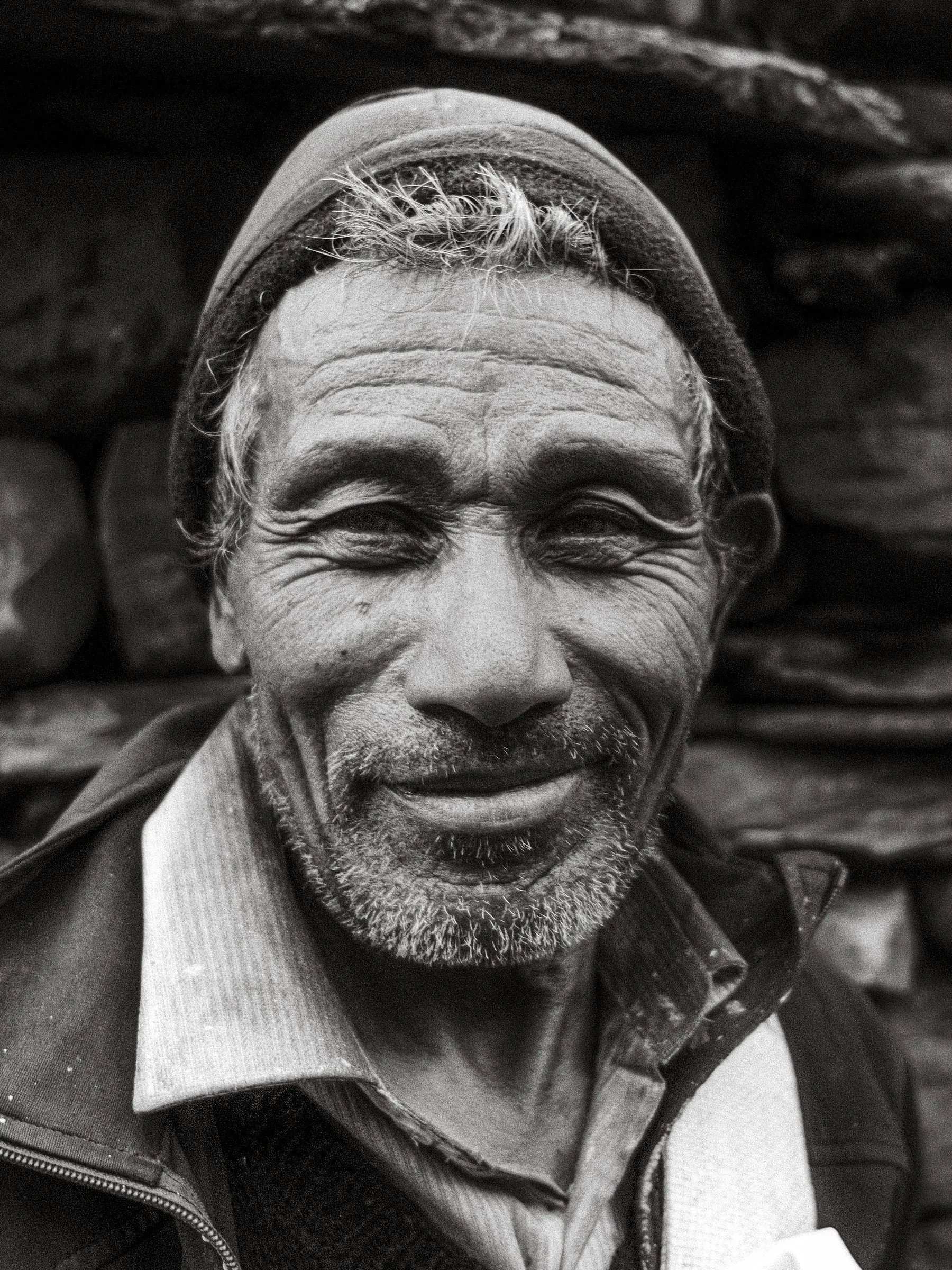
A local stopped for a portrait in Samdo village
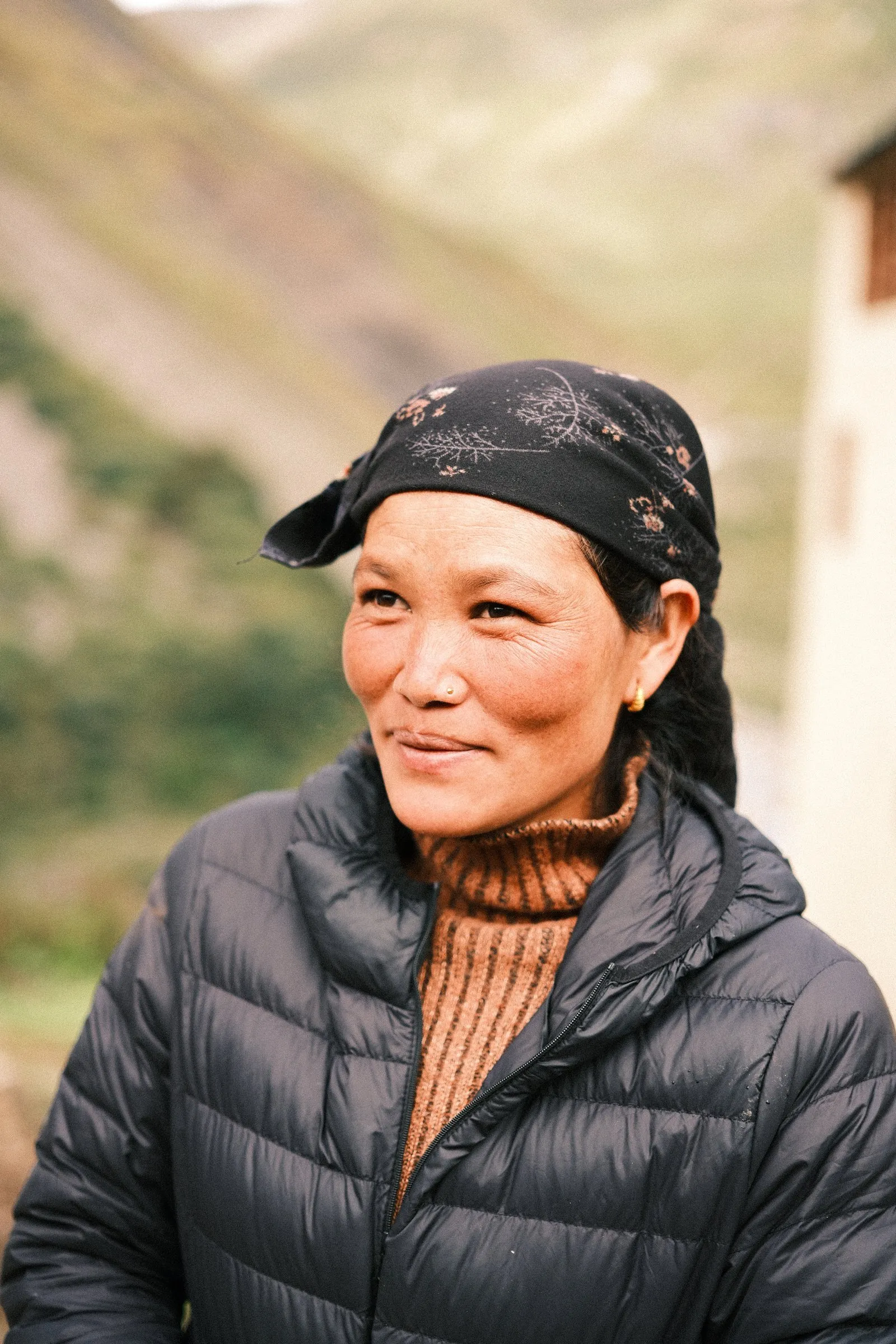
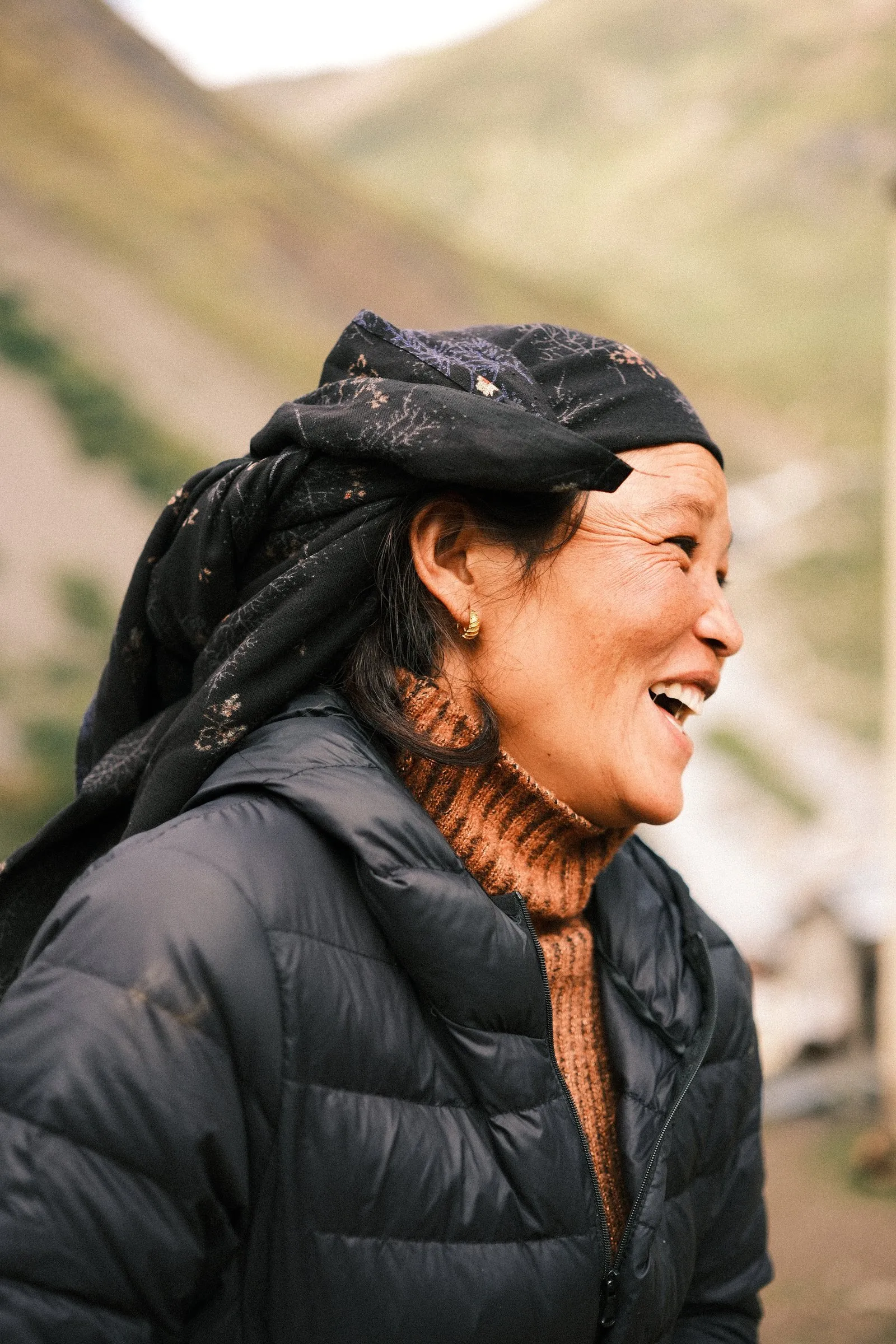
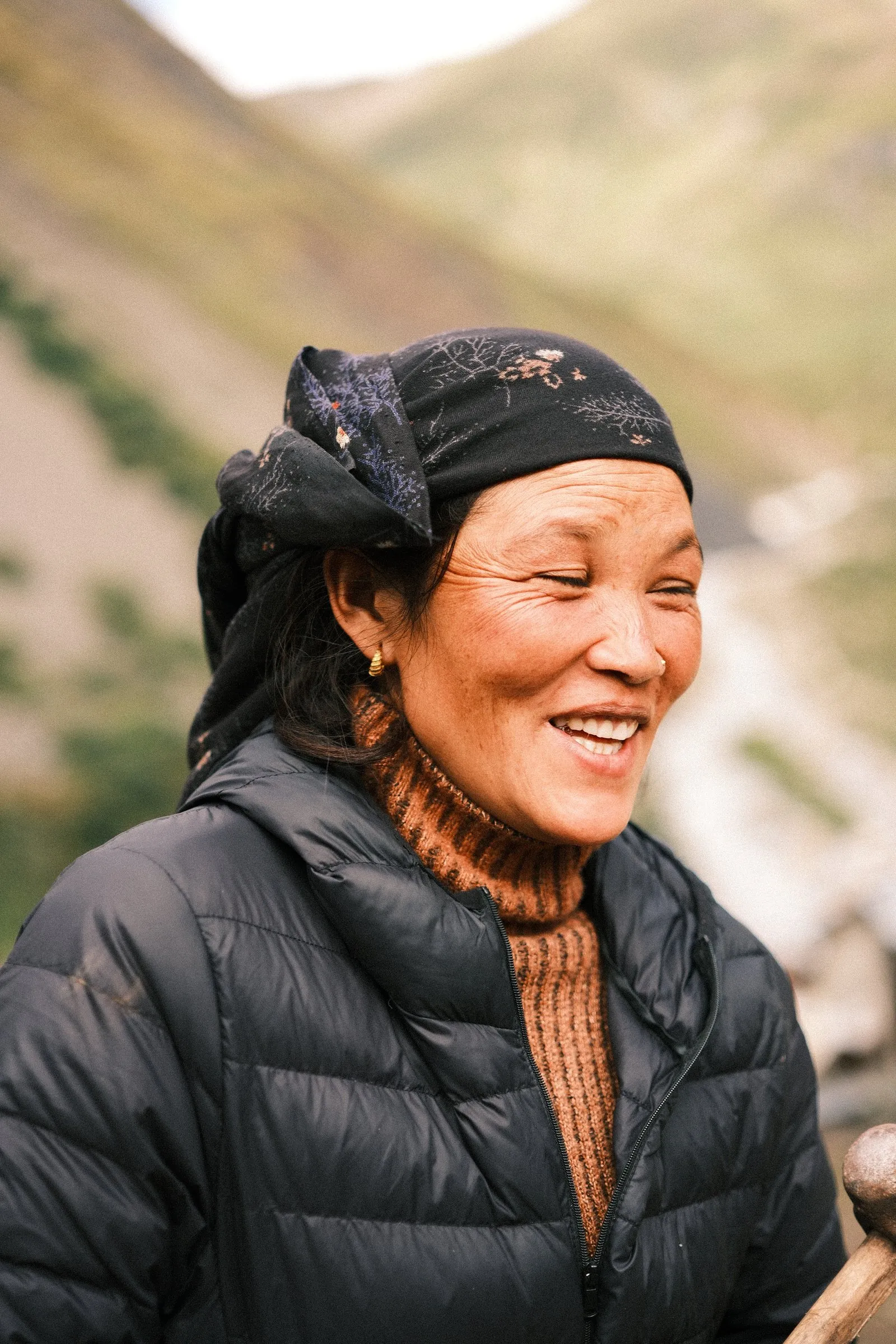
She posed for a very natural shot, then laughed as she became a bit shy
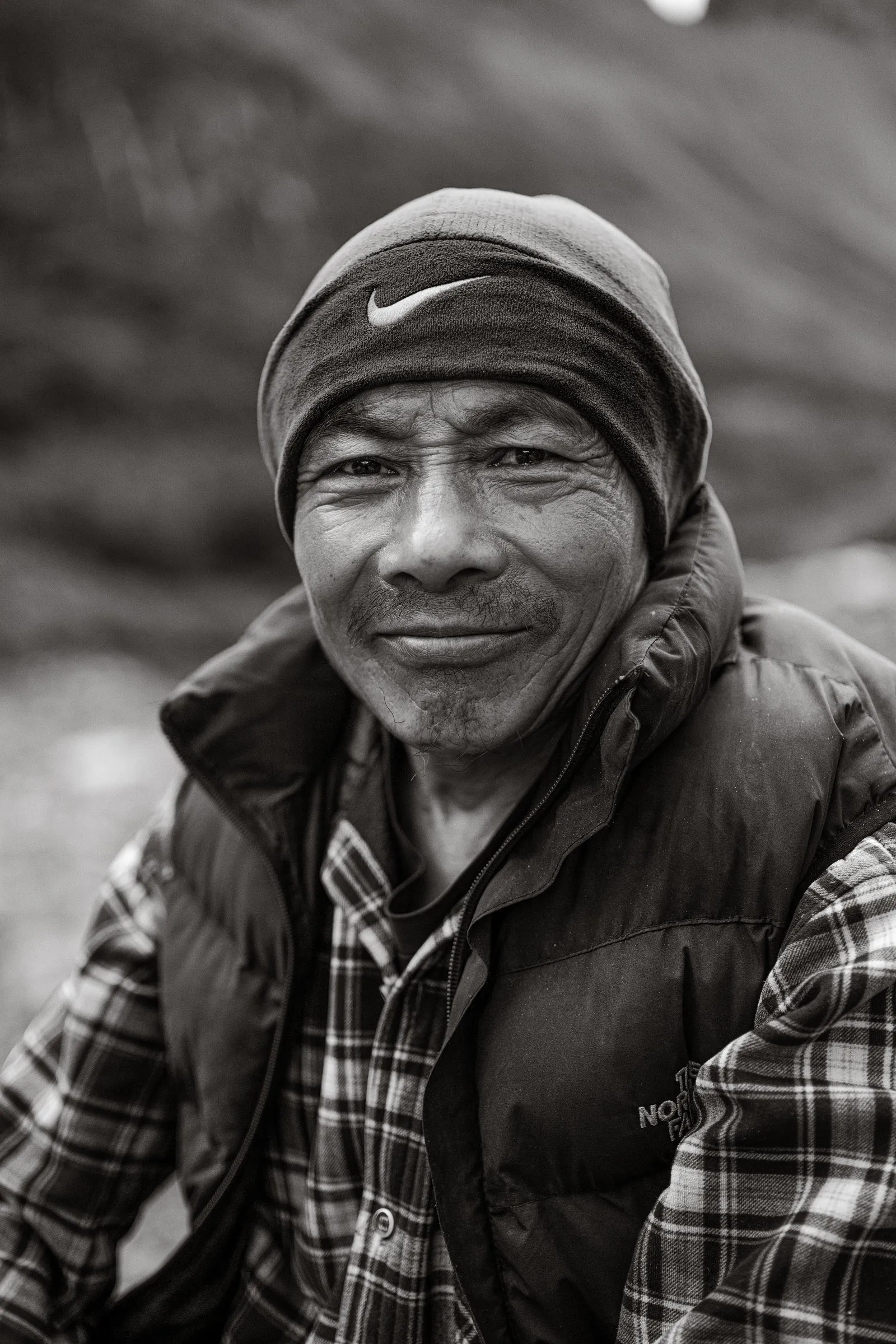
One of our porters stops for a rest
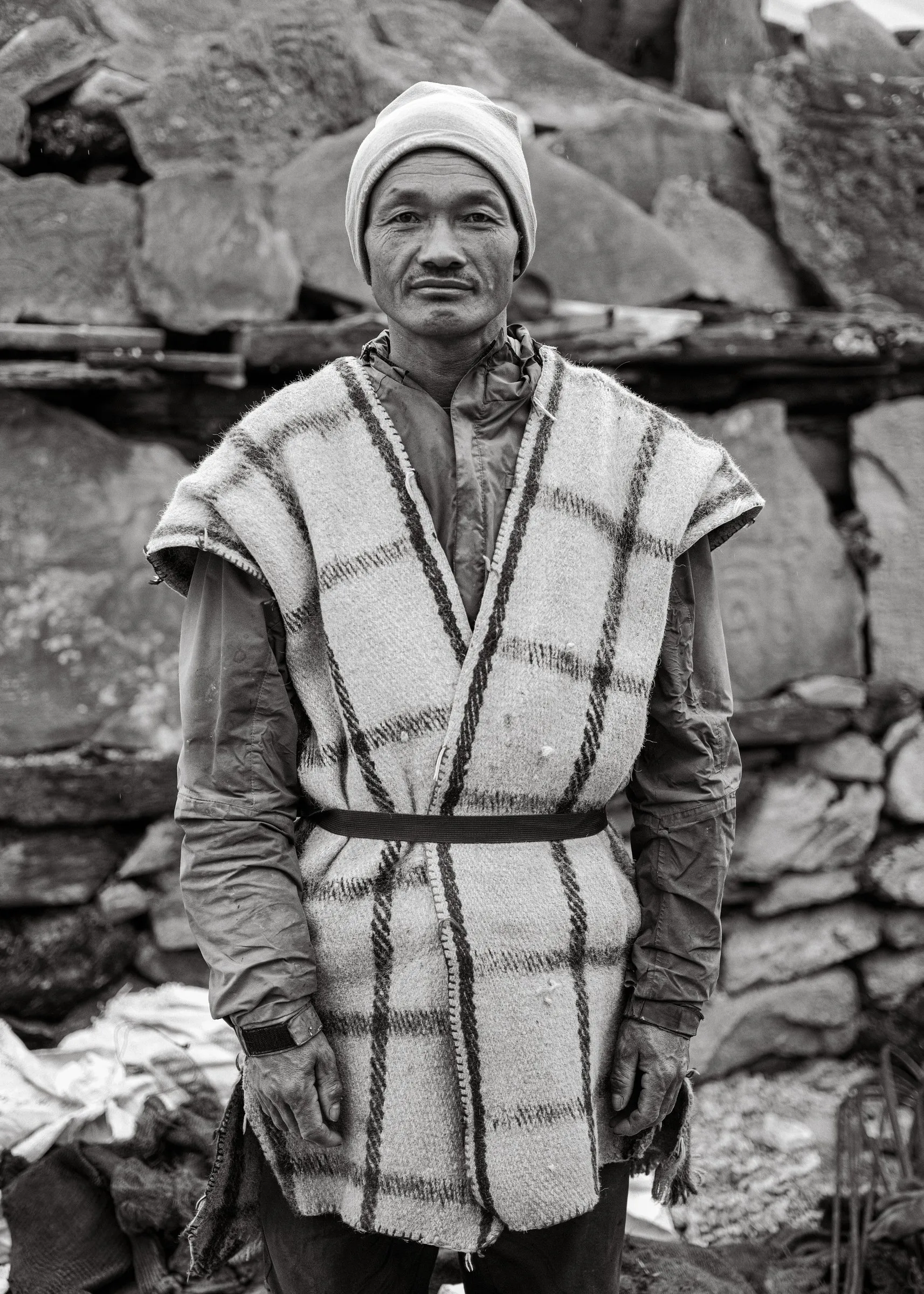
A construction worker in Samagaun
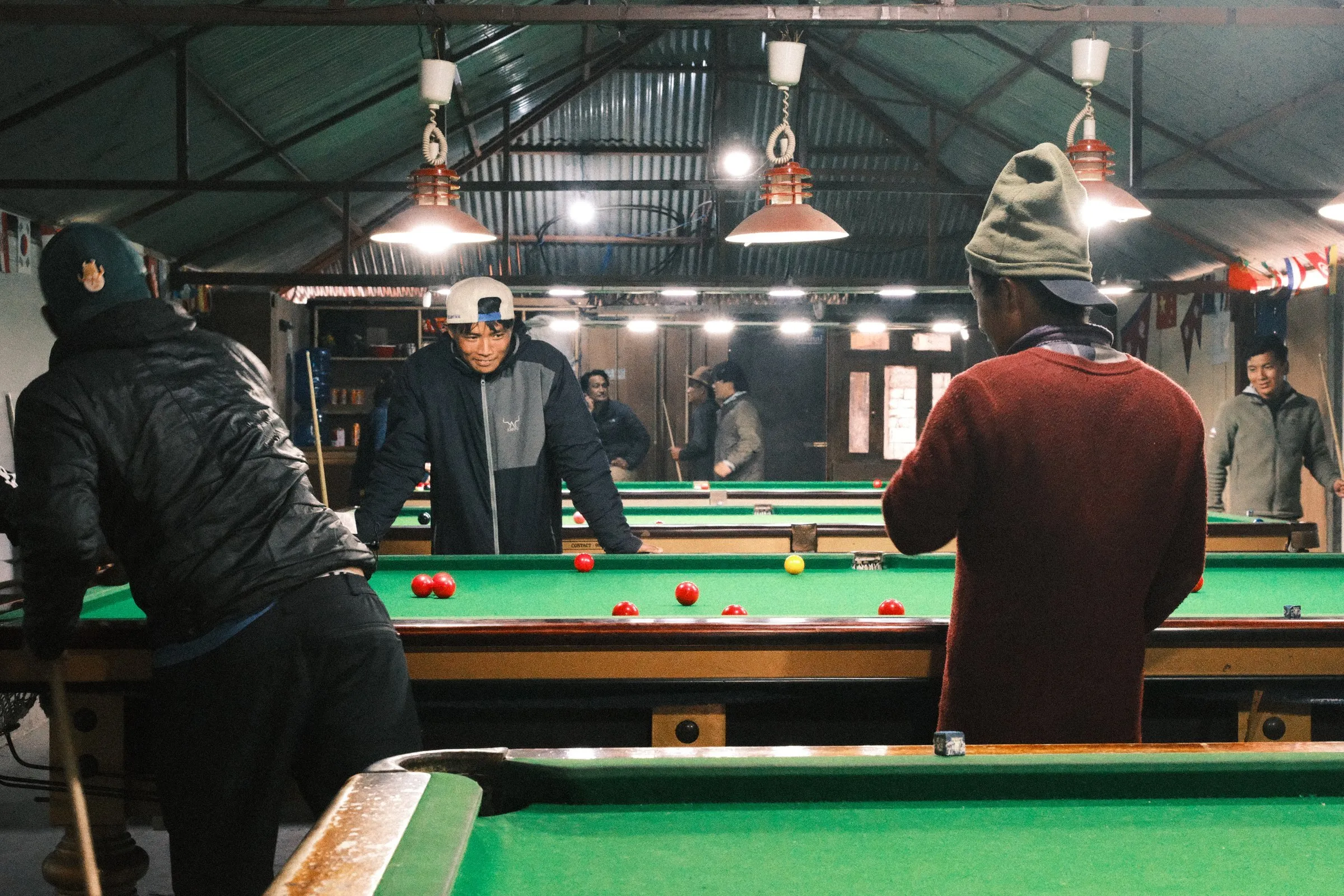
The Samagaun snooker hall
Day 7, 8 September: rest day in Samagaun. I was at the monastery for 6:15am. A security guard in a topi hat, holding a khukuri knife, took the 300 rupee entrance fee. A monk came in to perform a small puja, and I sat beside him while he chanted, drummed and carried incense around the room. I used the time to meditate and ask for strength, and for good decisions on the way up and back down.
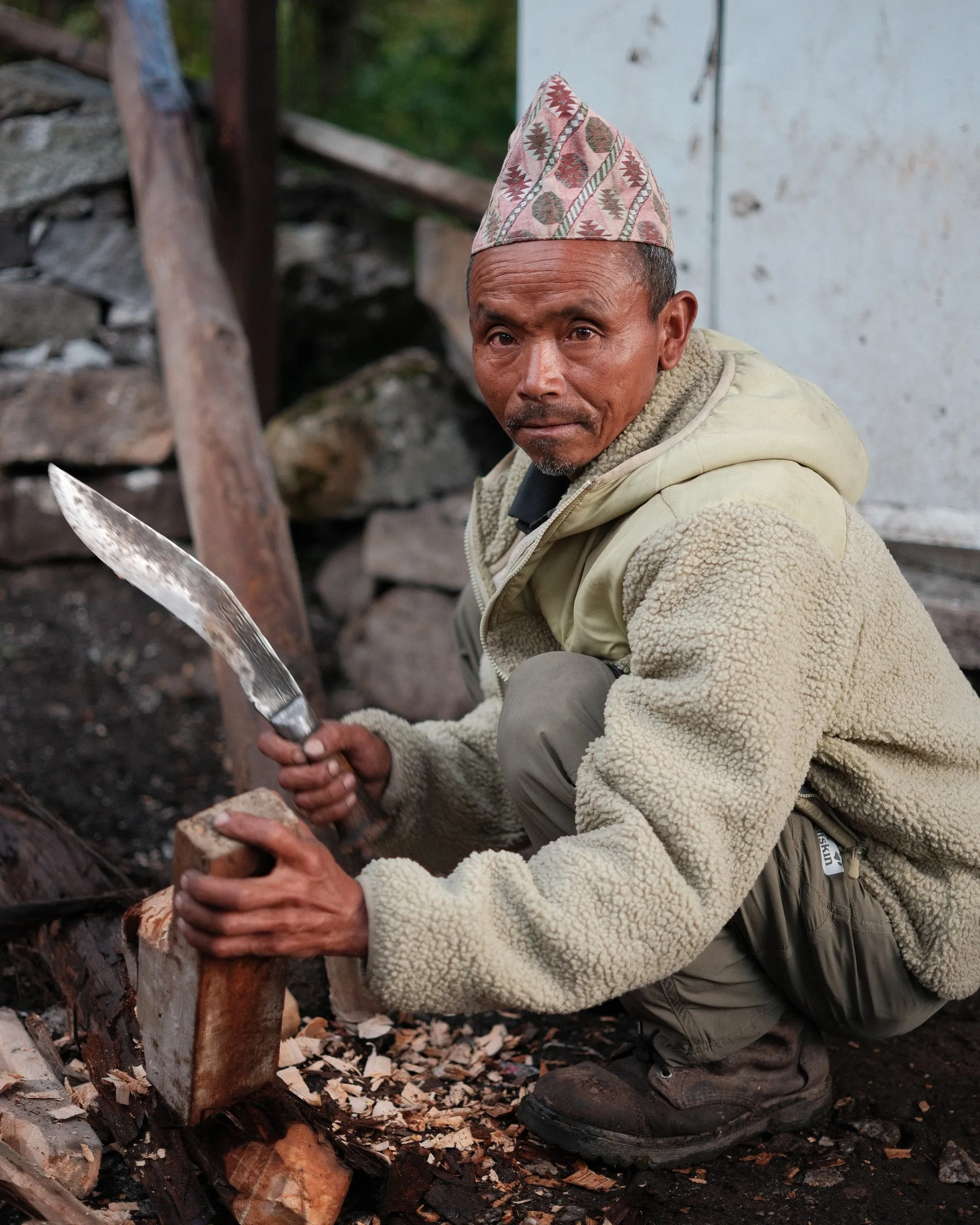
The monastery's security guard and his khukuri
When I came out the clouds had parted and Manaslu was clear above the village. Helicopters passed every ten minutes. Crows called, and horses were being readied for the day’s work.
While the others went to Birendra Lake, I explored the far side of the village, where locals were weaving textiles and preparing yak cheese. I asked to take photos and agreed a price. One didi tapped my pockets and took my last notes, and earned every rupee with her smile in the frames.
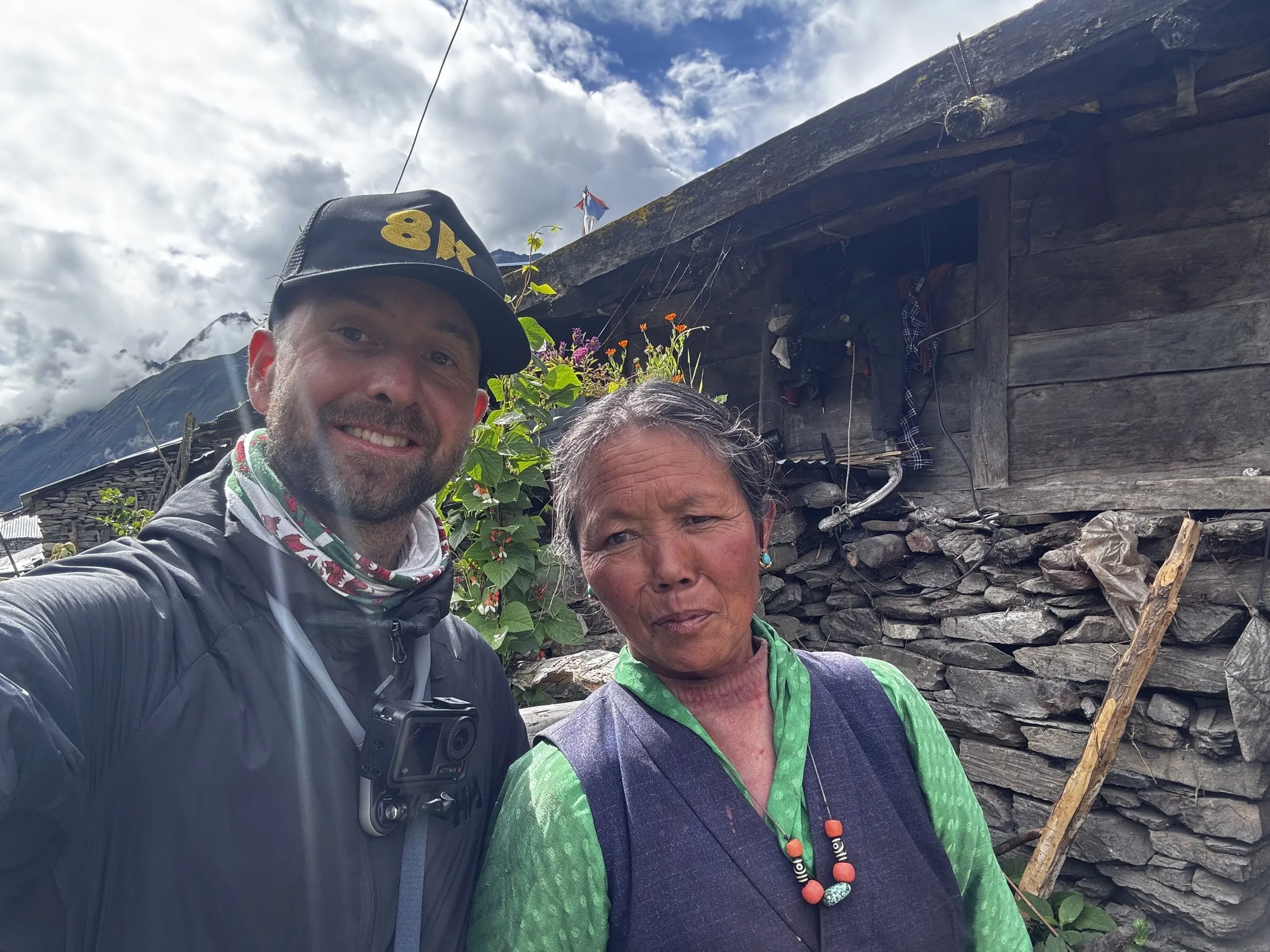
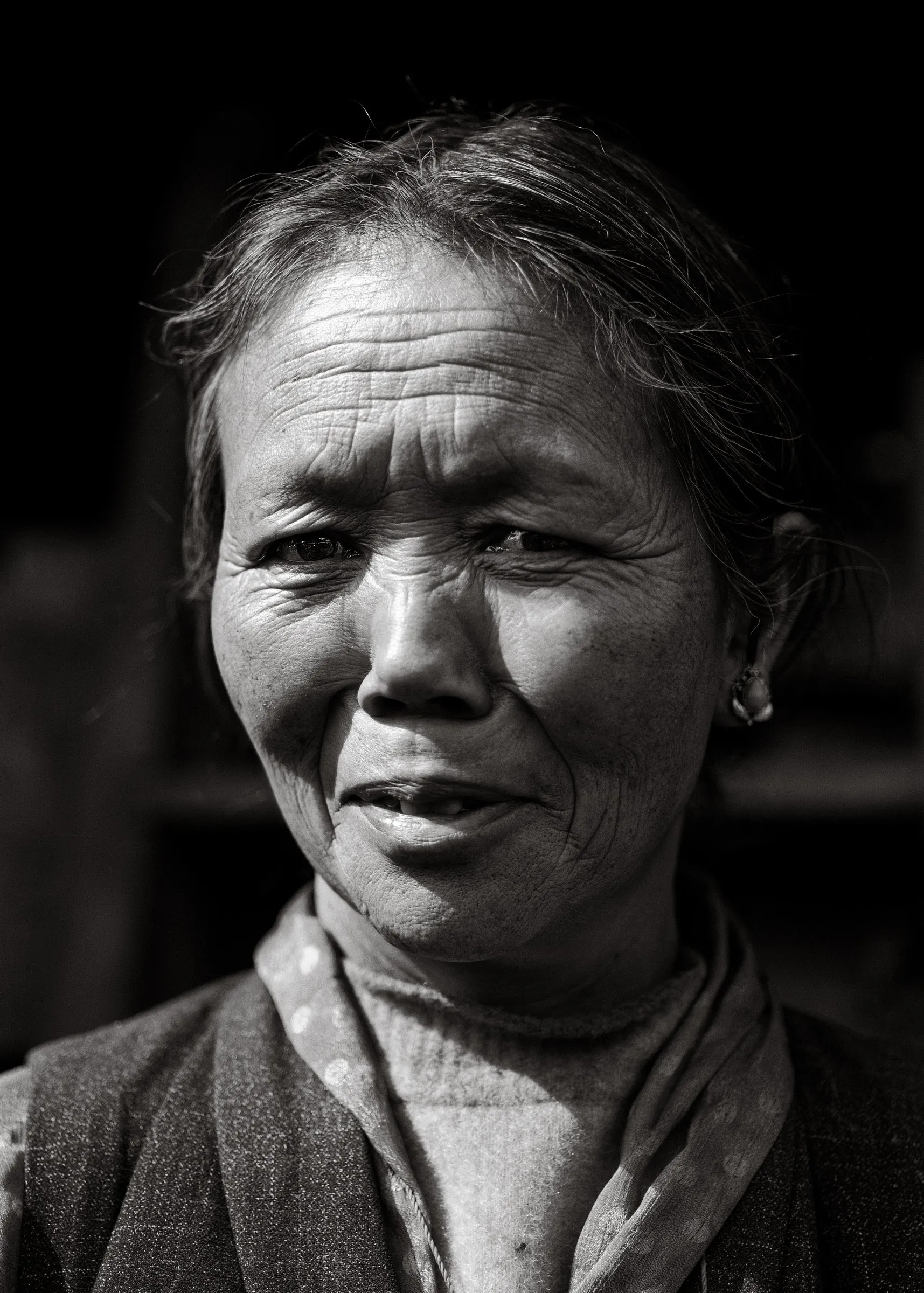
Portraits with villagers in the old part of Samagaun
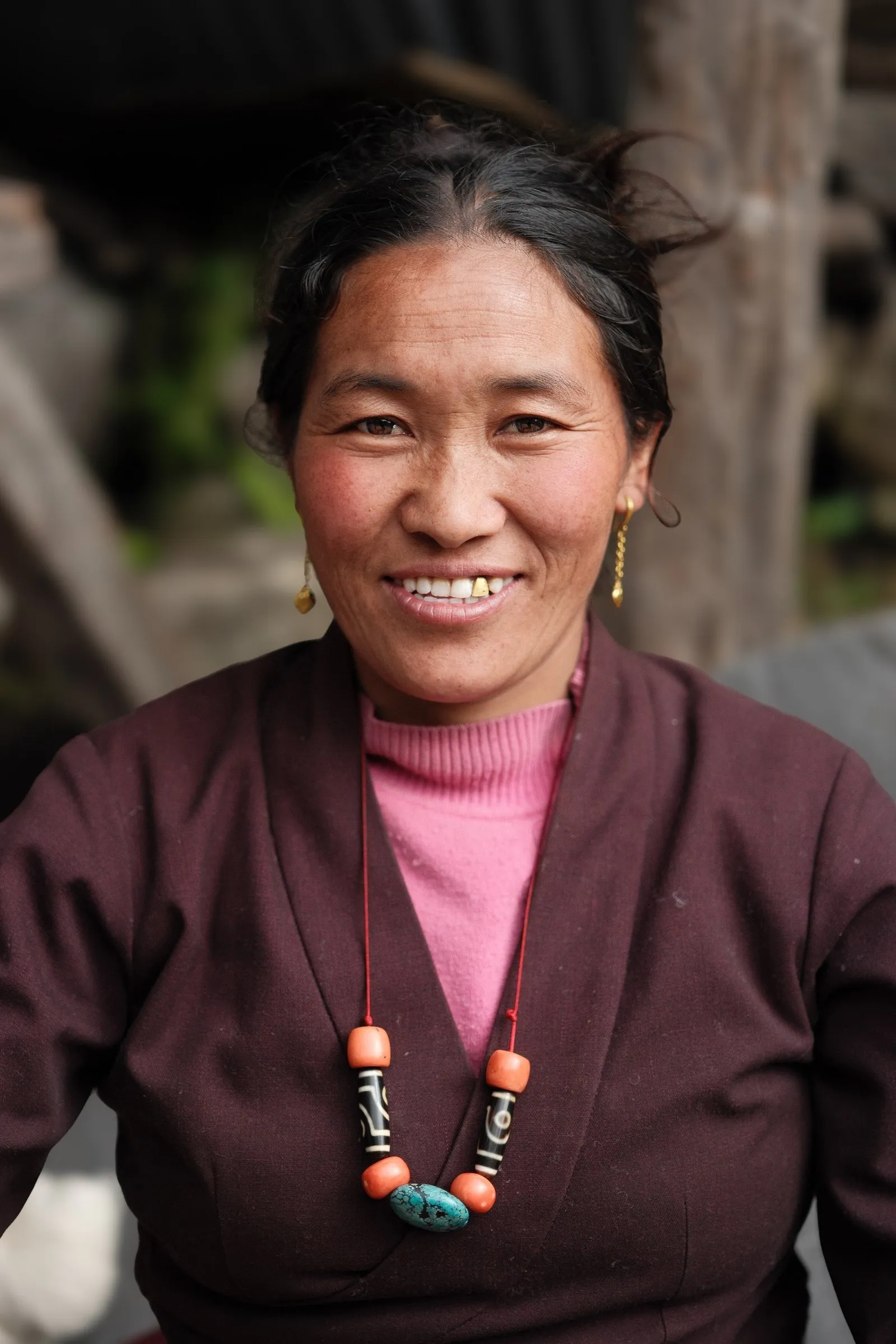
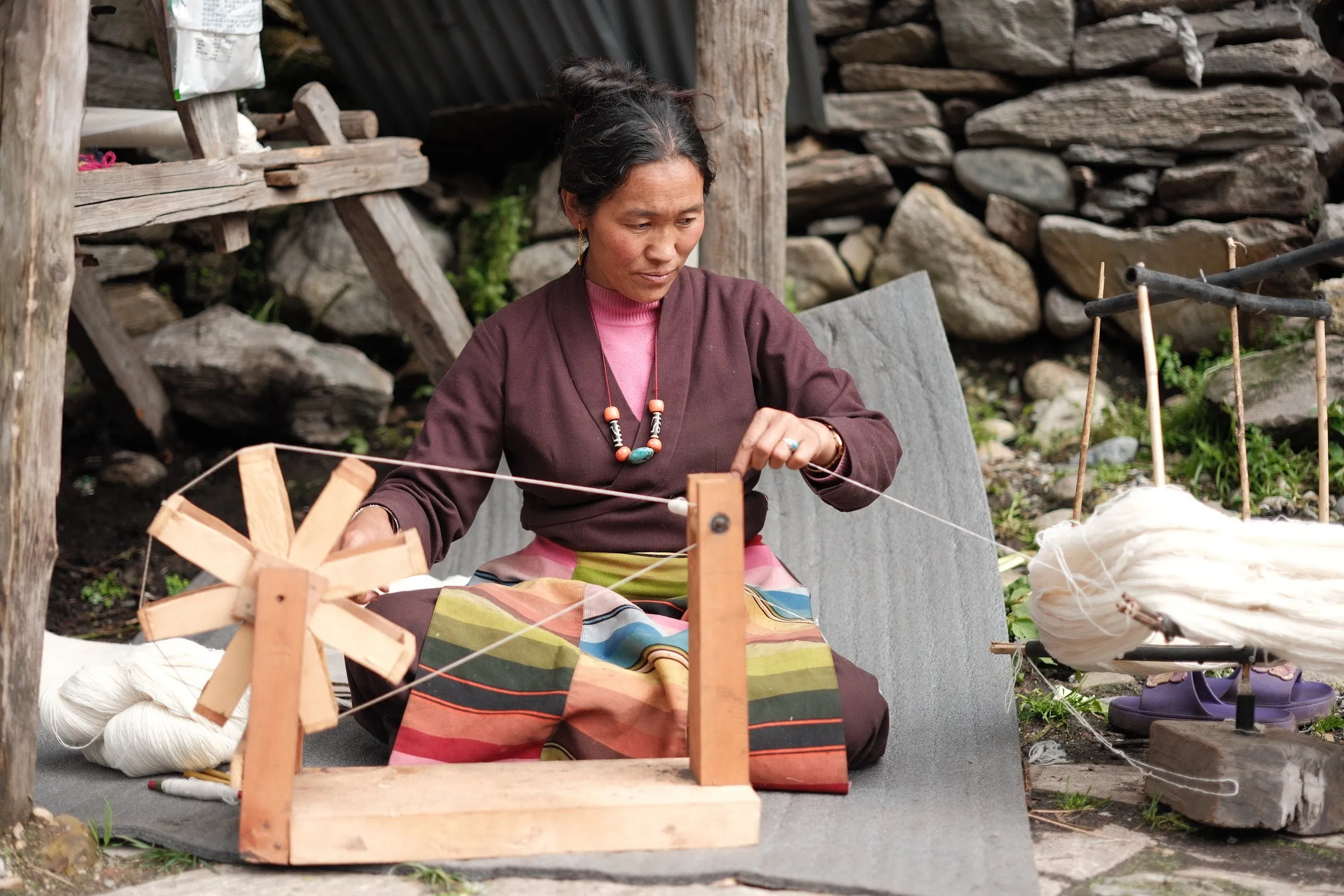
Another villager, spinning wool
In the late afternoon I went back with Andrew and Lorenzo. One woman invited us into her home for butter tea, and we spent 45 minutes talking with her, her husband and her mother-in-law. They live in Kathmandu and had come home to Samagaun to get married. Their house was a traditional Tibetan stone house with a solid wooden interior, a Tibetan stove and nice ornaments.
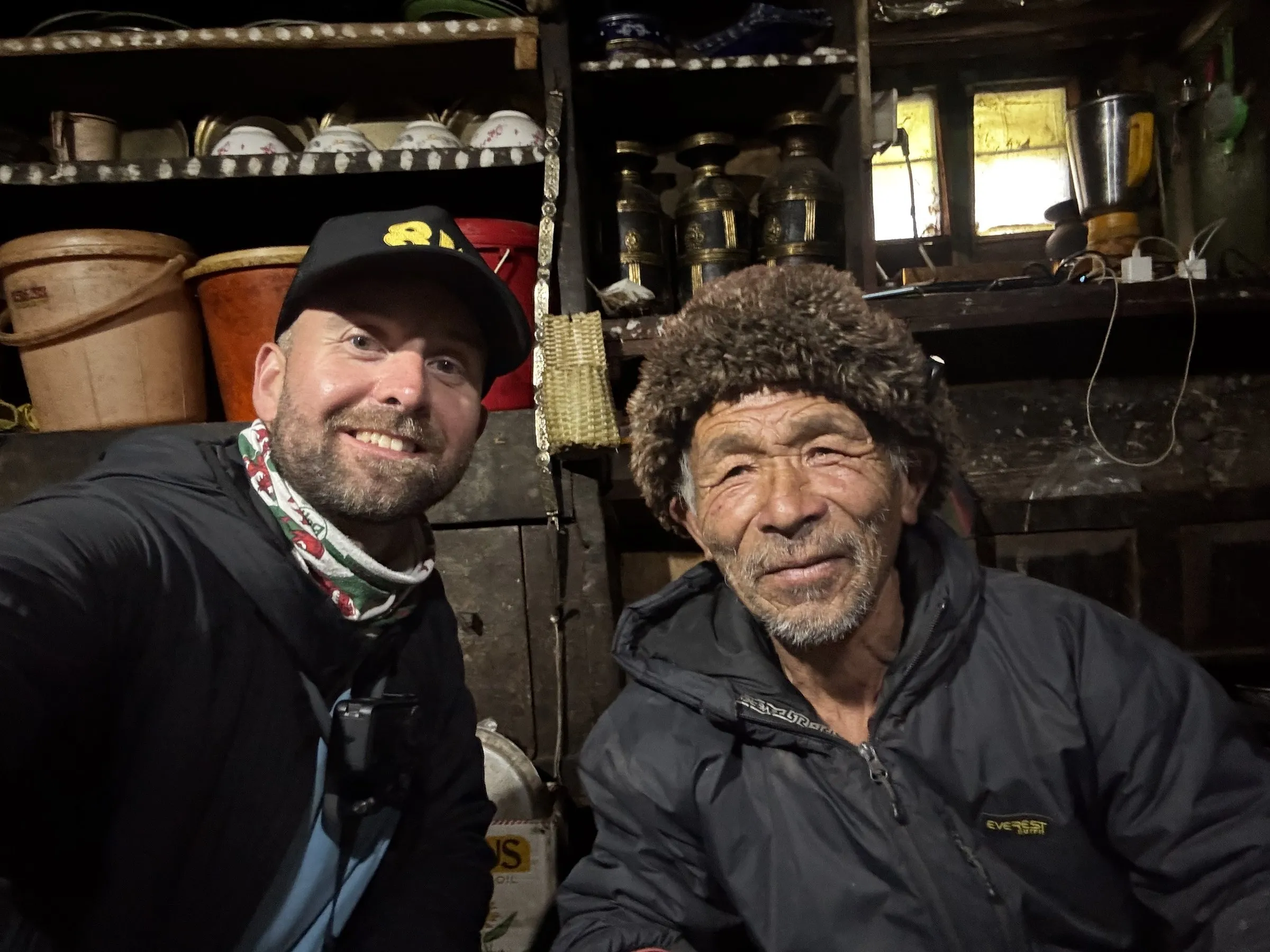
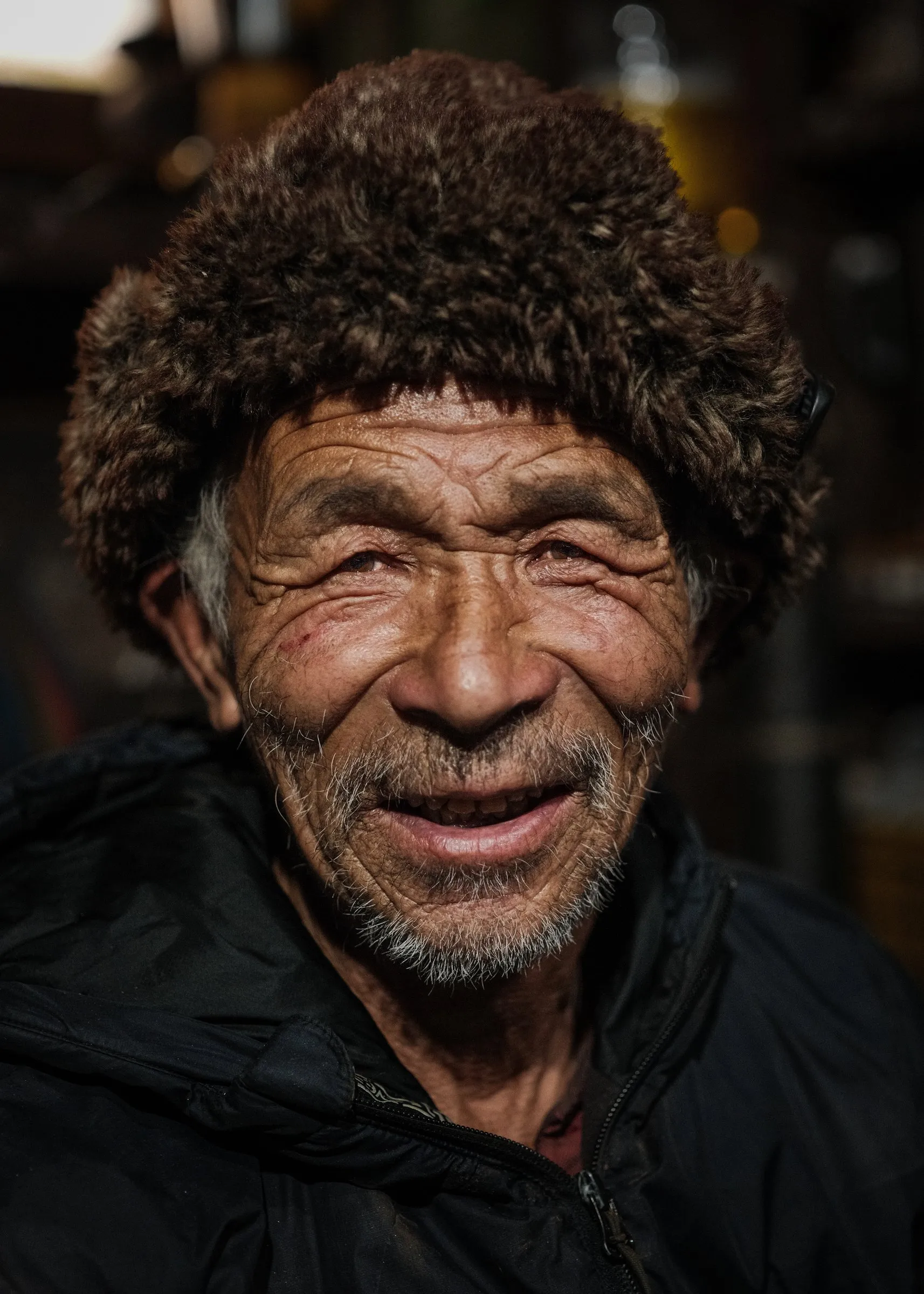
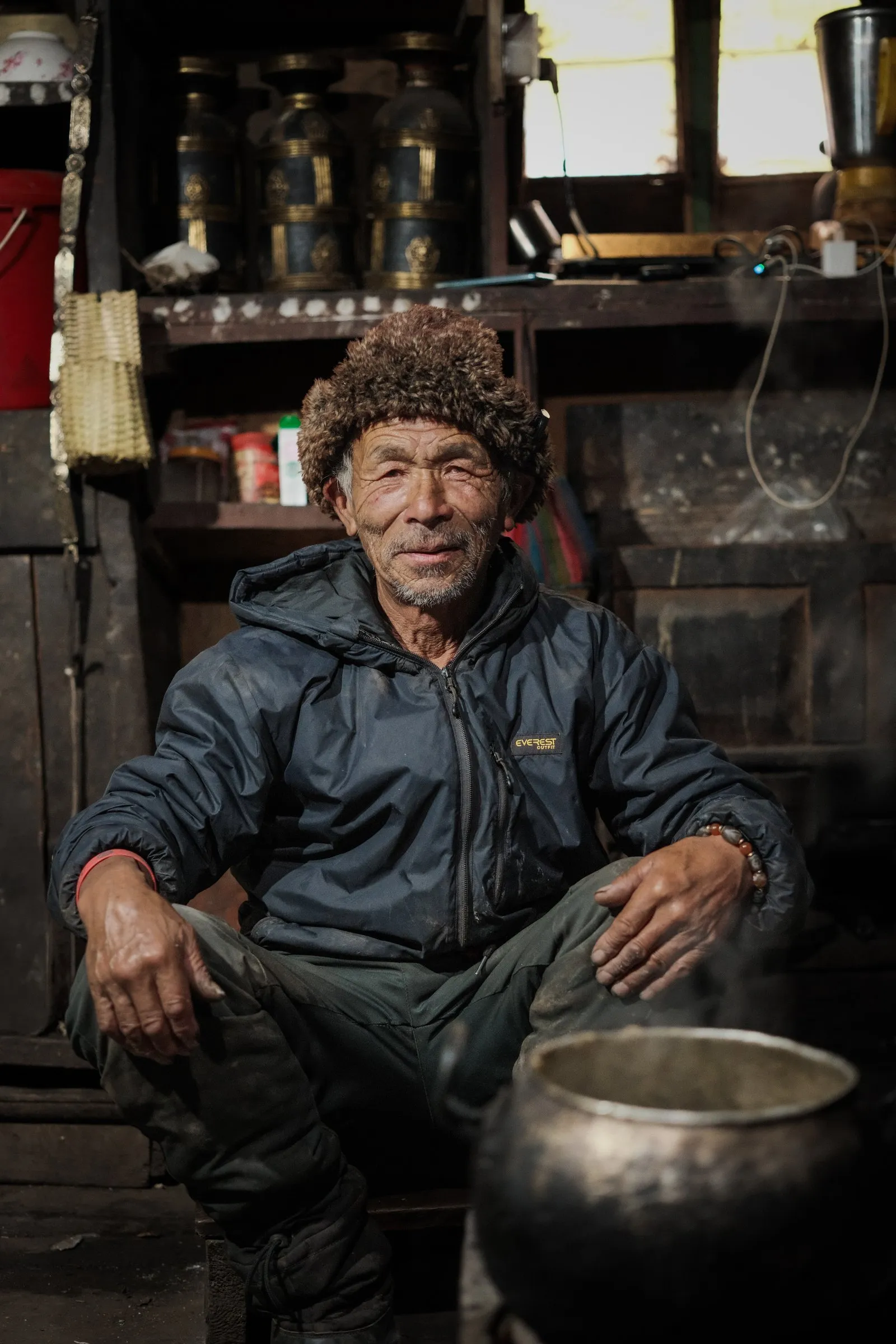
This dai let me into his home for a photo while he was making Sherpa stew
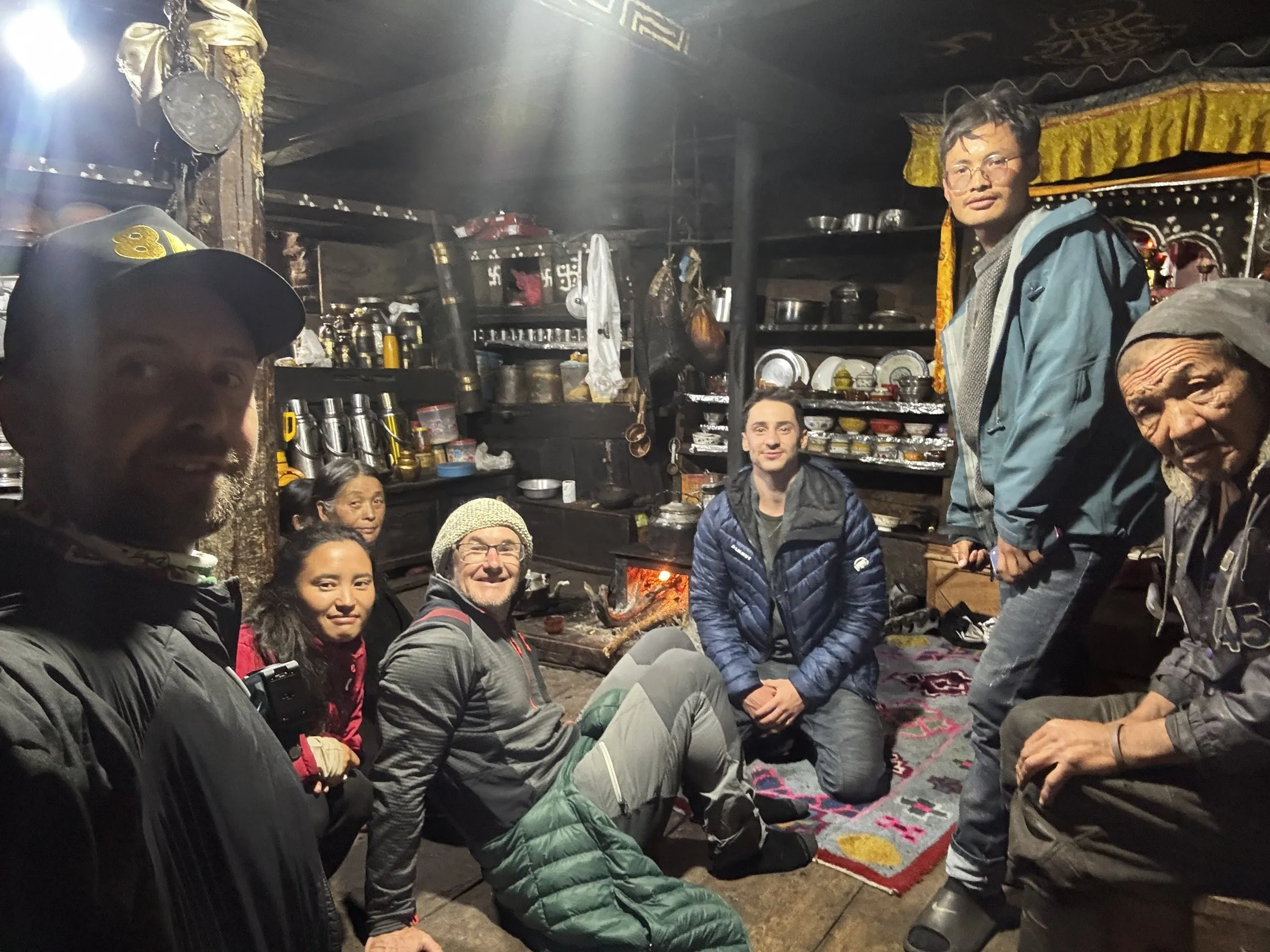
The woman who invited us into her home for butter tea
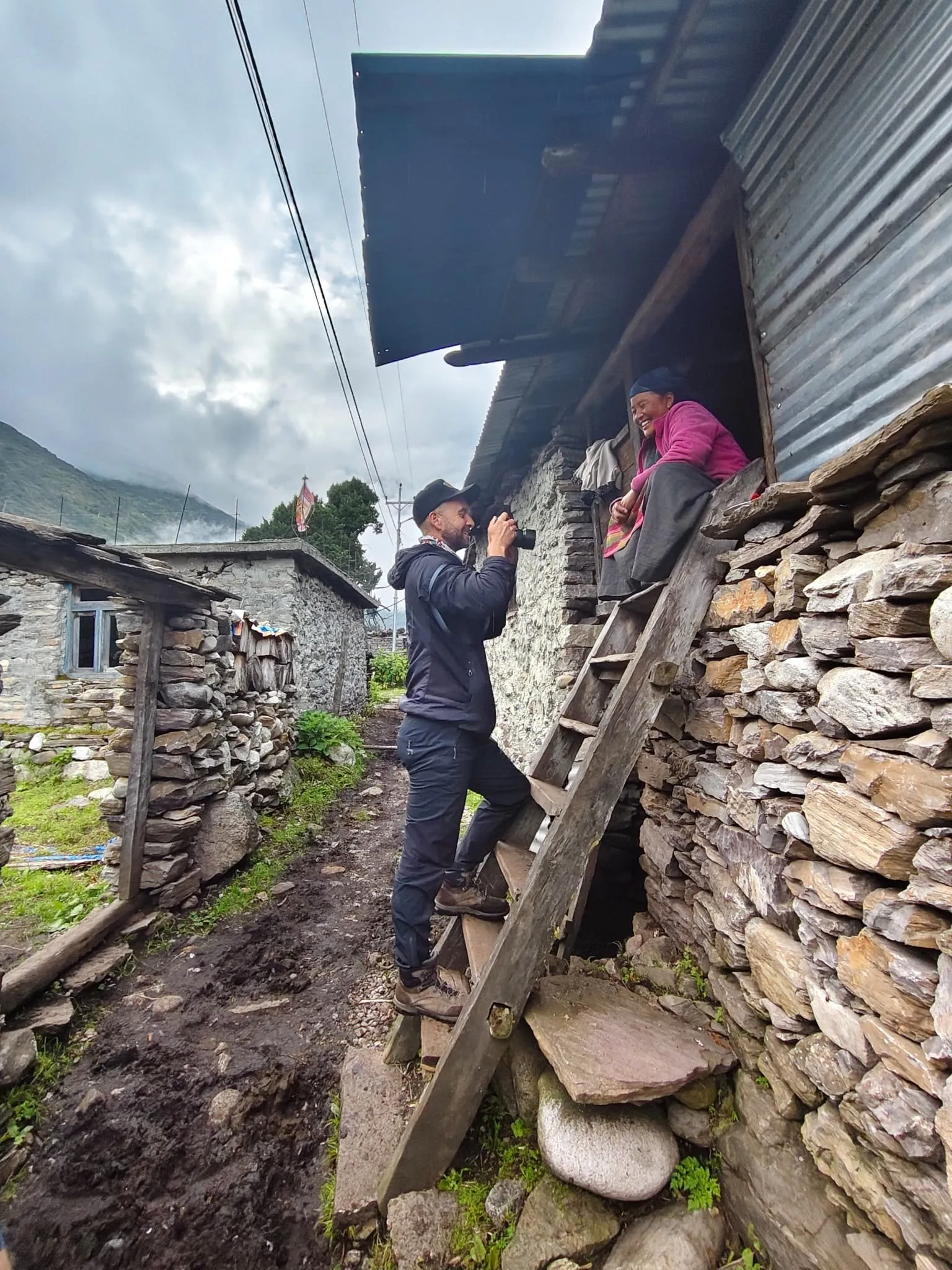
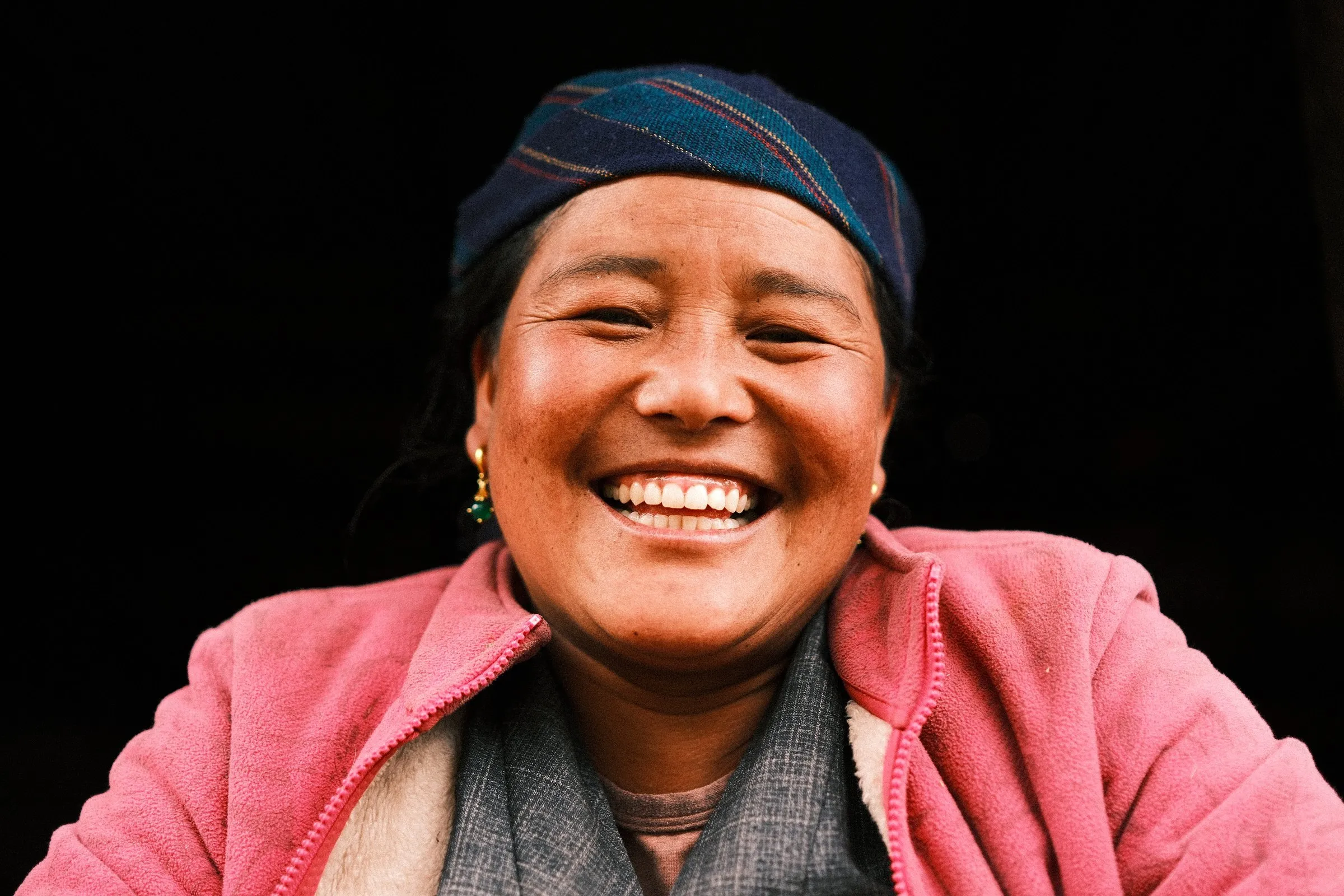
This didi
Day 8, 9 September: Samagaun to Base Camp (3h40m). An earthquake in Lower Mustang woke most of the team in the night. I slept through it.
The walk up to Base Camp was misty, with crows and vultures overhead and the glacier cracking nearby. At Base Camp I found Temba in the Sherpa tent, and recognised several Sherpas I’d stayed with at Everest Base Camp in April.
Life at Manaslu Base Camp (Days 8 to 14)
Manaslu Base Camp spreads along a hillside below the north-east face, with a couple of hundred metres of height between its lowest and highest tents. Ours were at around 4,880m, and for most of our stay the camp sat inside a cloud. The first evening I climbed 150m above camp to acclimatise, then lay in my tent to ease an altitude headache.
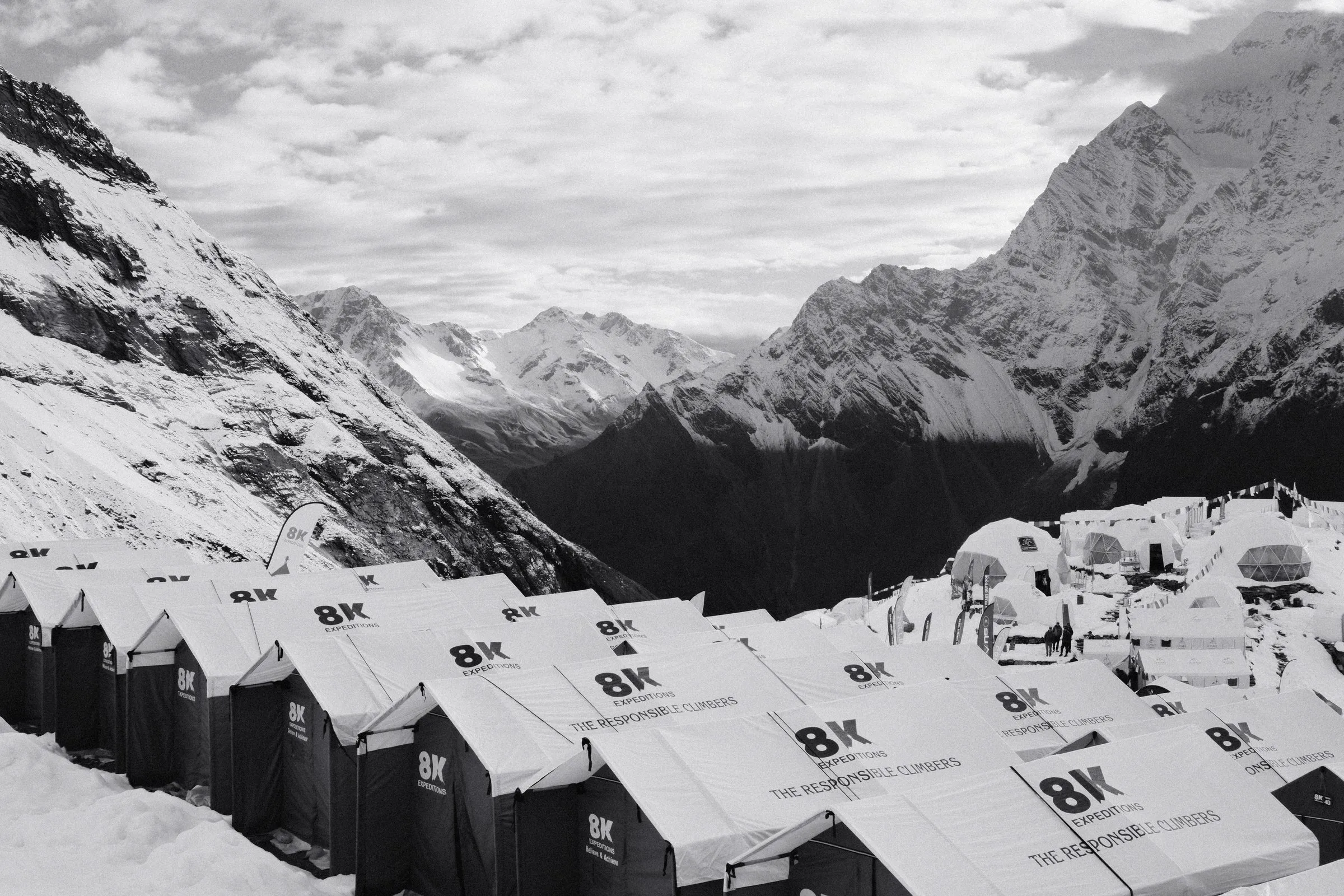
Manaslu Base Camp
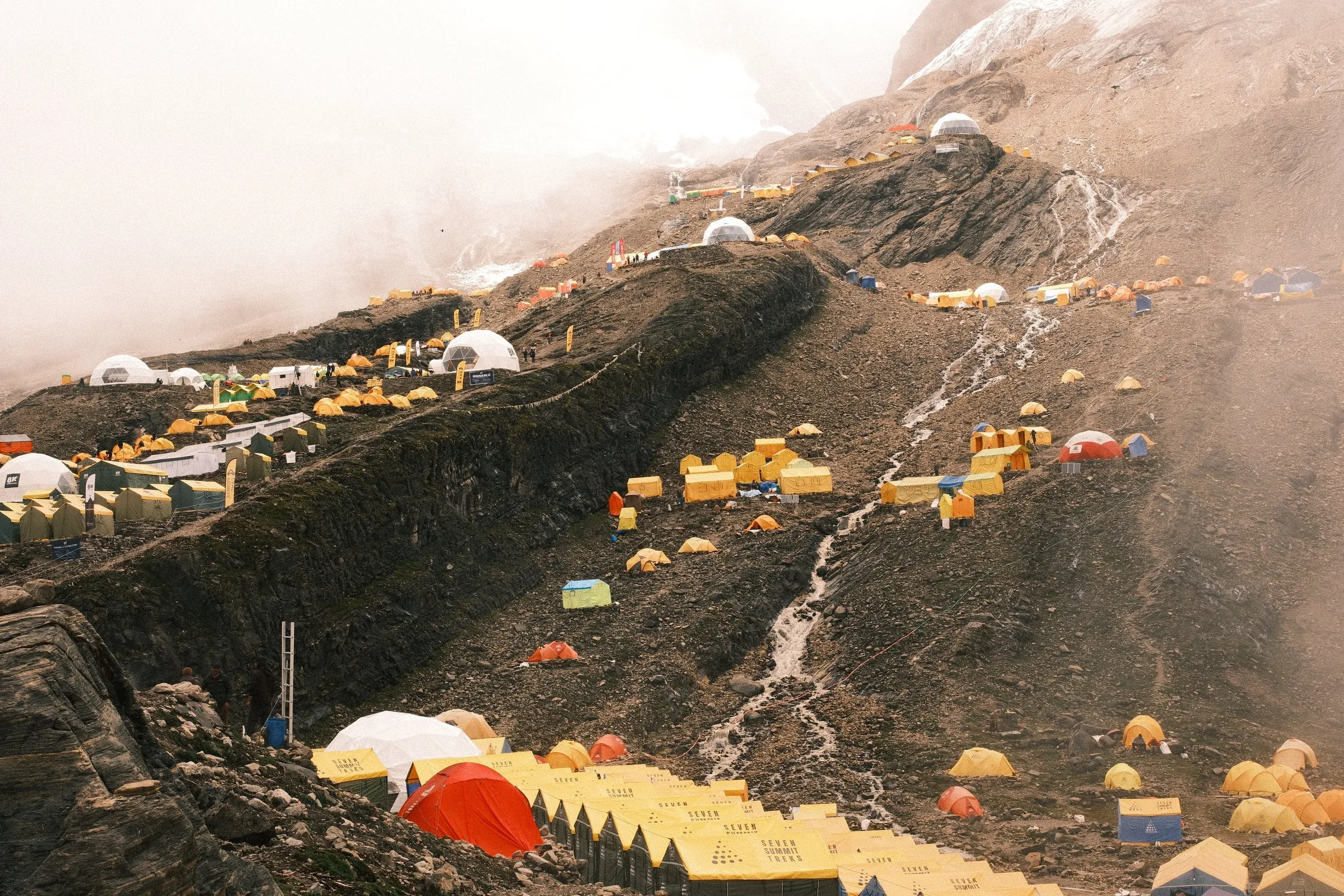
Base Camp spread along the hillside
Camp itself was more comfortable than I expected. There were bubble tents with chandeliers, a heated dining tent, a decent menu and a café with a barista. I had a very good pizza at 5,000 metres. On one afternoon the cloud parted for about 20 minutes and we saw Manaslu’s East Pinnacle clearly, with the main summit hidden behind it.
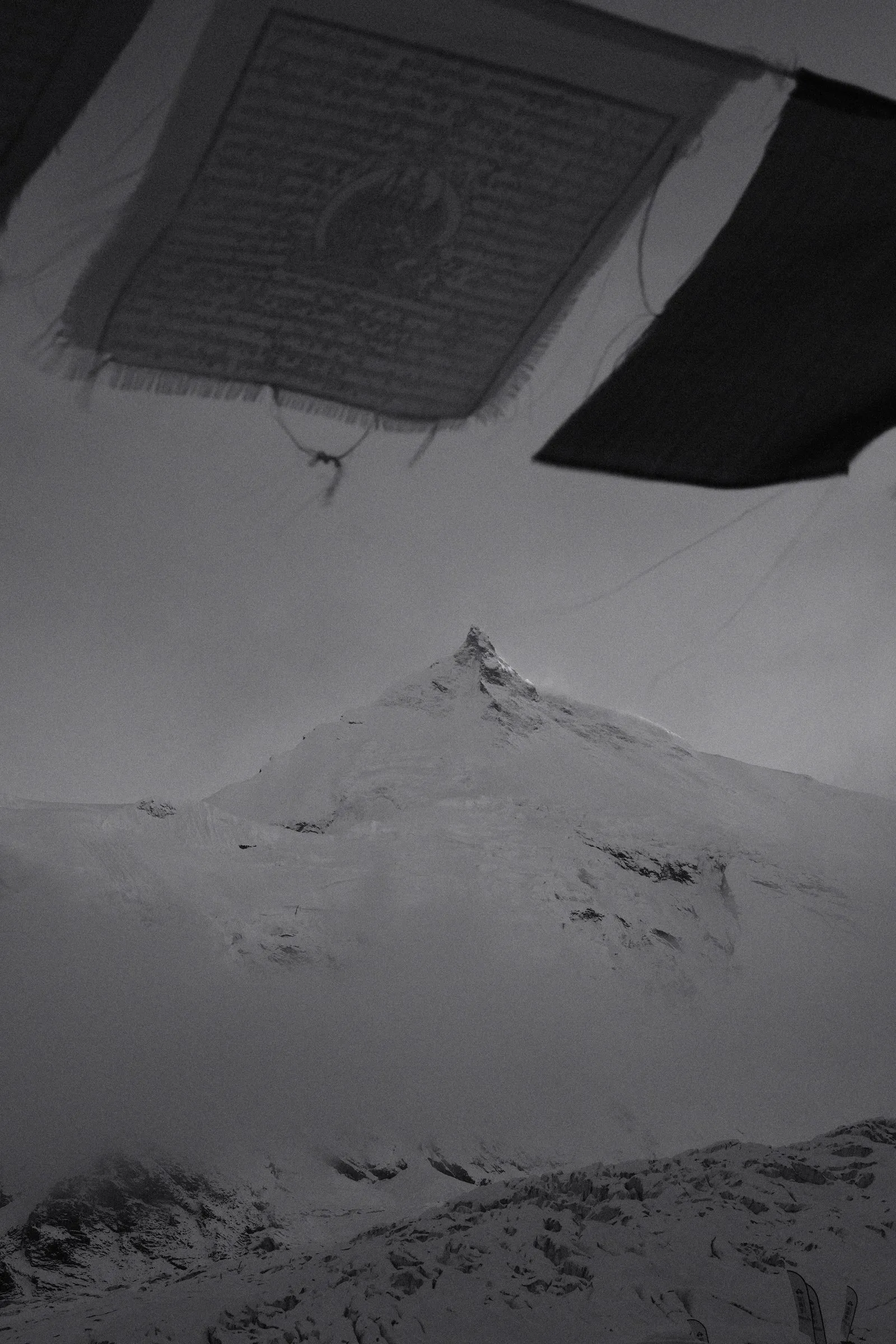
Manaslu's East Pinnacle
Glacier training
On 11 September we spent a couple of hours on the Manaslu Glacier refreshing ascending, traversing and descending on fixed ropes. I remembered nearly all of it from Island Peak and Lobuche East. More teams were arriving every day.
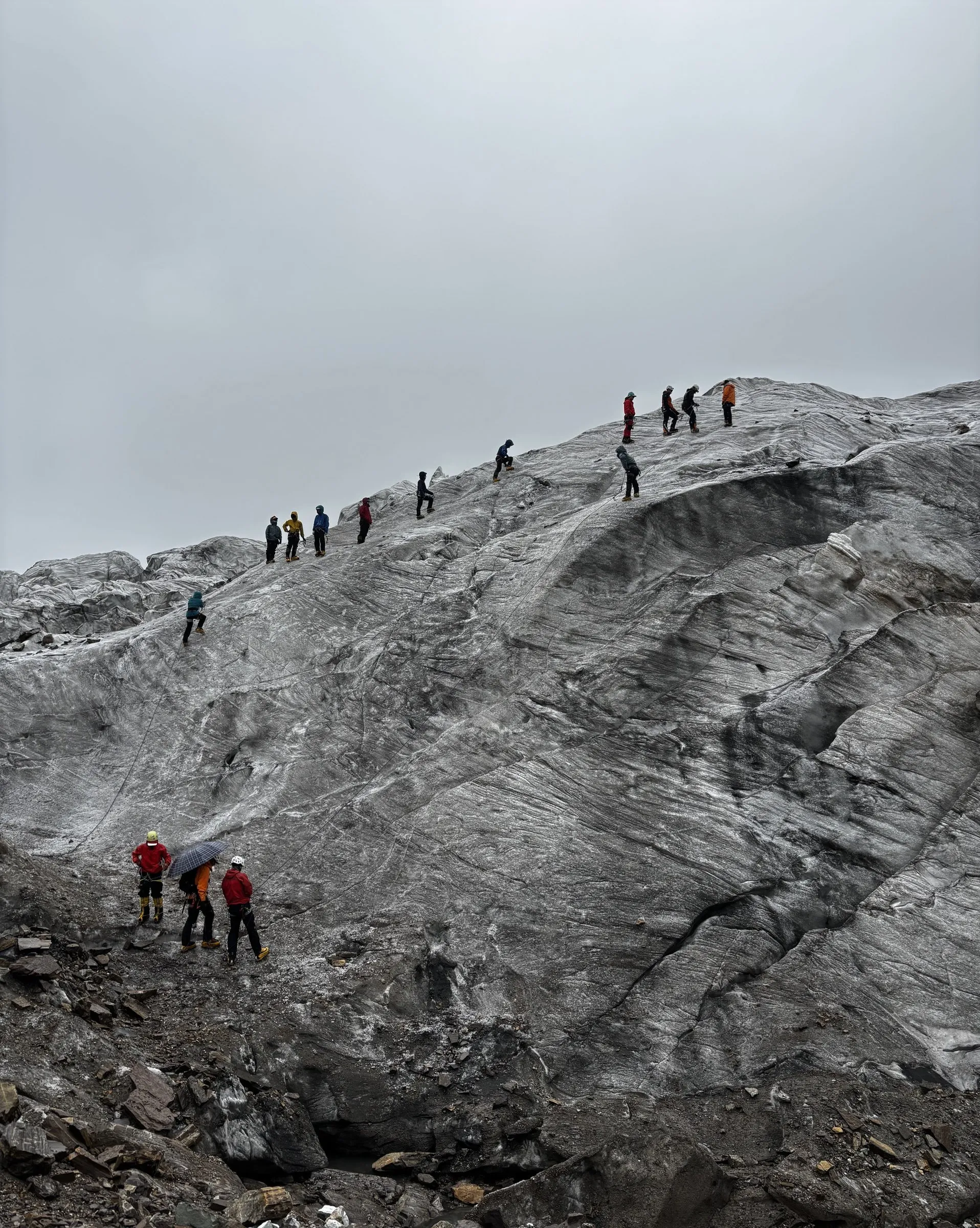
Glacier training above Base Camp
The puja
On 13 September, after coming down from our first night at Camp 1, we joined the puja. A monk chanted for a couple of hours in front of all the climbers and the Sherpa team, with offerings, blessings and rituals that went on for two to three hours. A puja asks the mountain gods for permission to climb, forgiveness for the damage climbing causes, and safety for everyone involved (Alan Arnette). Sherpas won’t climb without one.
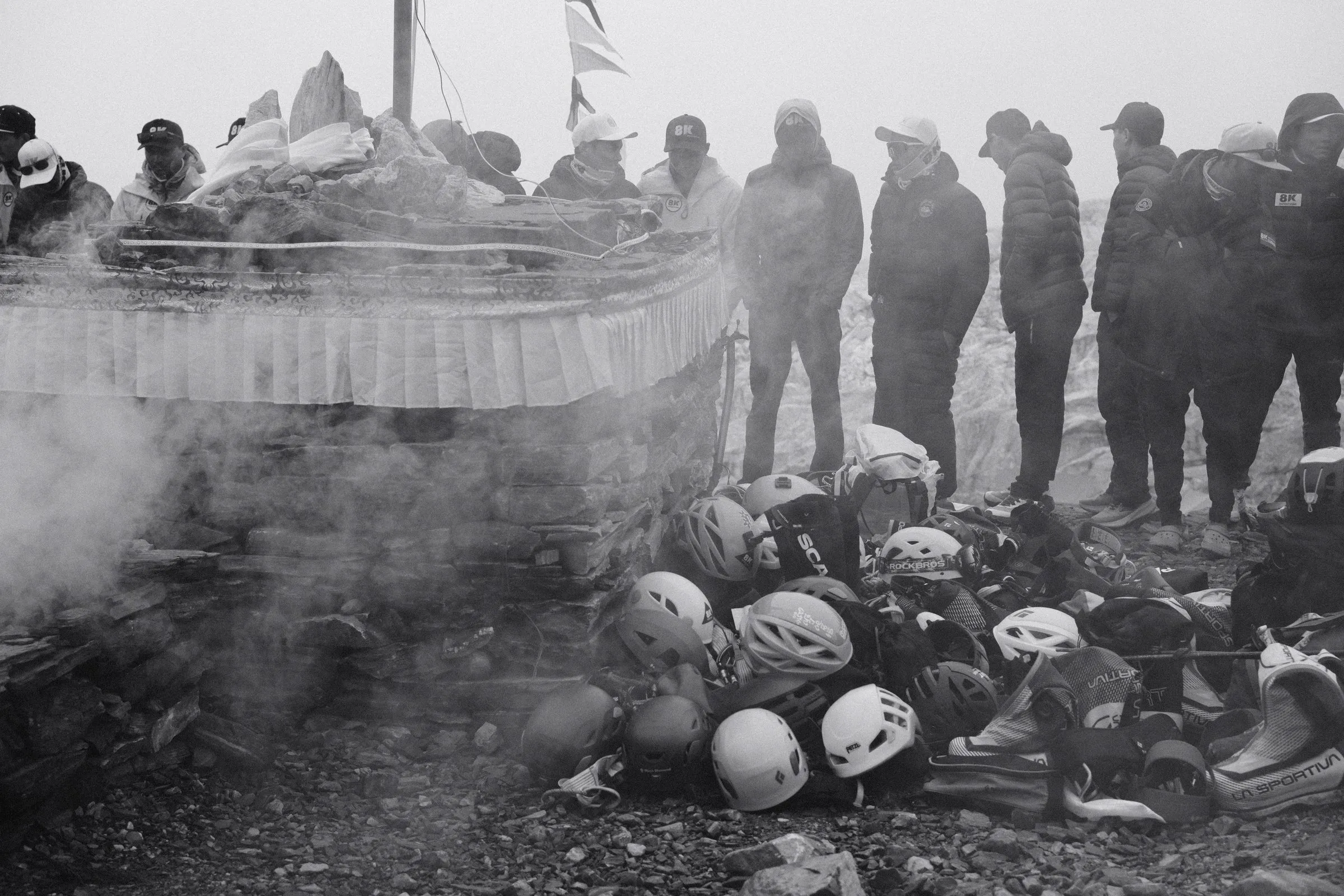
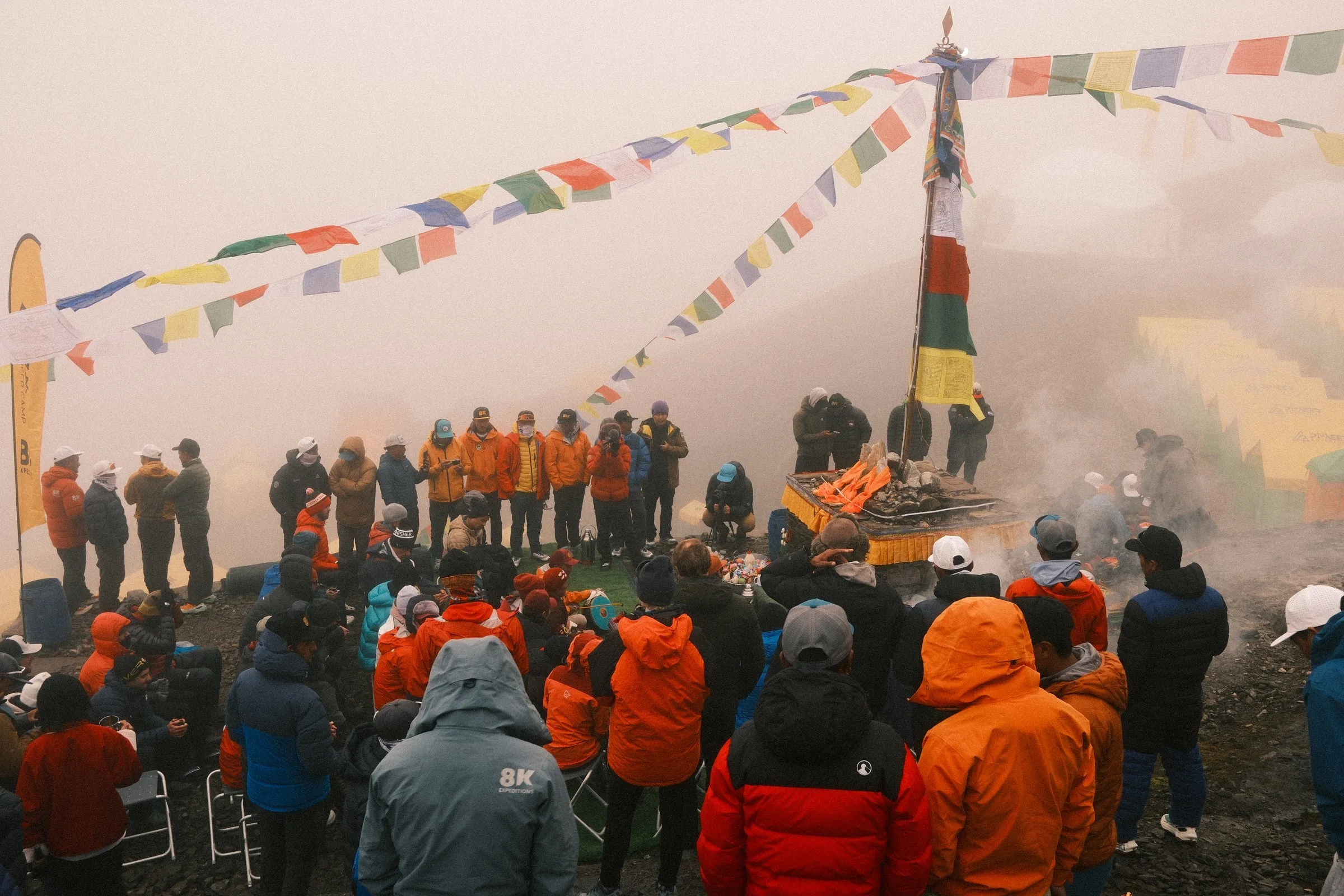
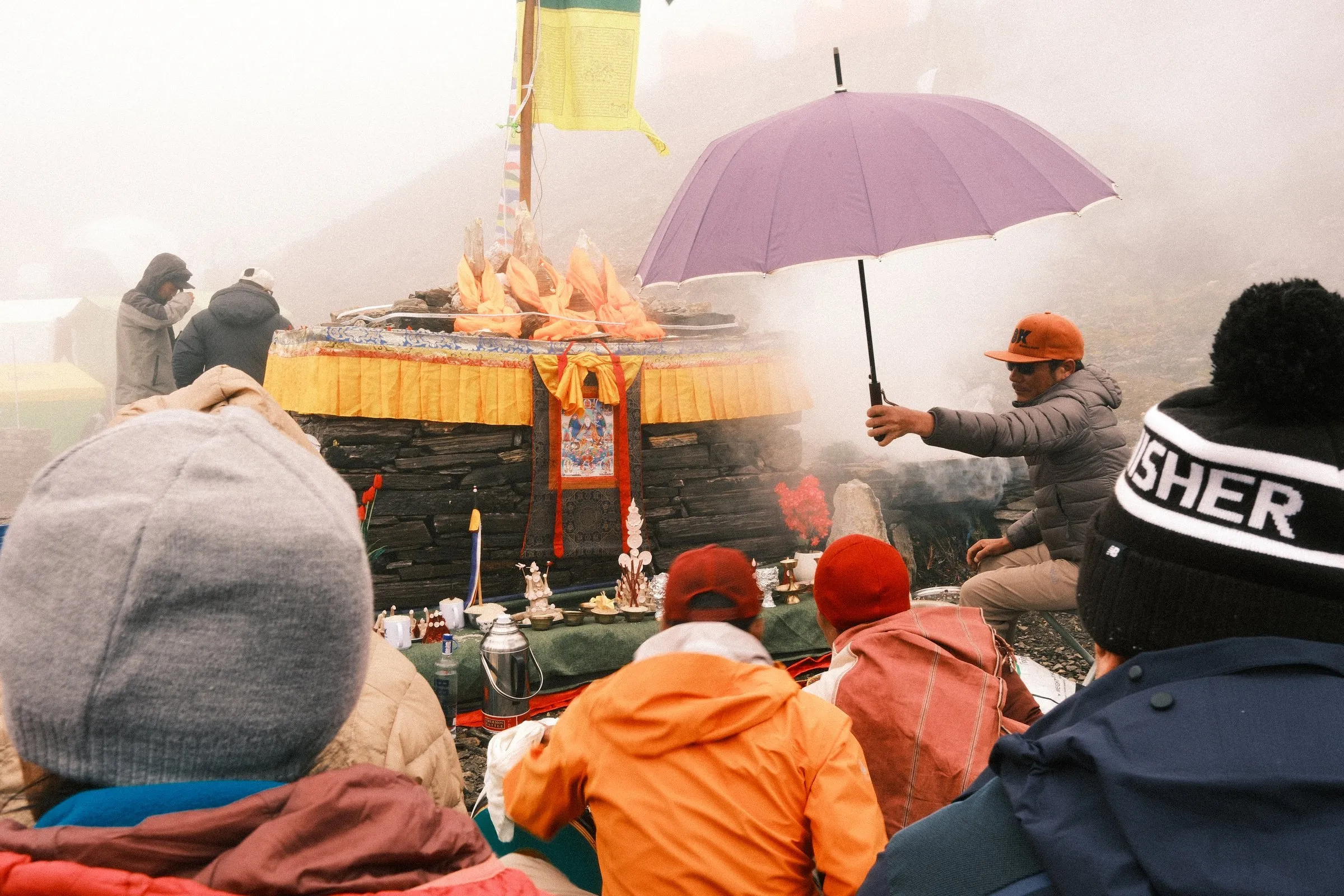
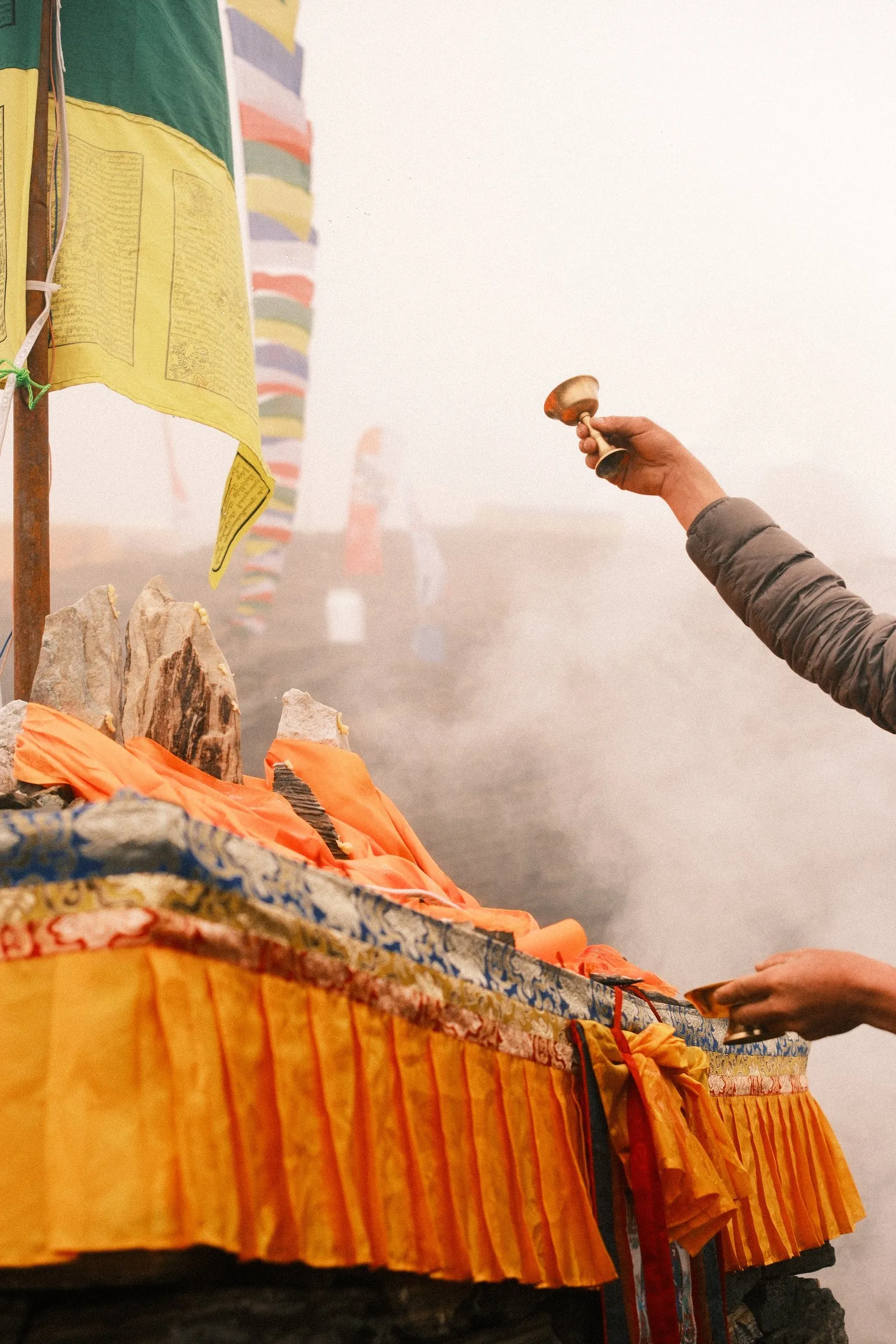
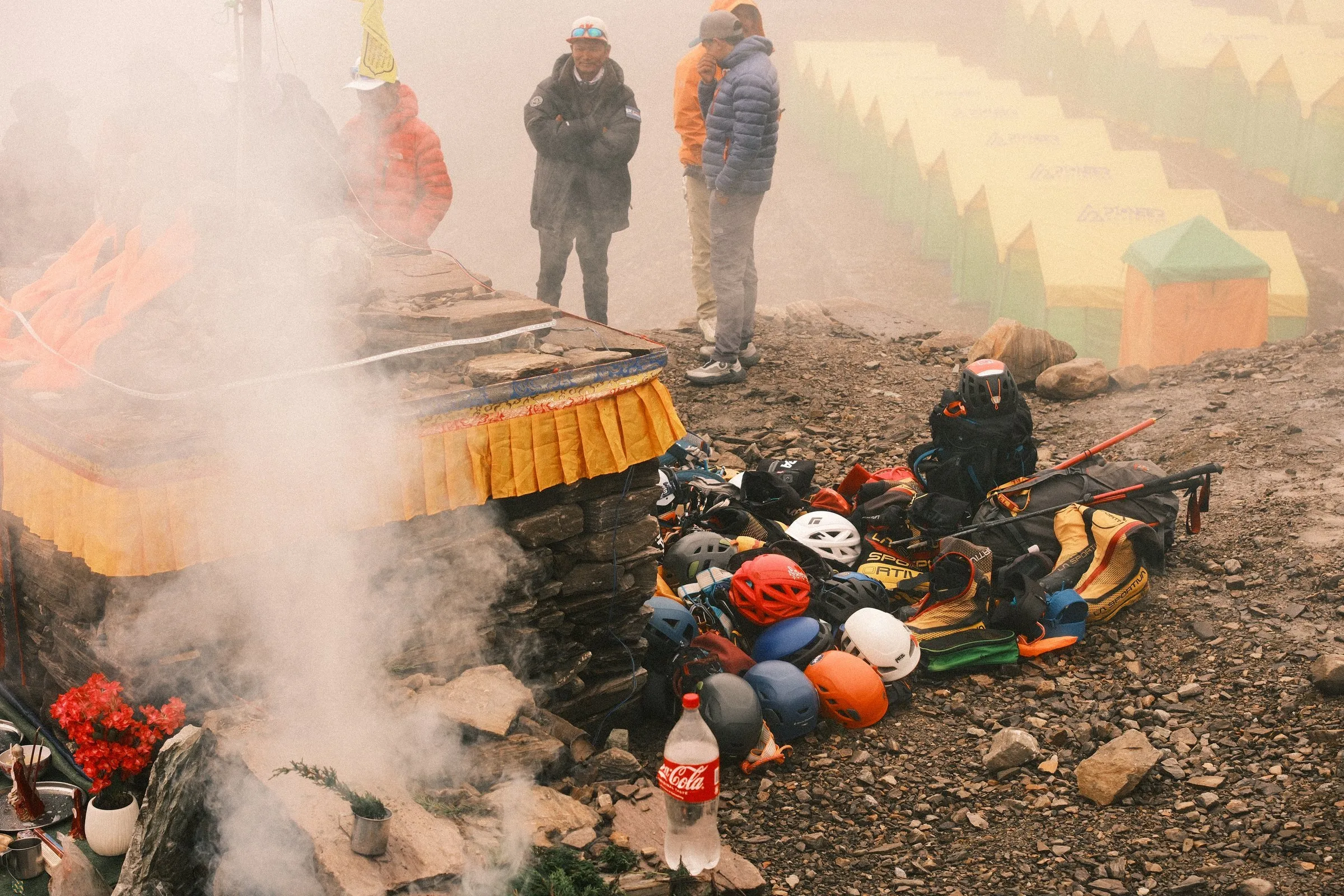
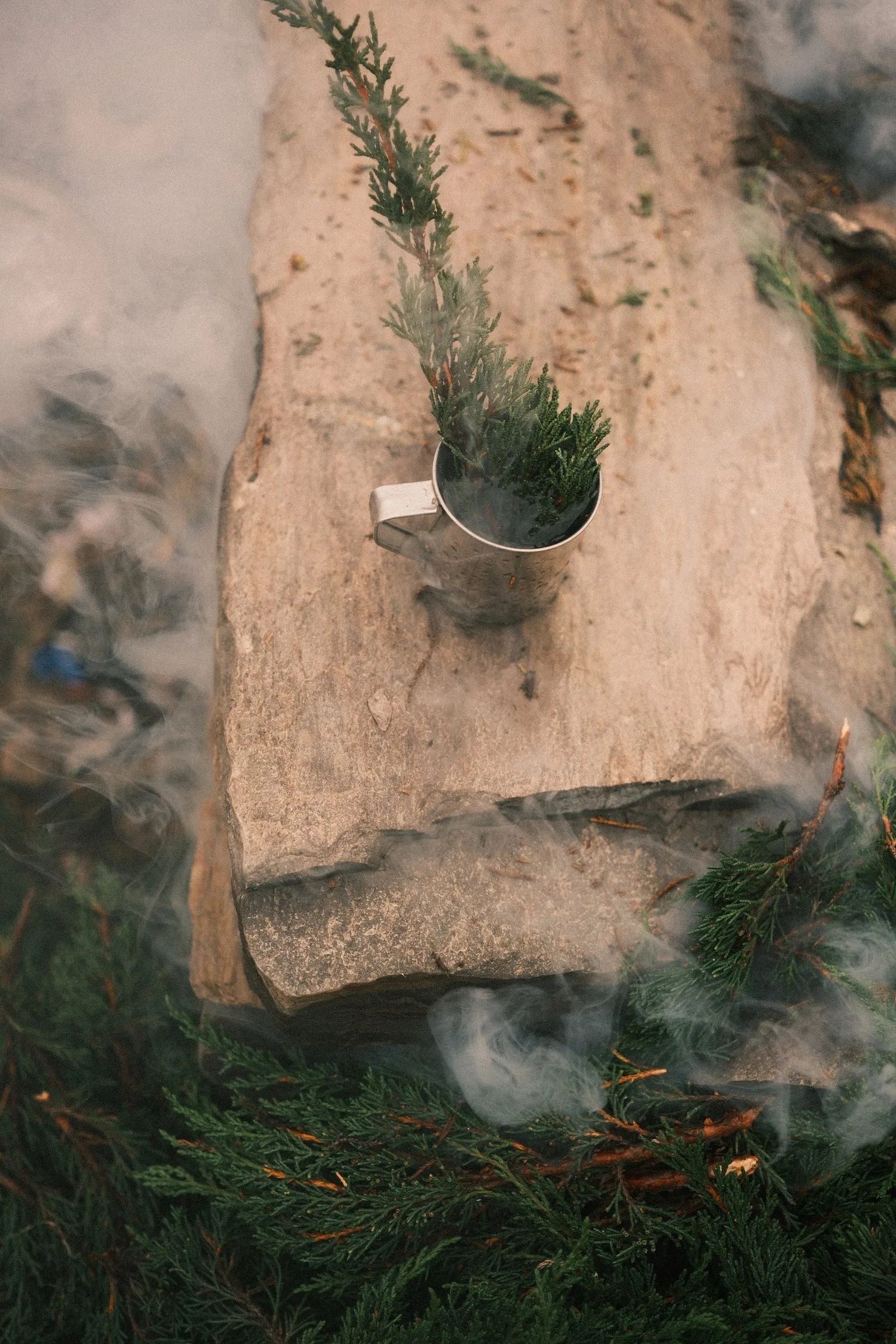
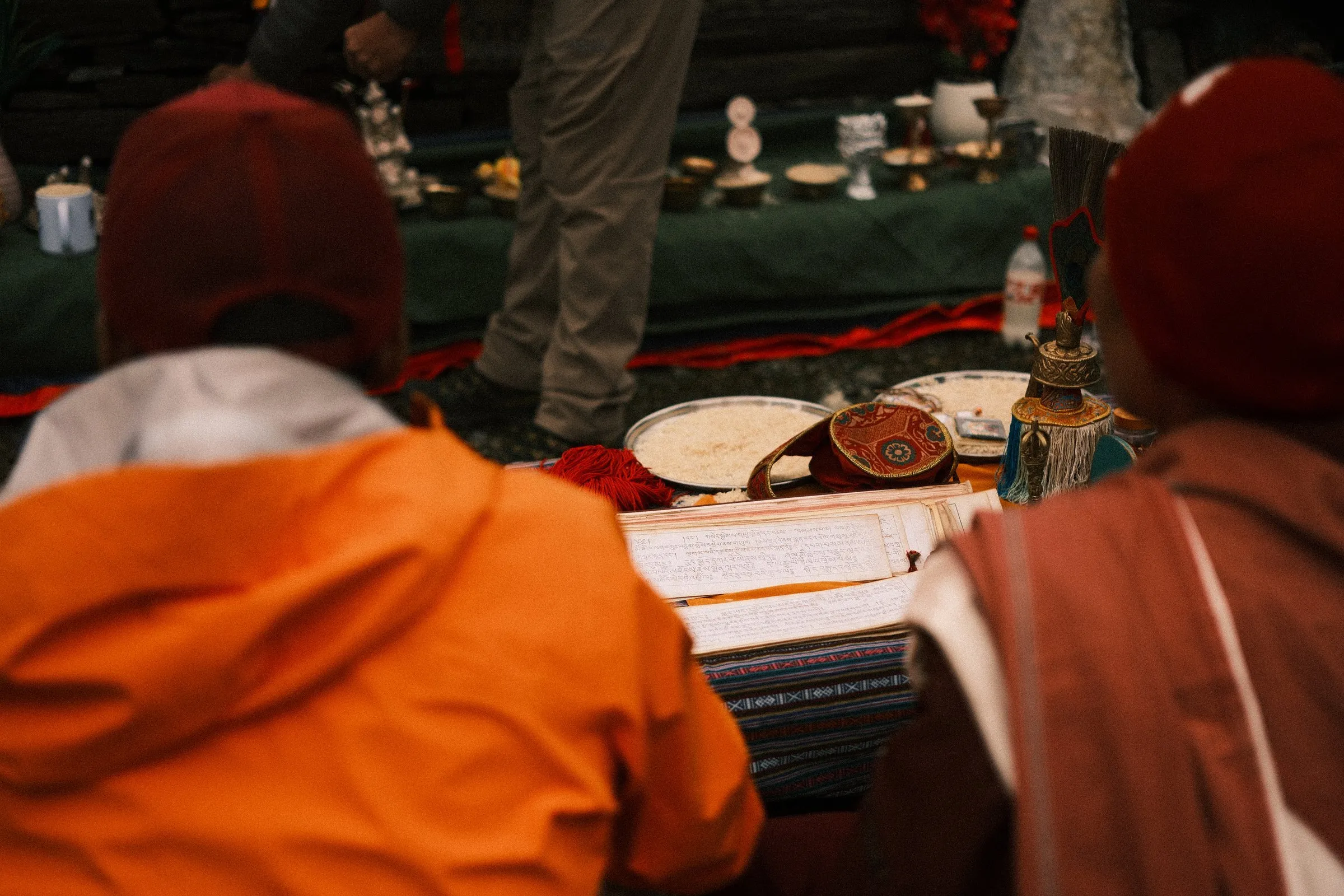
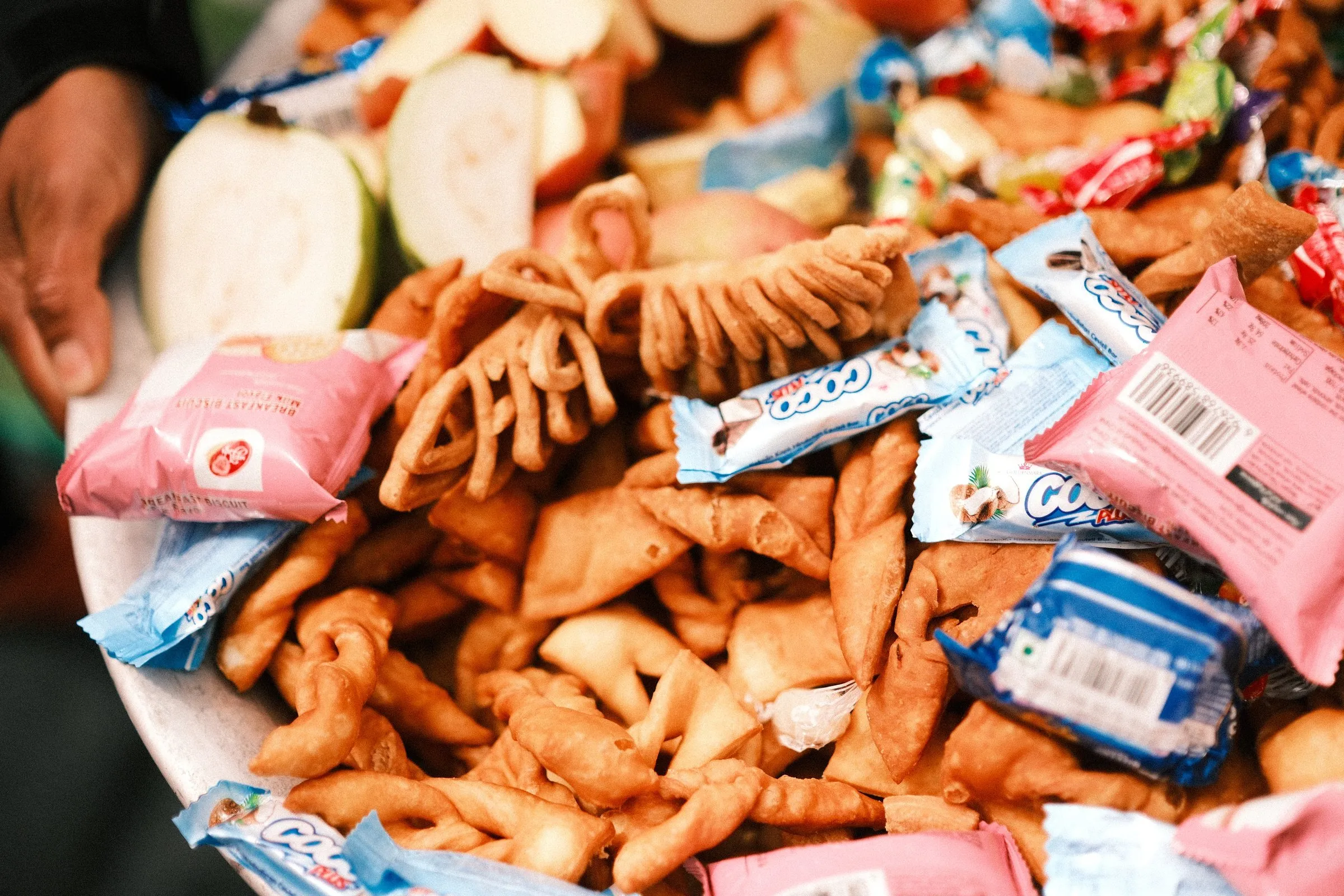
The puja at Base Camp
I photographed the ceremony, then put the camera away for a while to be part of it.
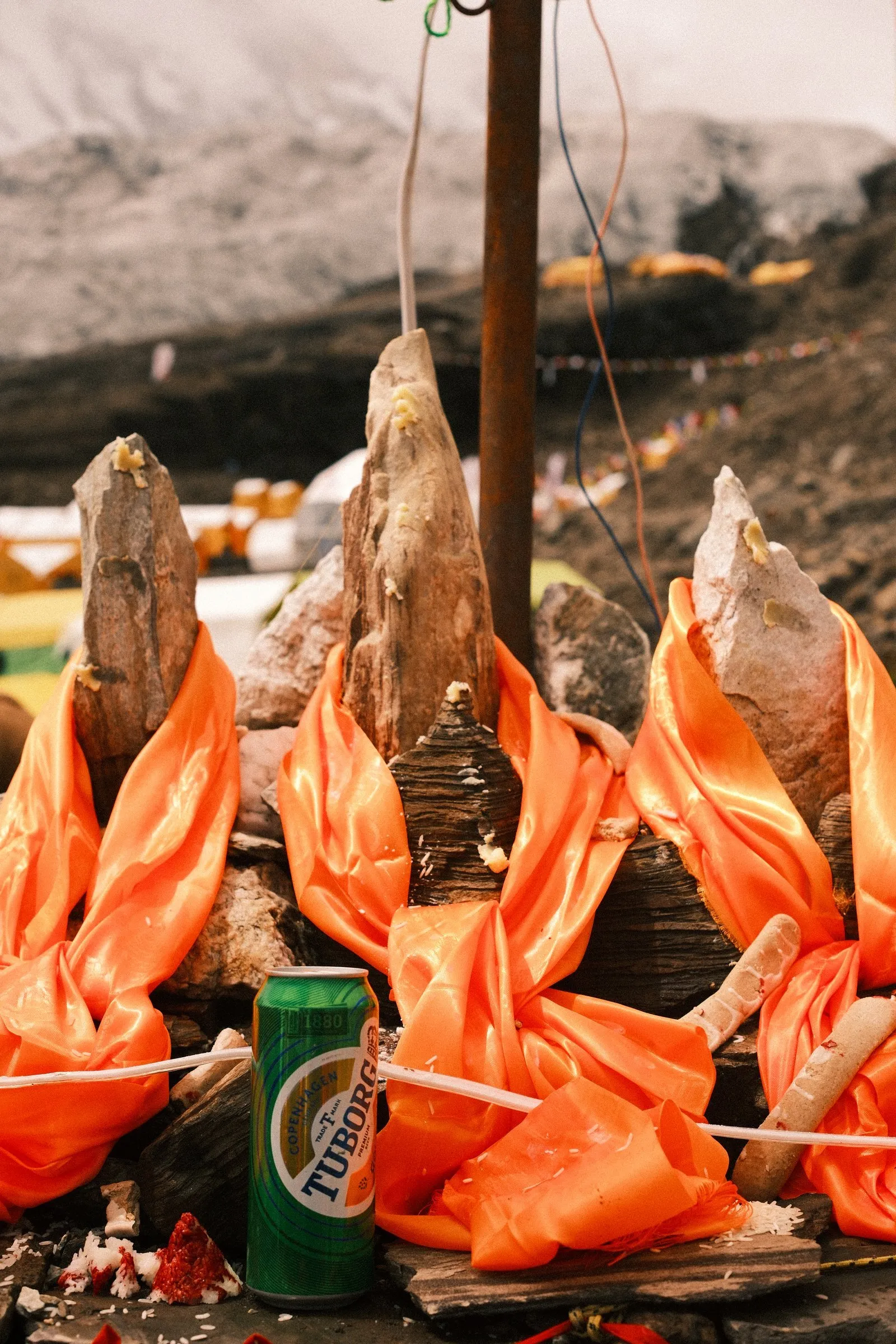
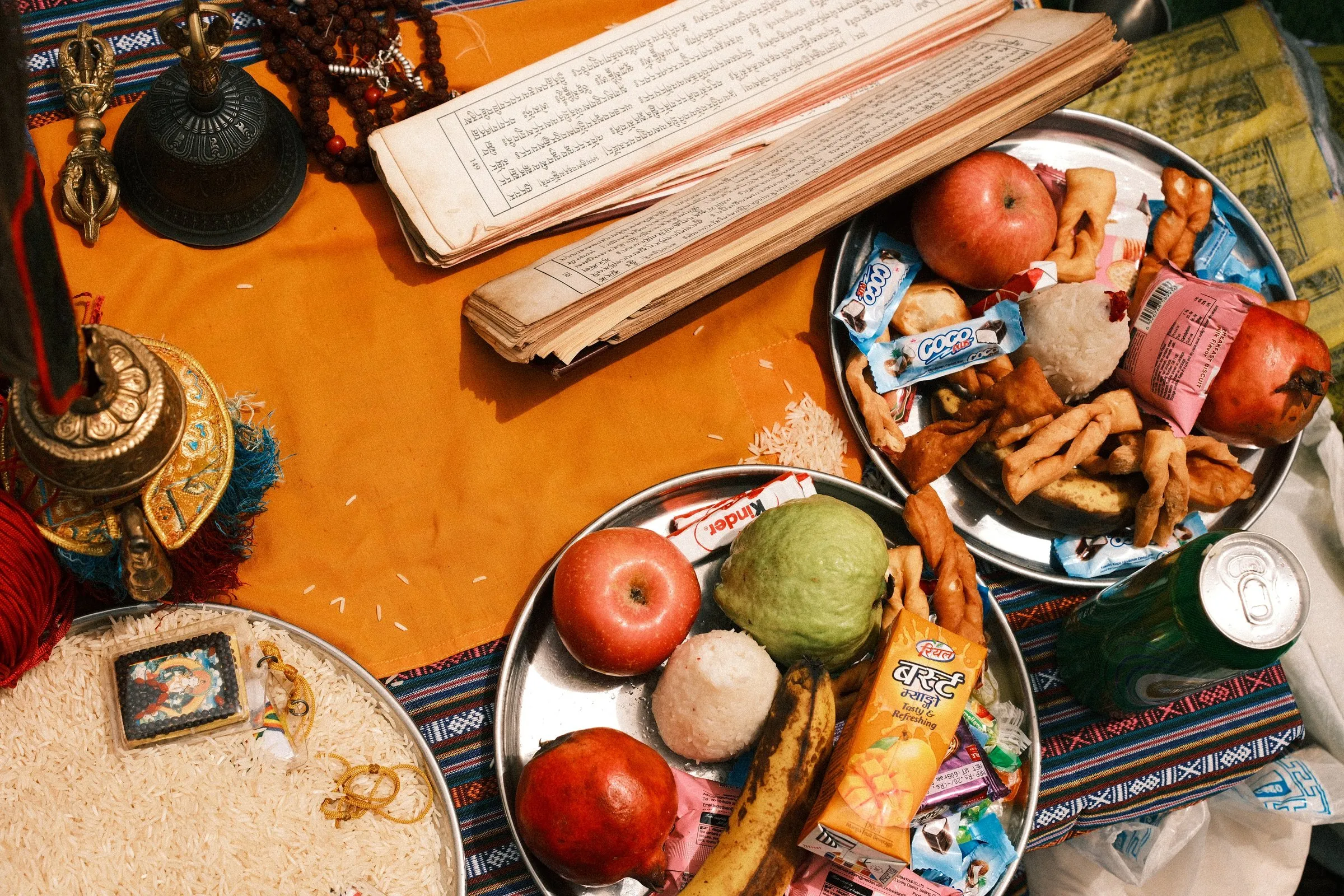
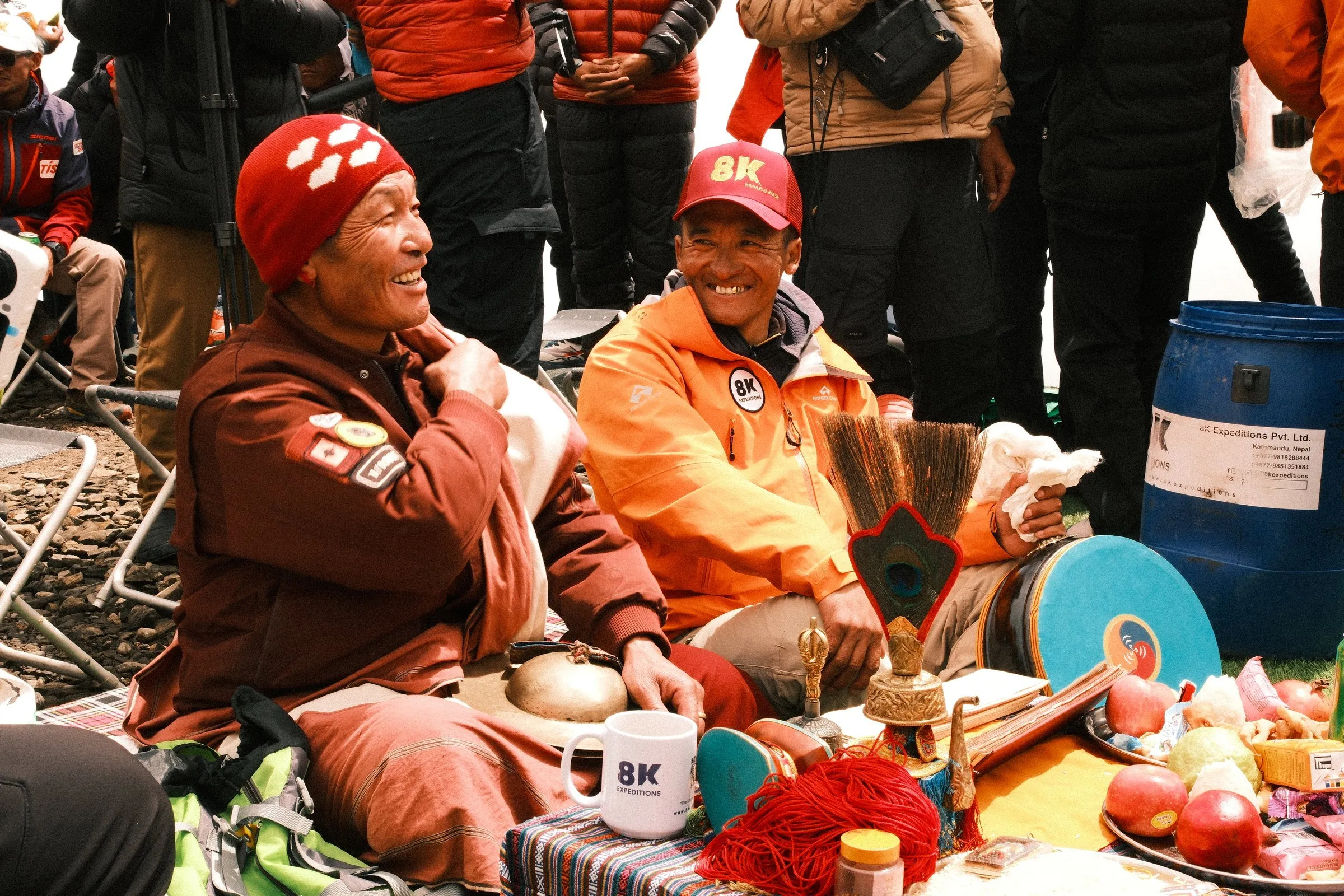
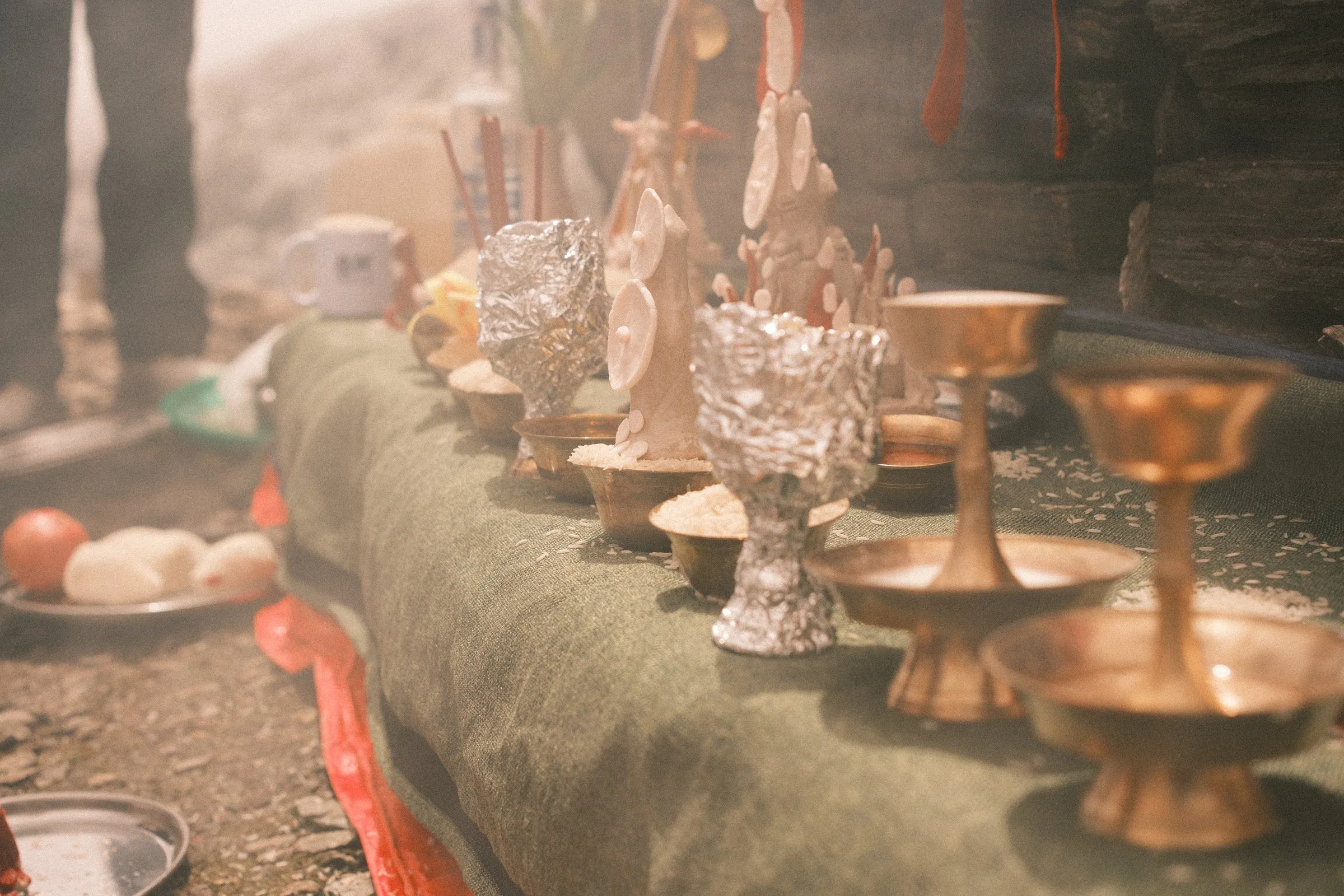
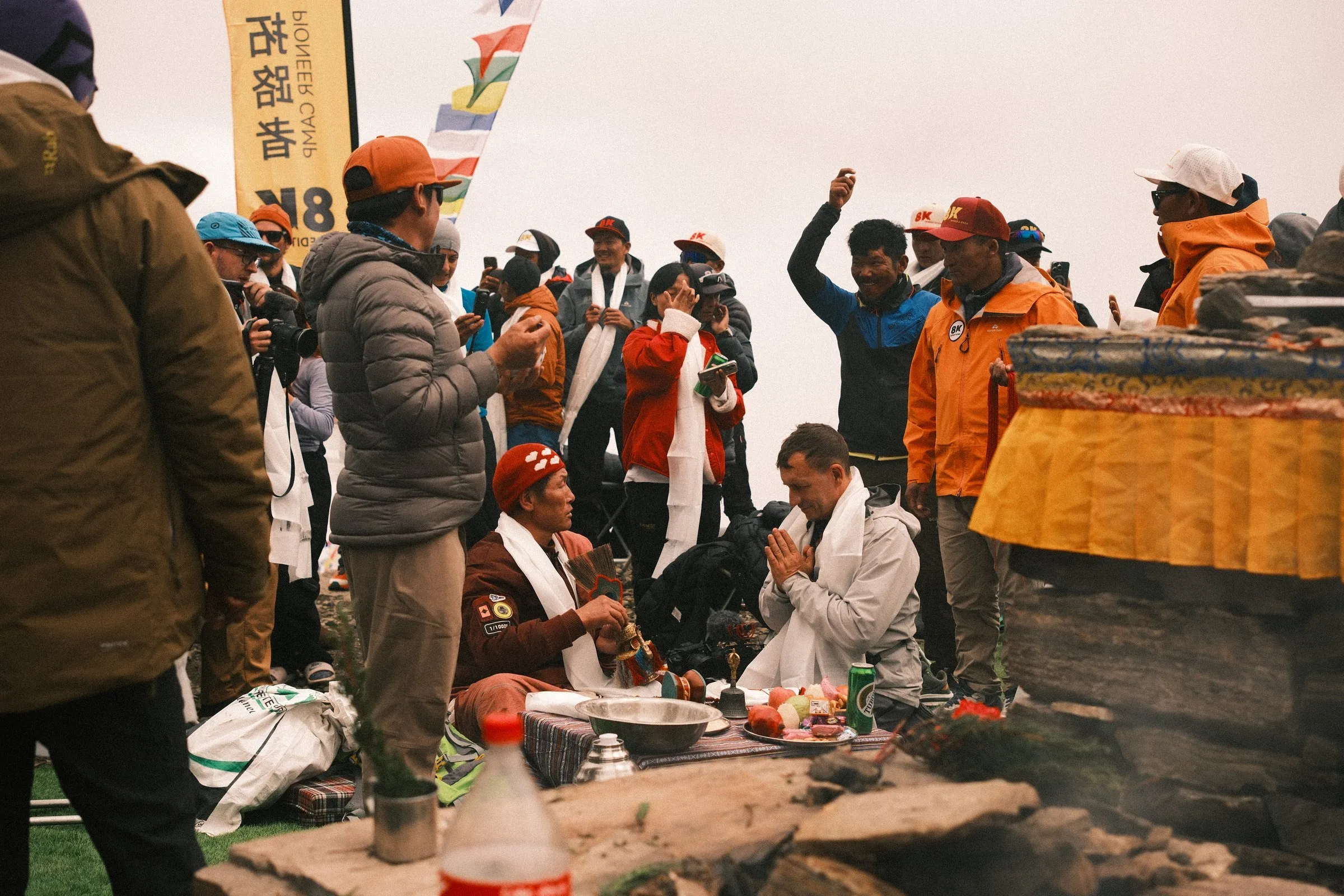
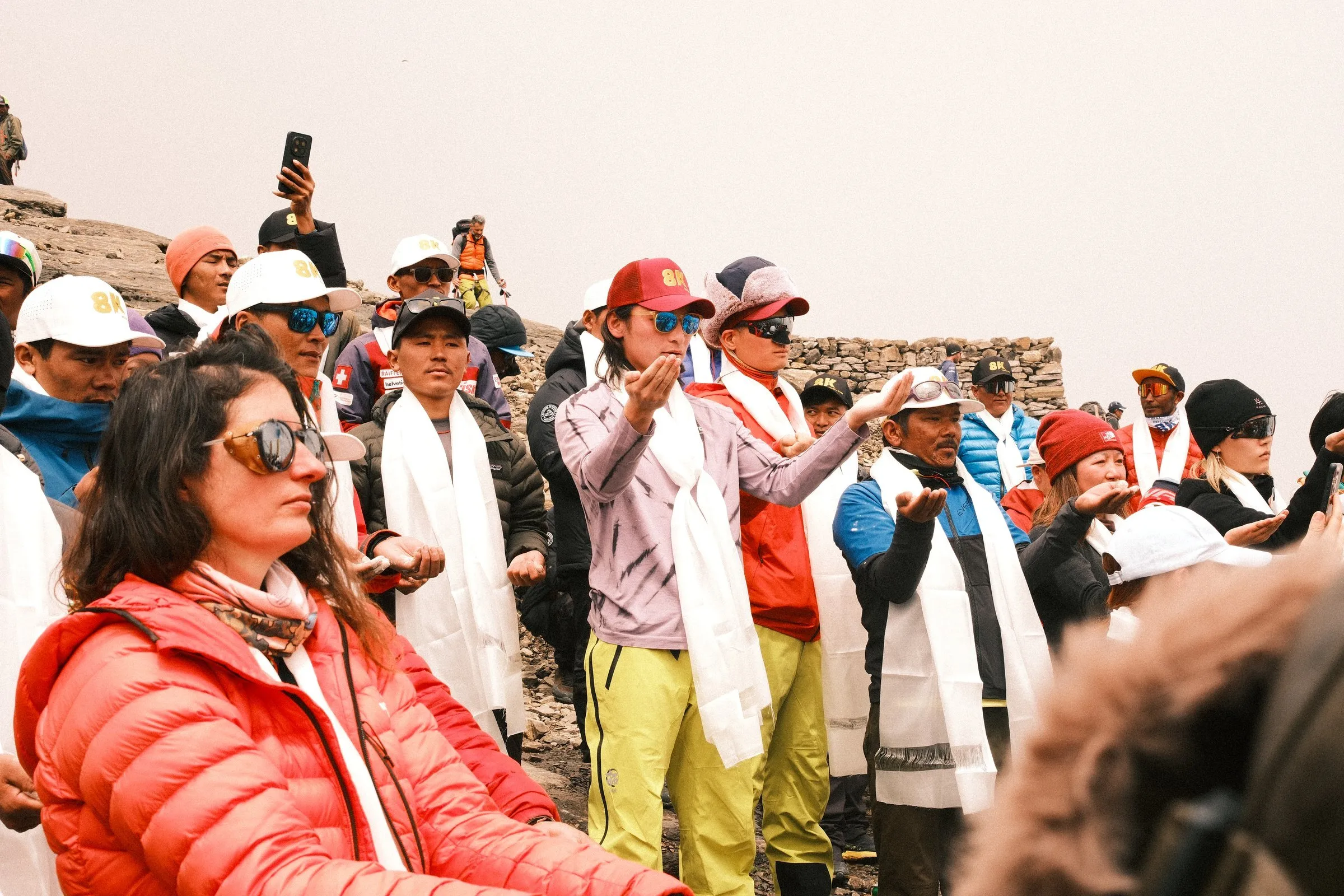
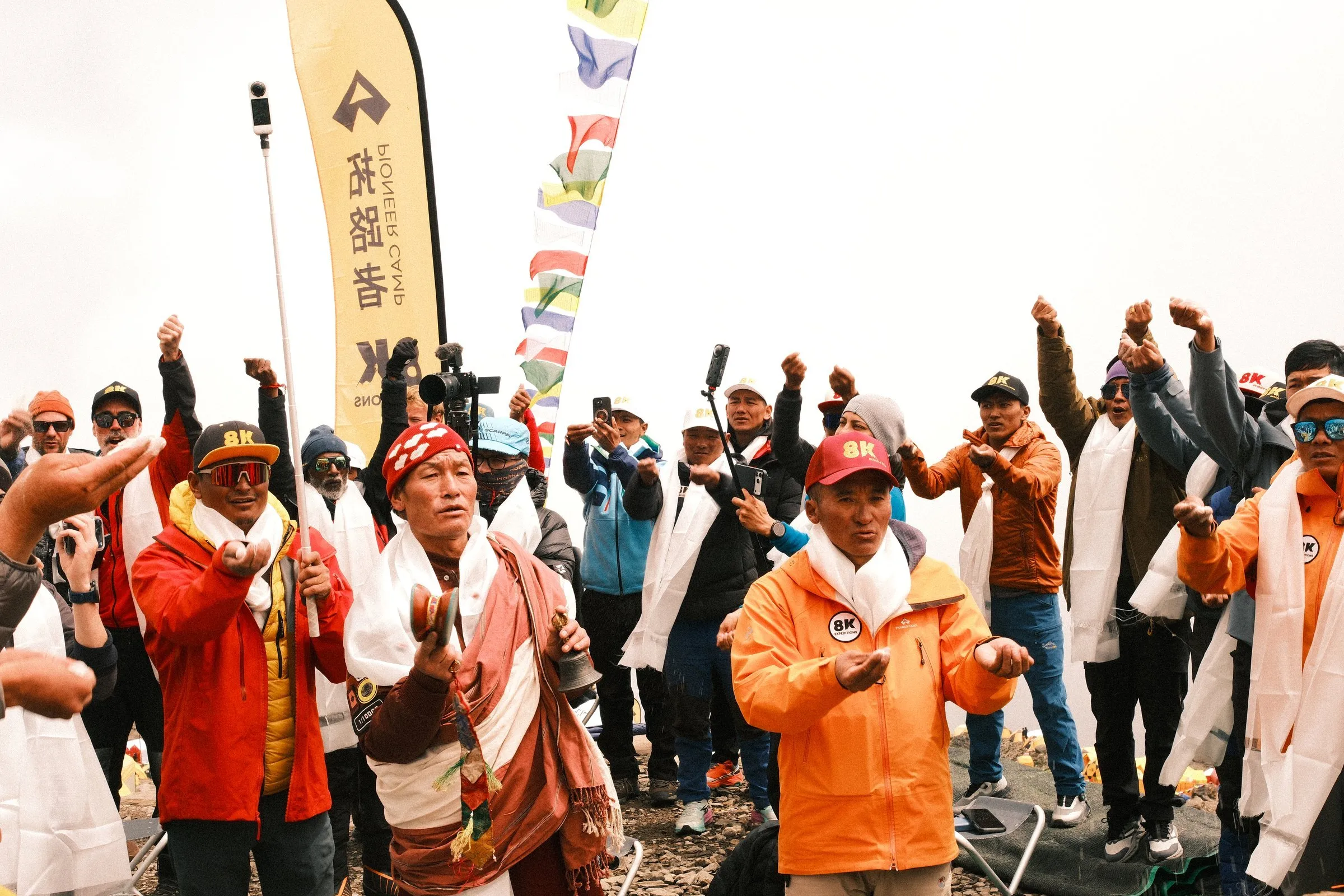
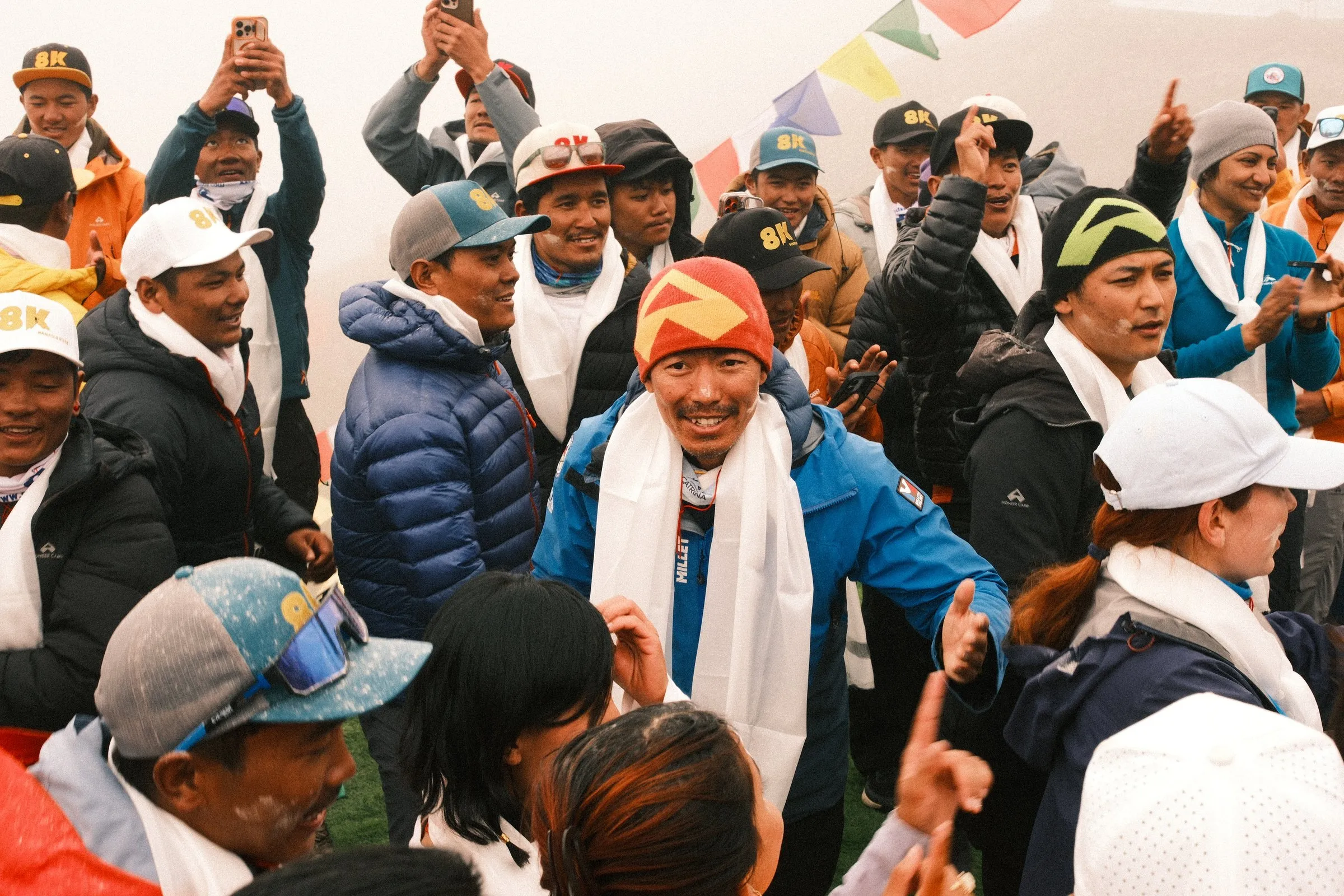
Offerings, blessings and khata scarves at the puja
Oxygen training
On 14 September we learned to use the cylinder, mask and regulator. The sequence we were taught:
- Rest the cylinder on your knee.
- Set the regulator to a flow rate of 4 (we used Summit regulators).
- Screw the bottle onto the regulator until it’s tight.
- Turn the flow rate back to 0.
- Connect the mask hose to the regulator with its bayonet fitting.
- Turn the flow up to 0.5, then 1.0, and check that oxygen is reaching the mask.
I was comfortable with most of it. The part I needed to practise was working out how much time is left in a cylinder.
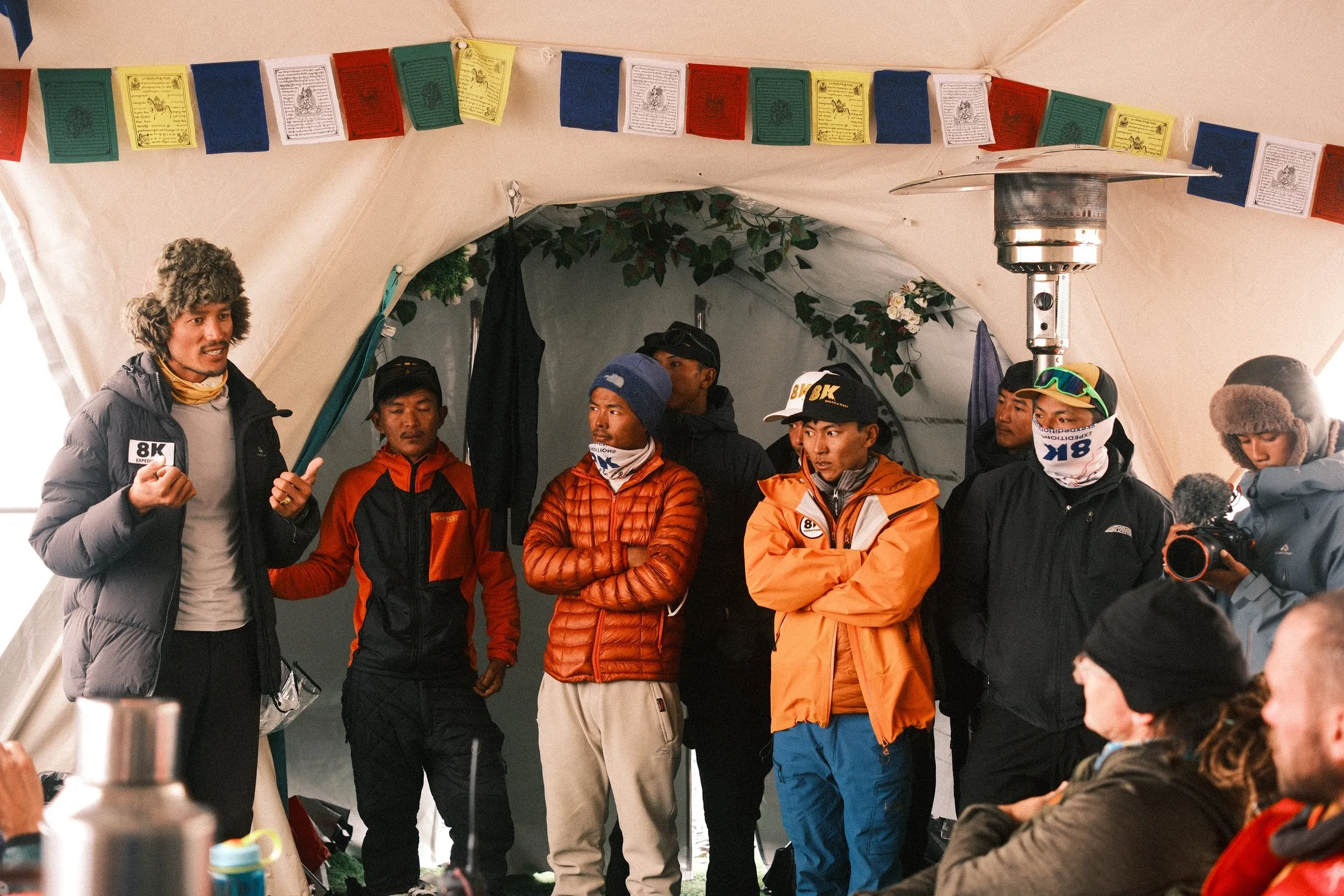
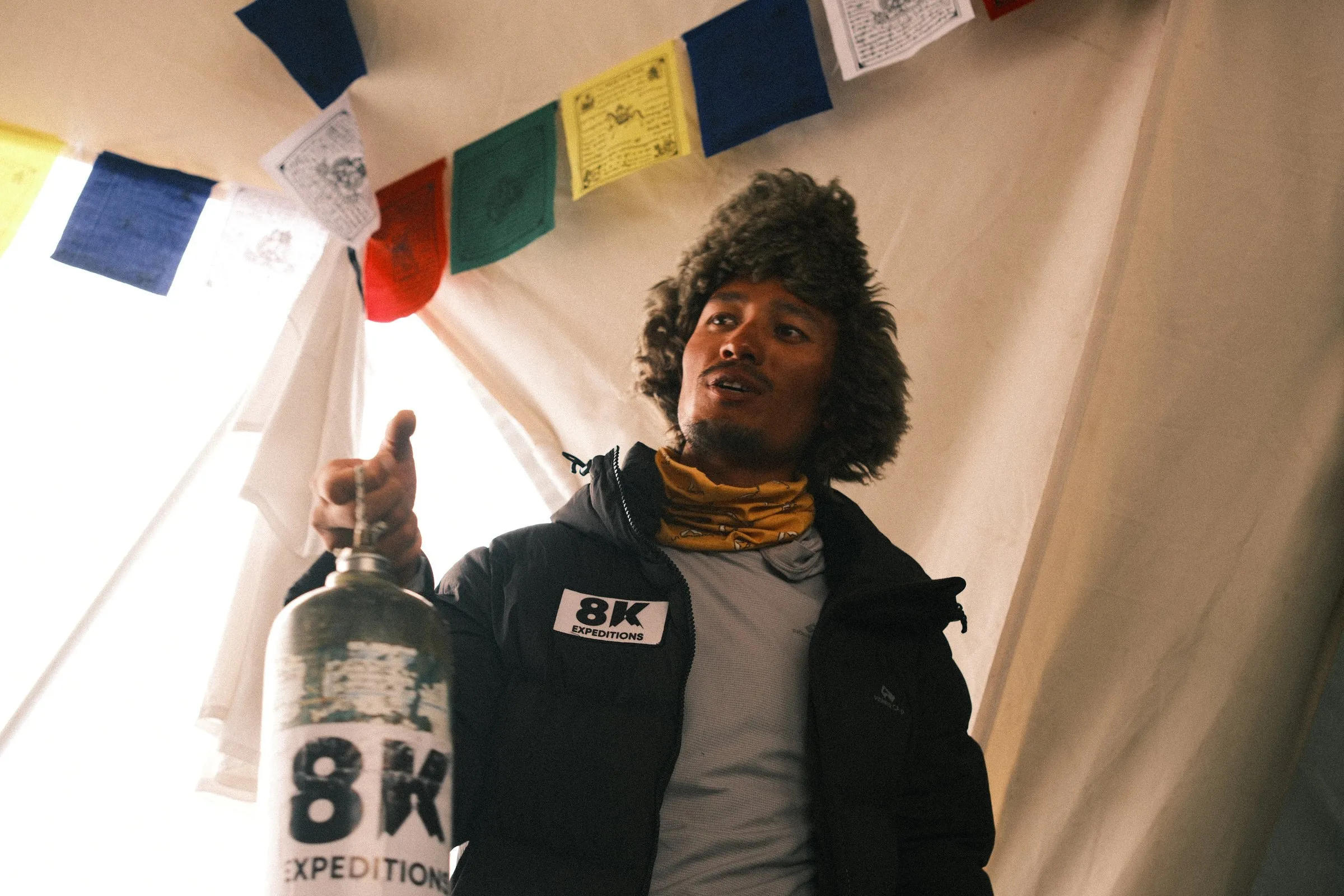
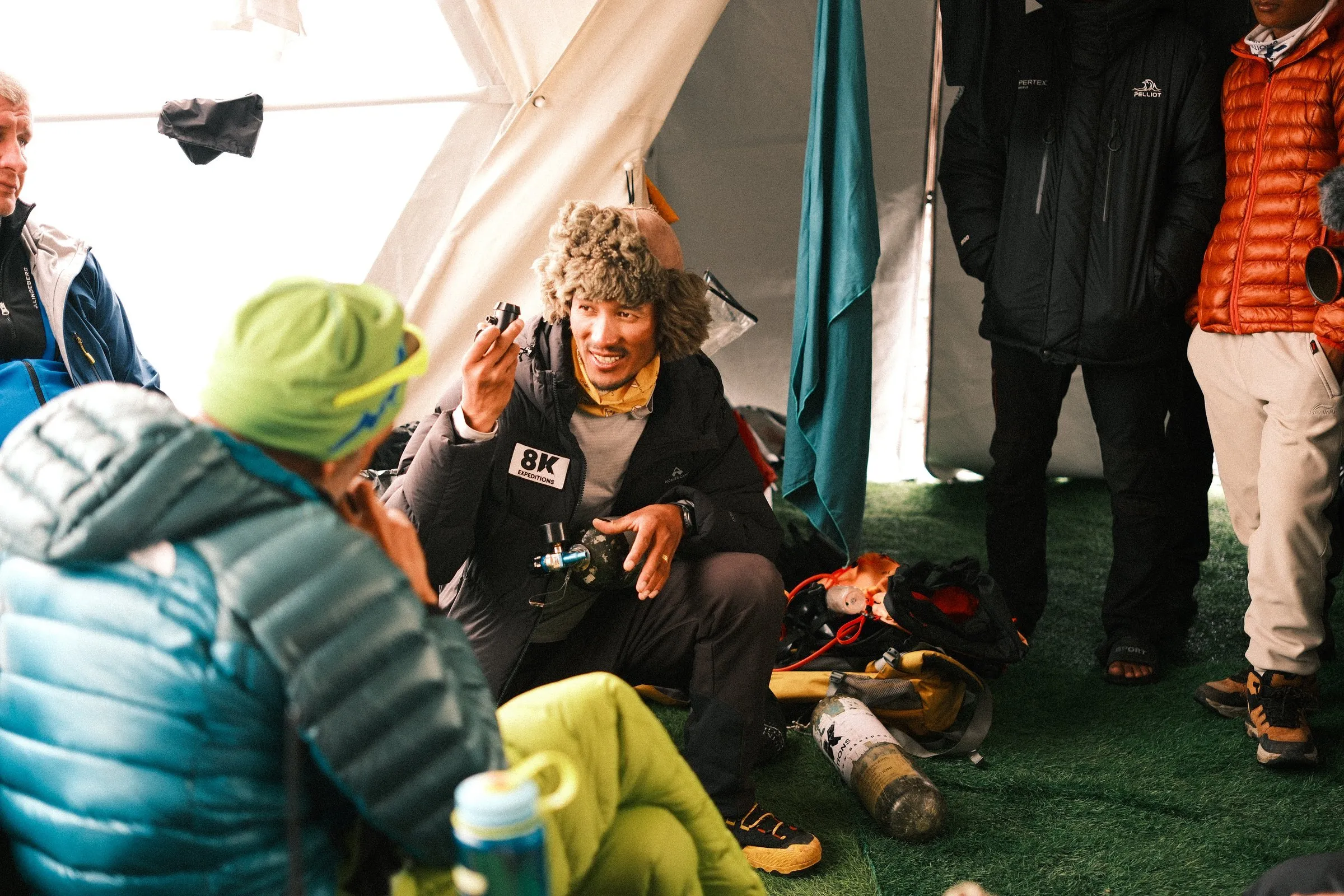
Oxygen training at Base Camp
The soundtrack of Base Camp
On the rest days I started noticing sounds more than sights:
- rain tapping on the tent roof
- a drone buzzing overhead, filming camp from above
- a sleeping bag zip as someone settles in for a nap
- laughter from the dining tent
- Tibetan dance music from a Sherpa tent below
- the ground rumbling as an avalanche tears down the next valley
- a helicopter roaring in from Samagaun
That morning we’d woken to avalanches every 10 to 20 minutes. Warm weather on top of fresh snow made perfect conditions for them, and it sounded like a war zone.
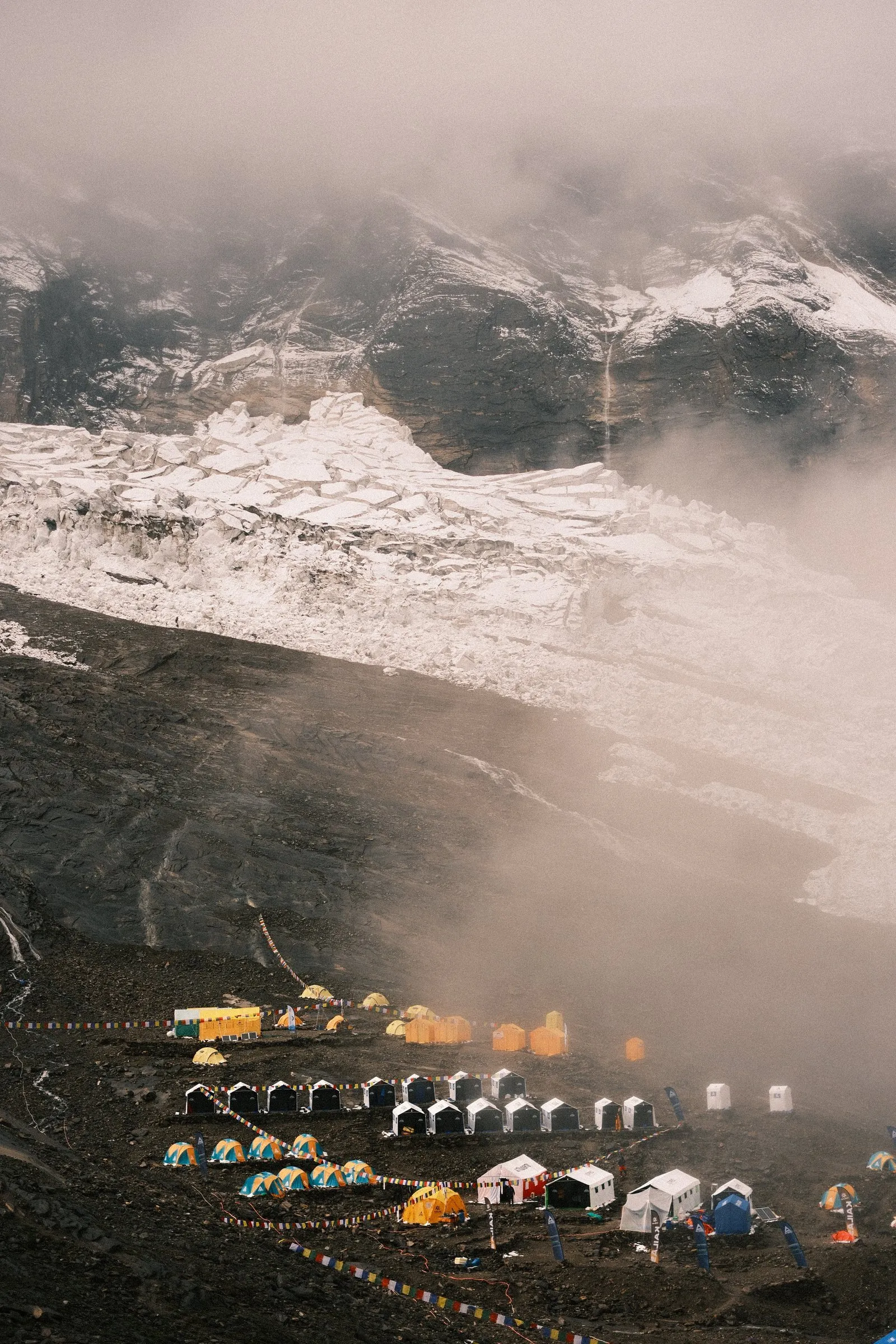
Base Camp below the glacier
The evenings were good. I had a small JBL speaker and a playlist saved offline. On the evening of 15 September, with Bohemian Rhapsody playing in the dining tent, we were briefed on a change of plan. The weather was changing, so there would be no more rotations: the summit push would start the next morning.
The people
Expedition life is tough. You’re pushing your body every day at altitude and living in an extreme environment. The people made it much easier, and I felt grateful to be climbing with such a good group.
There were almost 30 of us from more than a dozen countries, plus the Sherpa team. We had only known each other for a couple of weeks, but by the time we reached Base Camp it didn’t feel that way.
Planning Manaslu? I’m happy to share what my expedition cost and my full packing and equipment list. Get in touch and ask.
Climbing to Camp 1 and Camp 2 (Days 11 to 17)
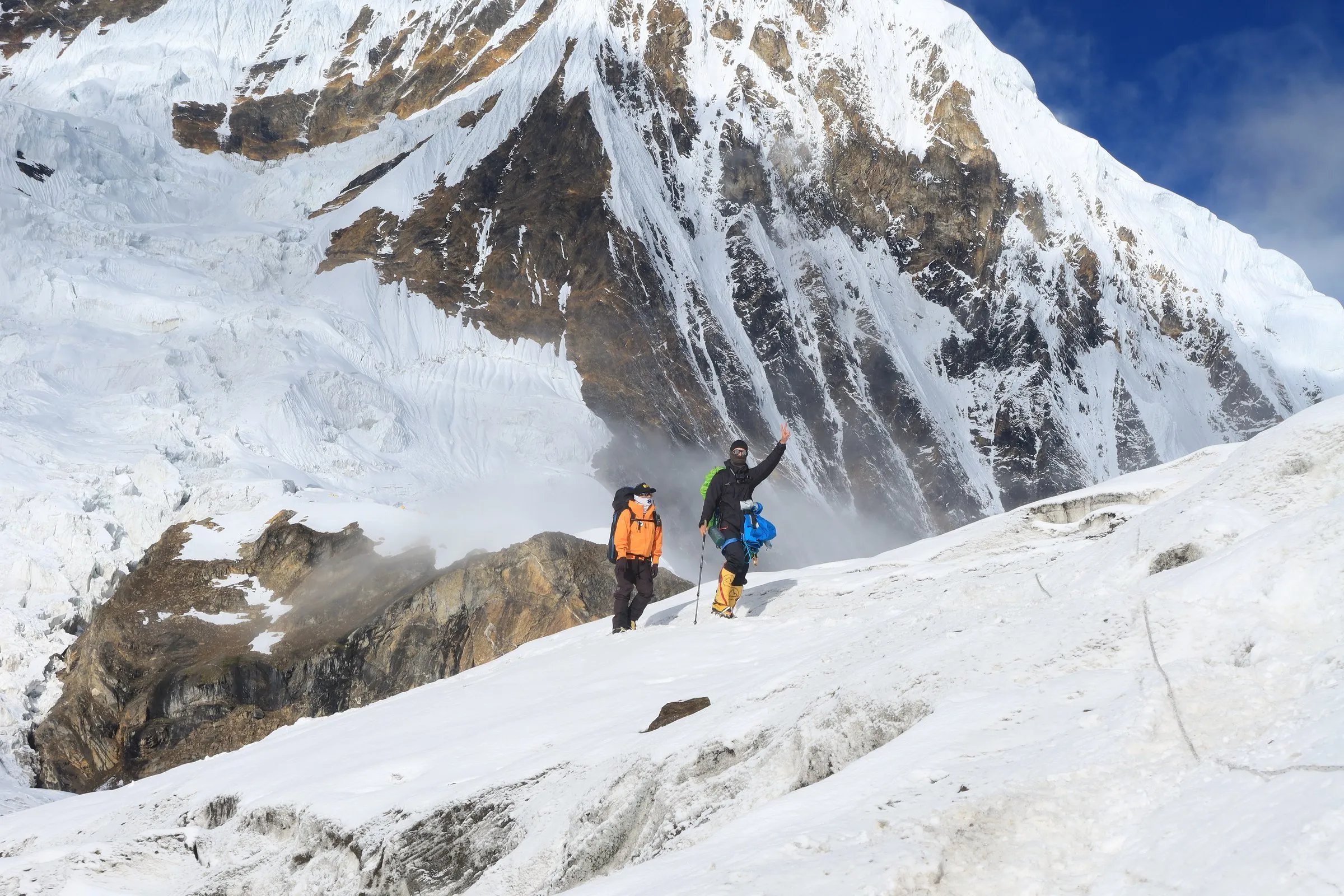
On the route to Camp 1
First night at Camp 1 (12 September)
5.5 km, 4h51m, +889m. After days of bad weather we set off under a blue sky. The walk to Camp 1 is a steady climb of almost 900m over the glacier and not technical. On the way you hear the glacier cracking, then the avalanche that follows.
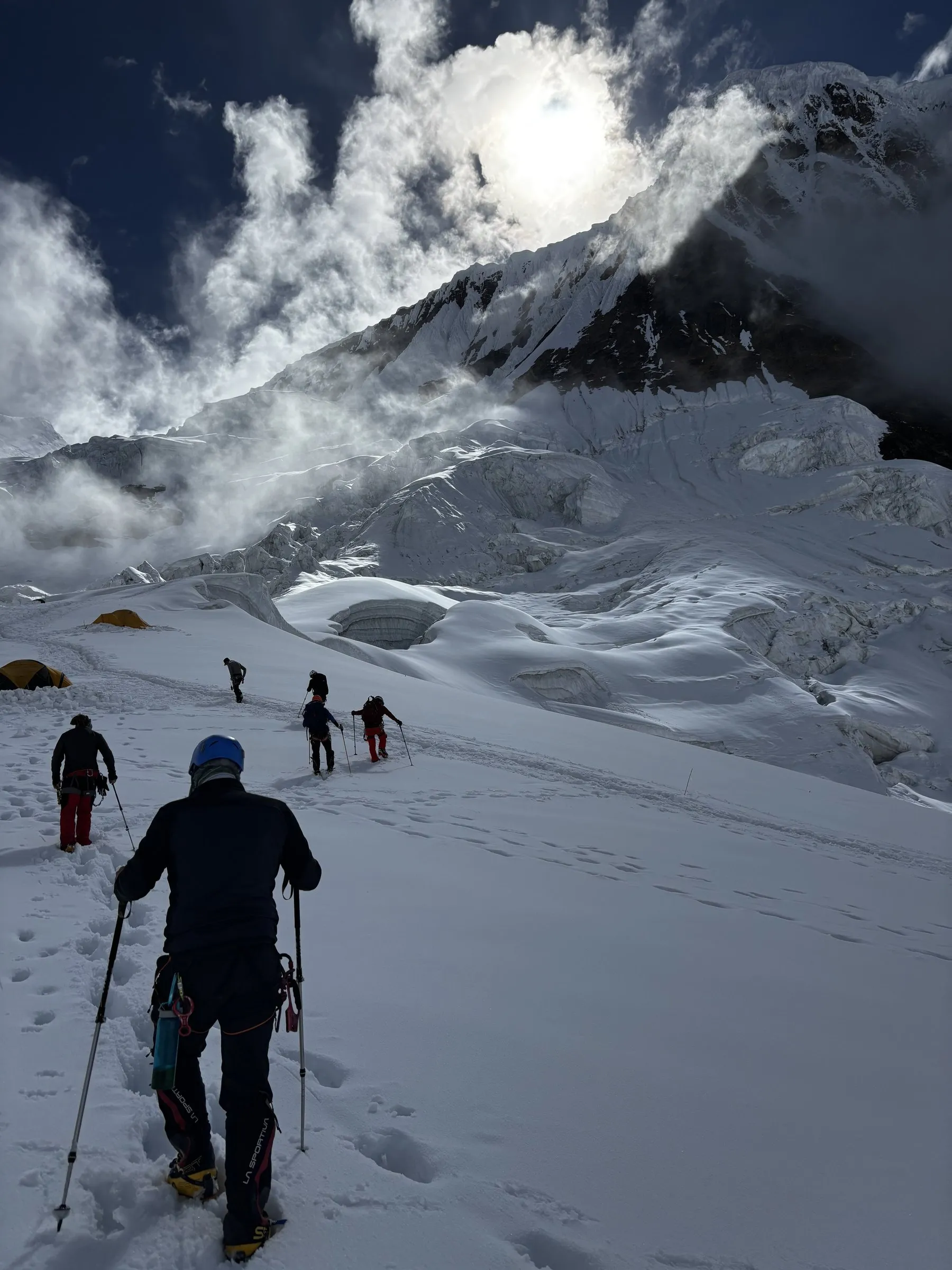
The walk up to Camp 1
Camp 1 sits at 5,800m on a small snowy perch above the clouds. In the late afternoon the light turned gold on the peaks above us, cloud billowed below, and the route to Camp 2 rose right beside the tents. I ate three servings of spaghetti to keep my energy up.
A pounding headache arrived in the late afternoon. I followed the process: drink around four litres a day, rest, eat. By 8pm, with the help of ibuprofen, it had gone. It was also the first proper test of my down suit and the cold-weather routine, and I slept for almost eight hours.
Temba climbed with me that day, carried some of my kit and checked in on me through the evening. The next morning we walked down to Base Camp in 1h28m, watching the sunrise light up the peaks above a sea of cloud.
The summit push begins, or so we thought (16 September)
The change of plan meant going straight into the summit push without a second rotation. The schedule was Base Camp to Camp 1, then Camp 2, Camp 3, a rest day, and the summit via Camp 4 on 20 September.
The climb back to Camp 1 with a heavy pack was brutal, and I arrived an hour slower than on the rotation. Before leaving I stopped at the puja shrine and prayed for steadiness, strength and good decisions. The sun came out while I prayed, as it had during the puja.
Another headache at Camp 1 needed fluids and ibuprofen. The sunset and sunrise from that small plateau, with light on some of the highest mountains in the world, made up for it. It finally felt like a real expedition.
Camp 1 to Camp 2 (17 September)
The climb from Camp 1 to Camp 2 is probably the most technical climbing I’ve done, and the most beautiful scenery I’ve seen. Temba and I left at 6:30am after a bad night. The route crosses crevasses and climbs over overhangs, and we watched avalanches pour off the walls around us. It asked for everything: technical skill, strength and concentration.
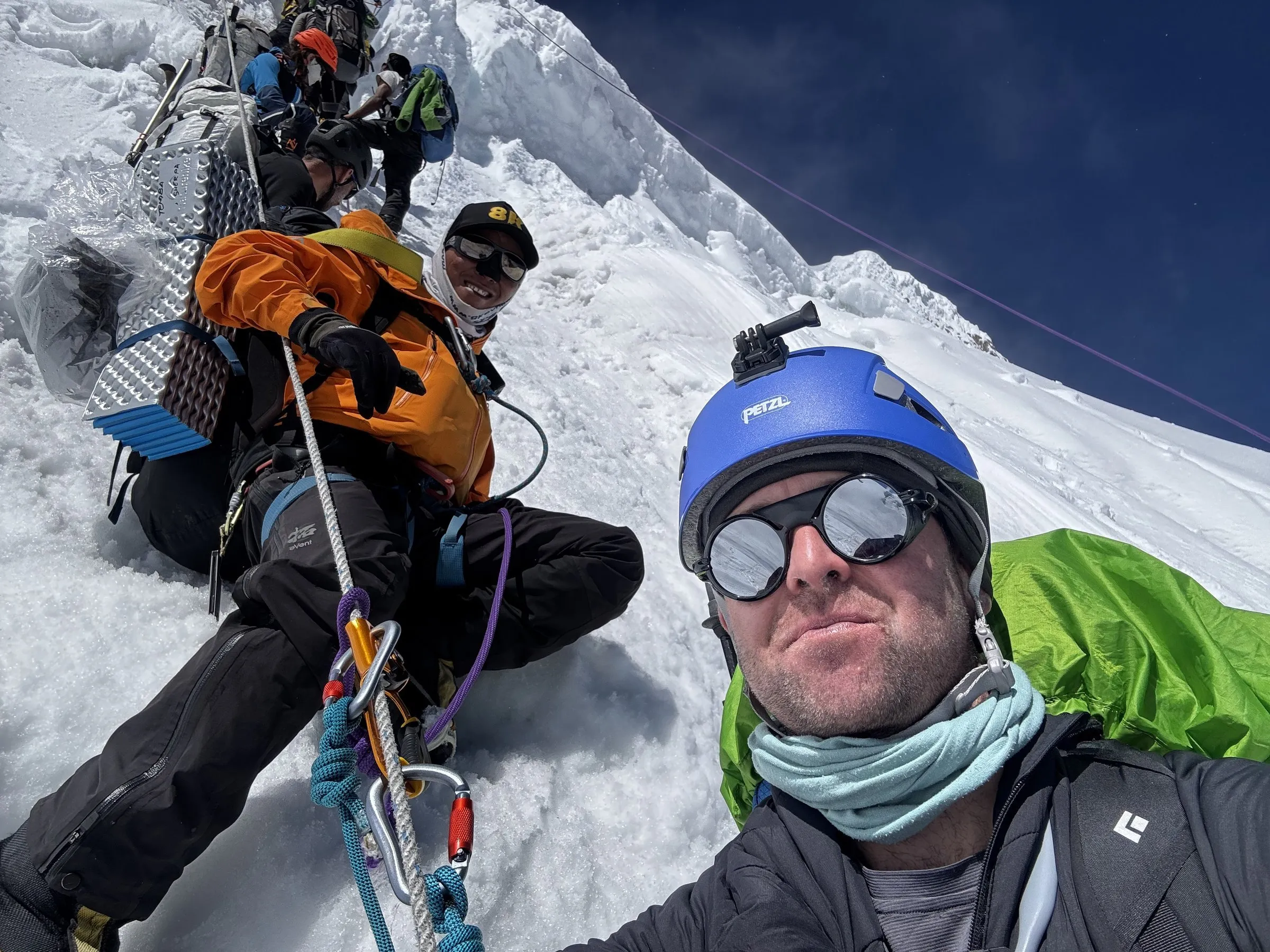
On the fixed ropes between Camp 1 and Camp 2
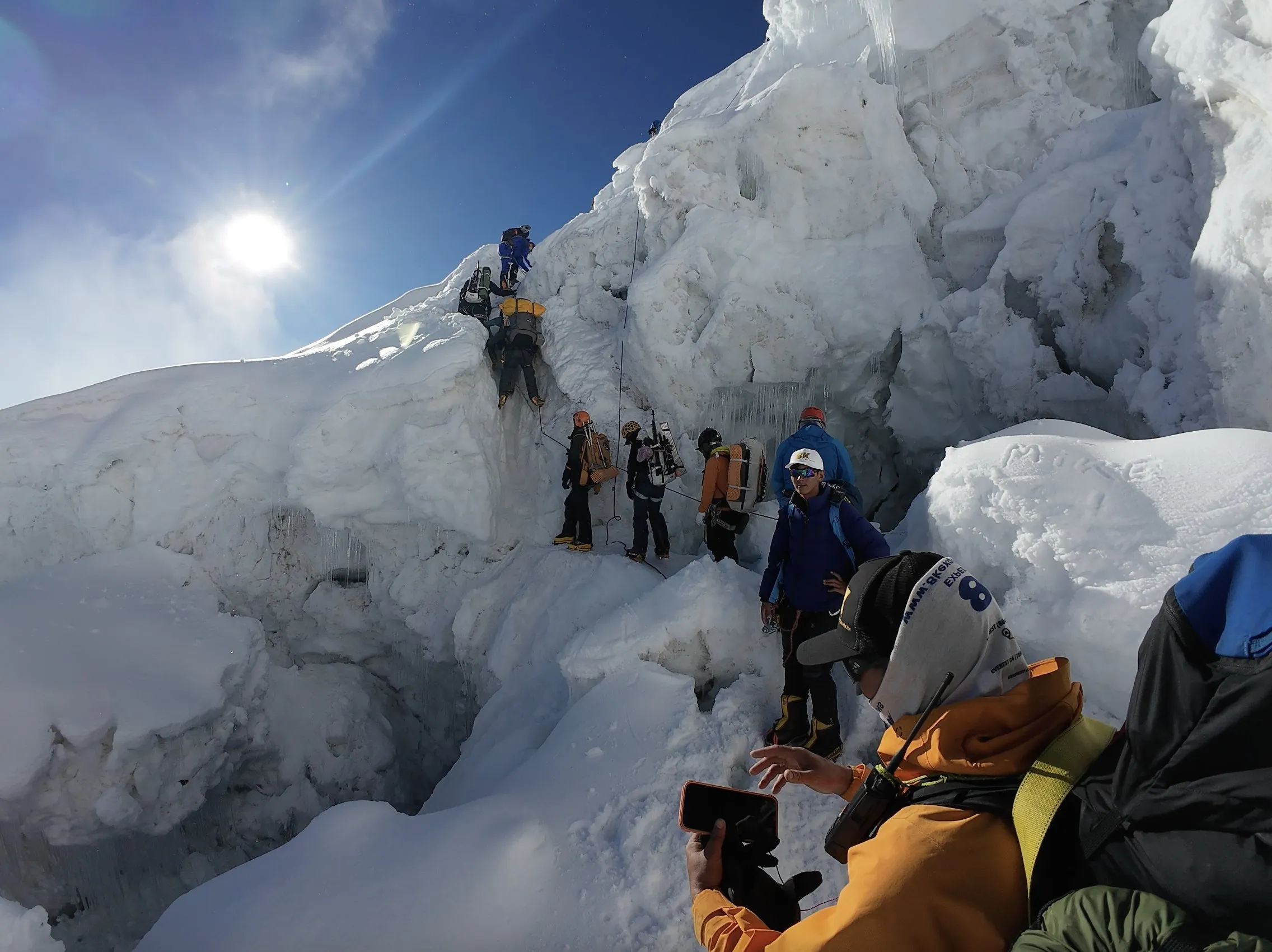
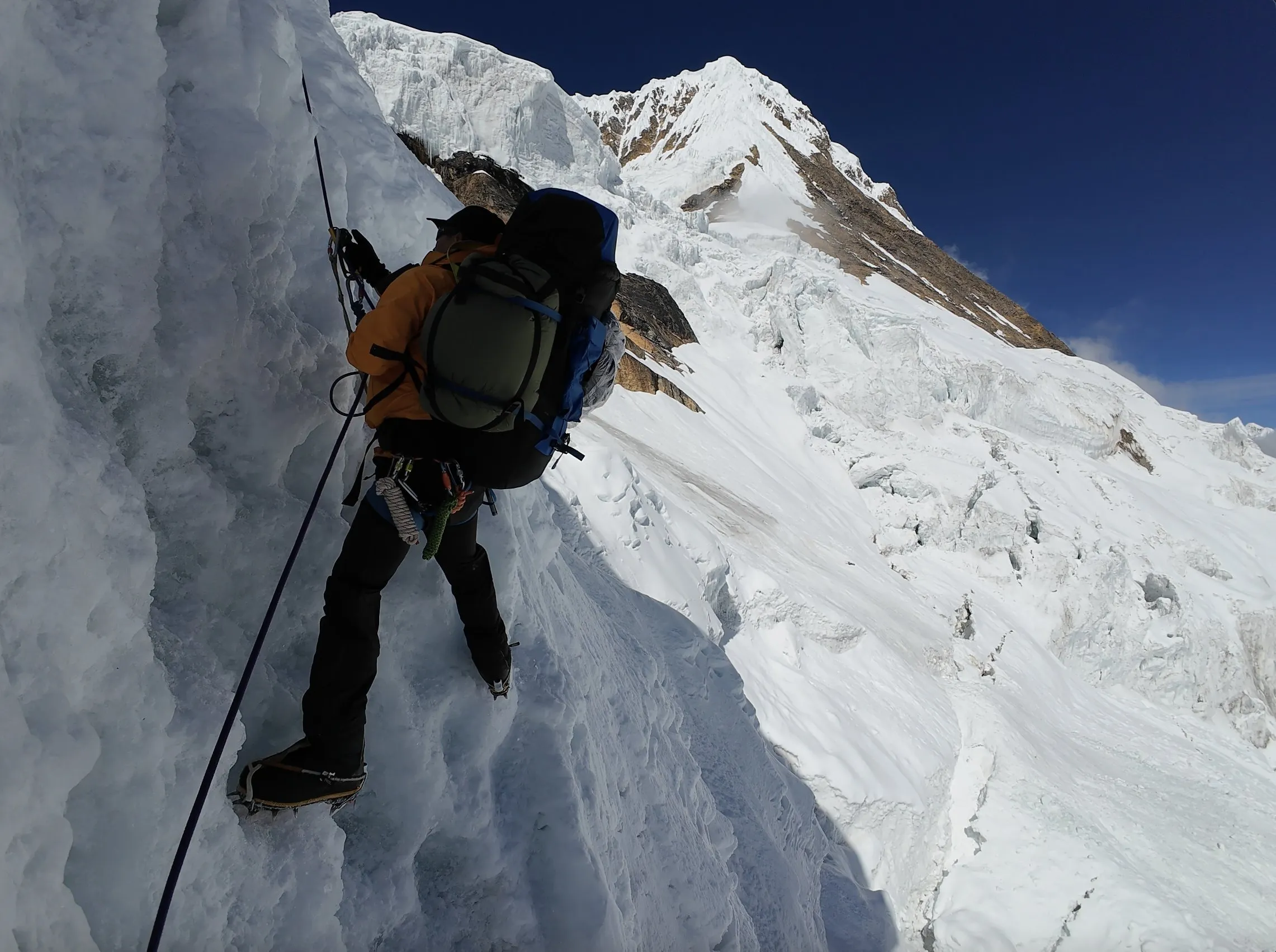
Through the icefall towards Camp 2
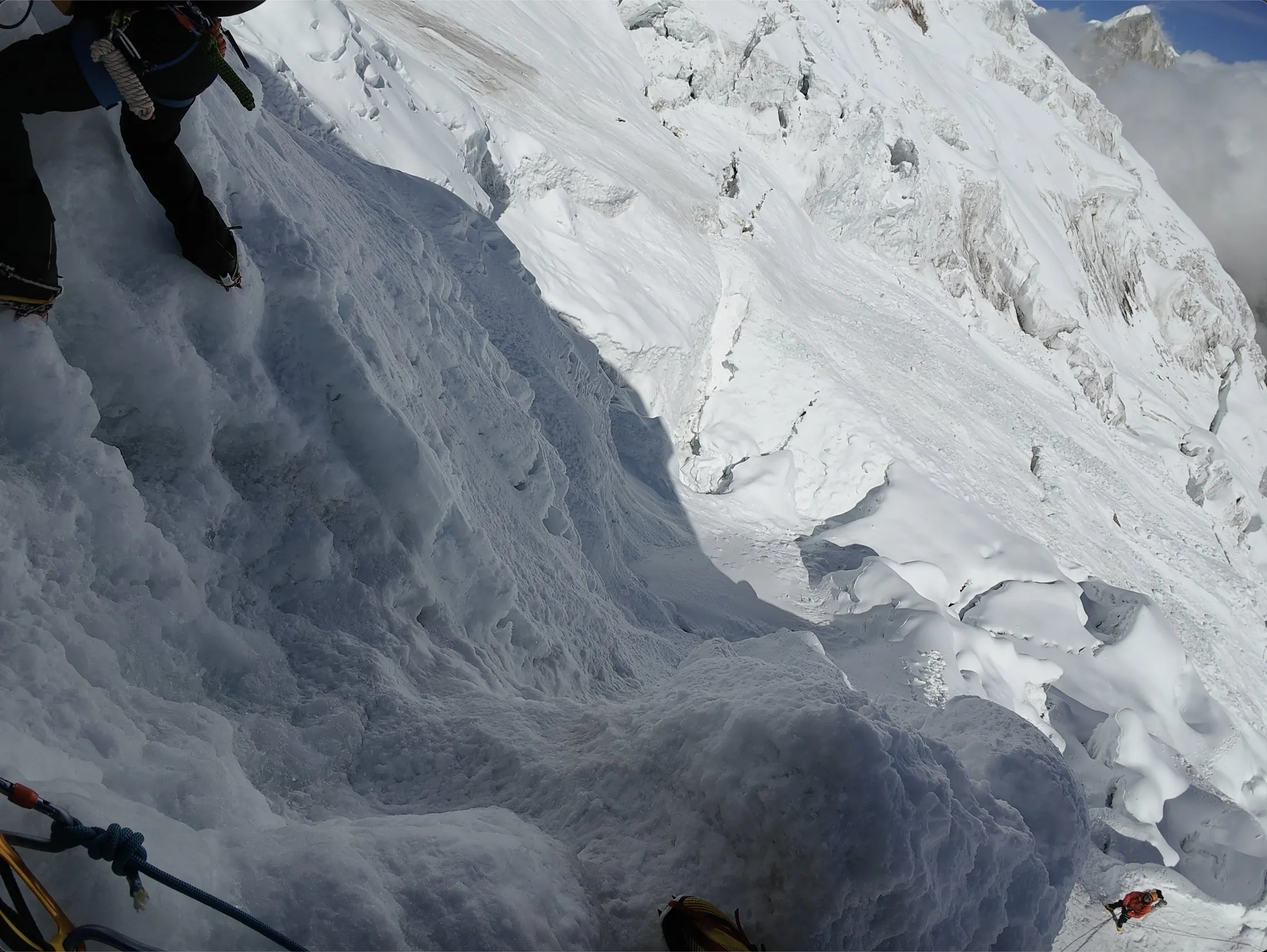
Steep snow on the way to Camp 2
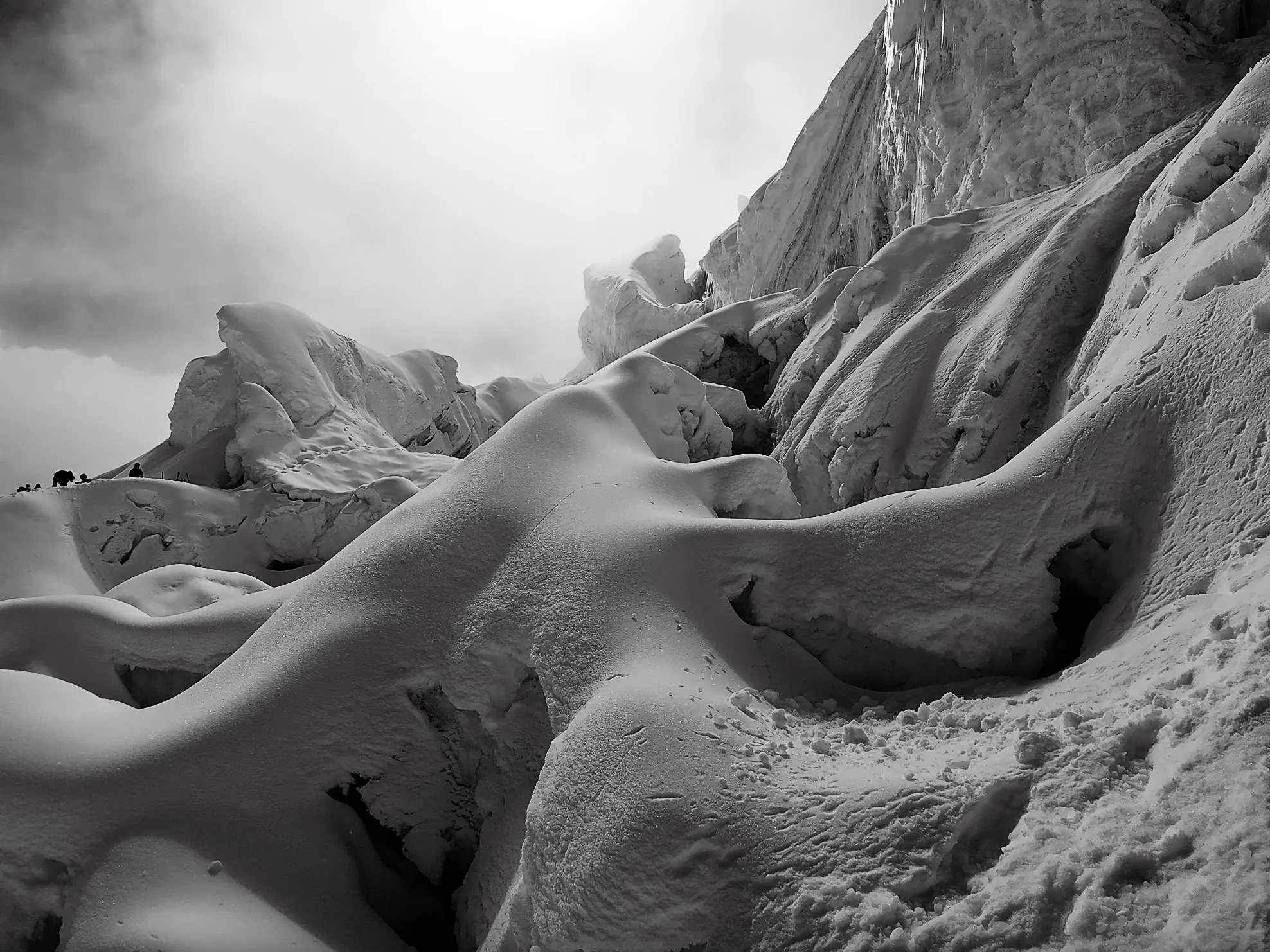
Ice formations between Camp 1 and Camp 2
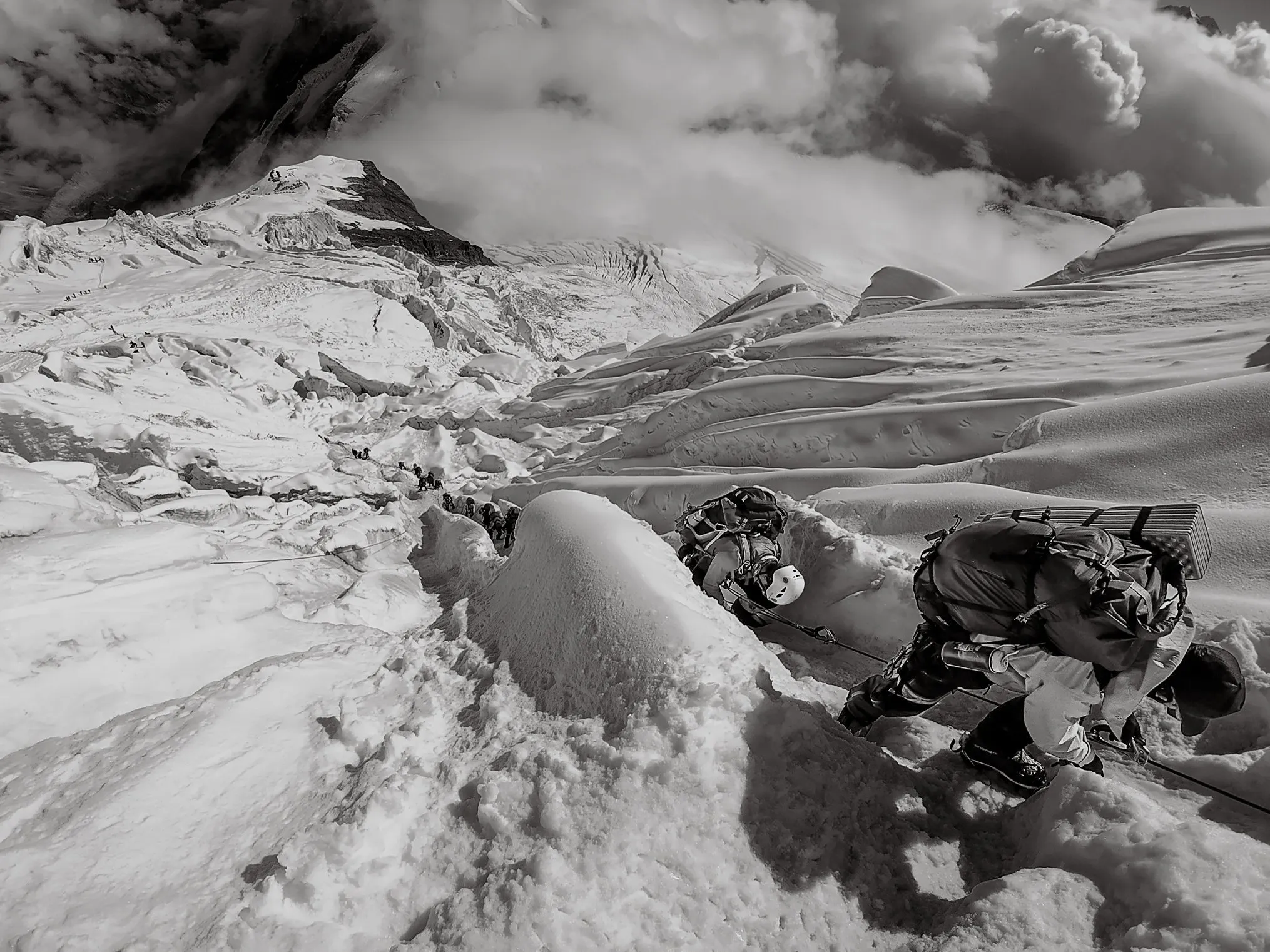
Breaking trail high on the mountain
Lau Wee Seng (Benedict)
The same day, we lost a member of our expedition. Lau Wee Seng from Singapore, who we knew as Benedict or Ben, was in Team 2. He passed away on the mountain that day.
We had only known each other for a couple of weeks, but Ben was easy to get along with, and a popular and well-liked member of the team. He will be sorely, sorely missed.
Rest in peace, Ben.
Losing Ben made me take a hard look at our plan to push for the summit without full rotations. I asked experienced climbers for their views and checked my own numbers. My resting heart rate, asleep and while climbing, was good. I decided to carry on, and to check in with myself every day: energy, sleep, heart rate and any altitude symptoms.
Camp 2 (6,400m)
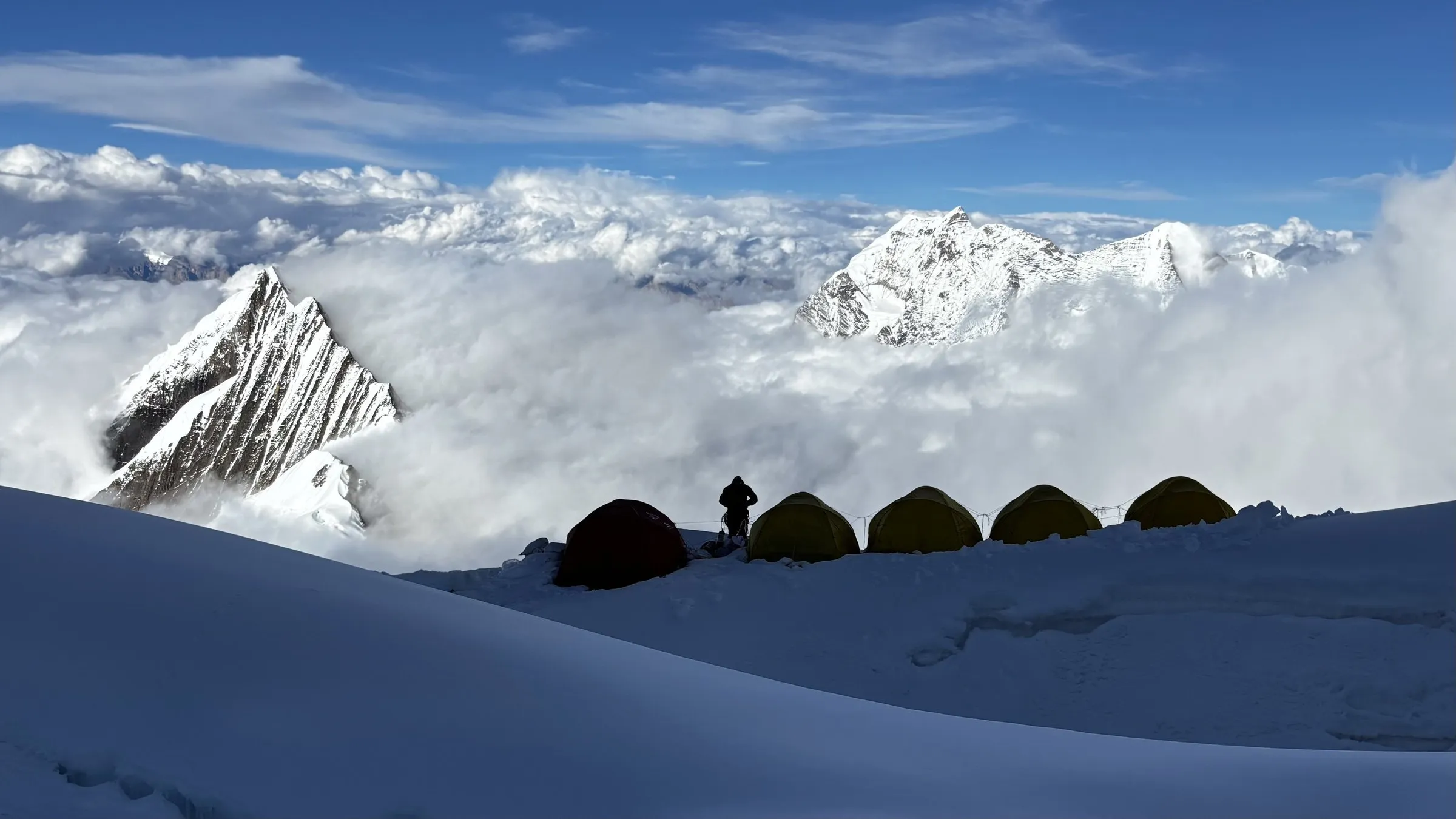
Camp 2 at 6,400m, above the clouds
After a dal bhat dinner I lay in the tent and listened: boots crunching on snow, constant chatter and laughter from the Sherpas, wind fluttering the tent fabric.
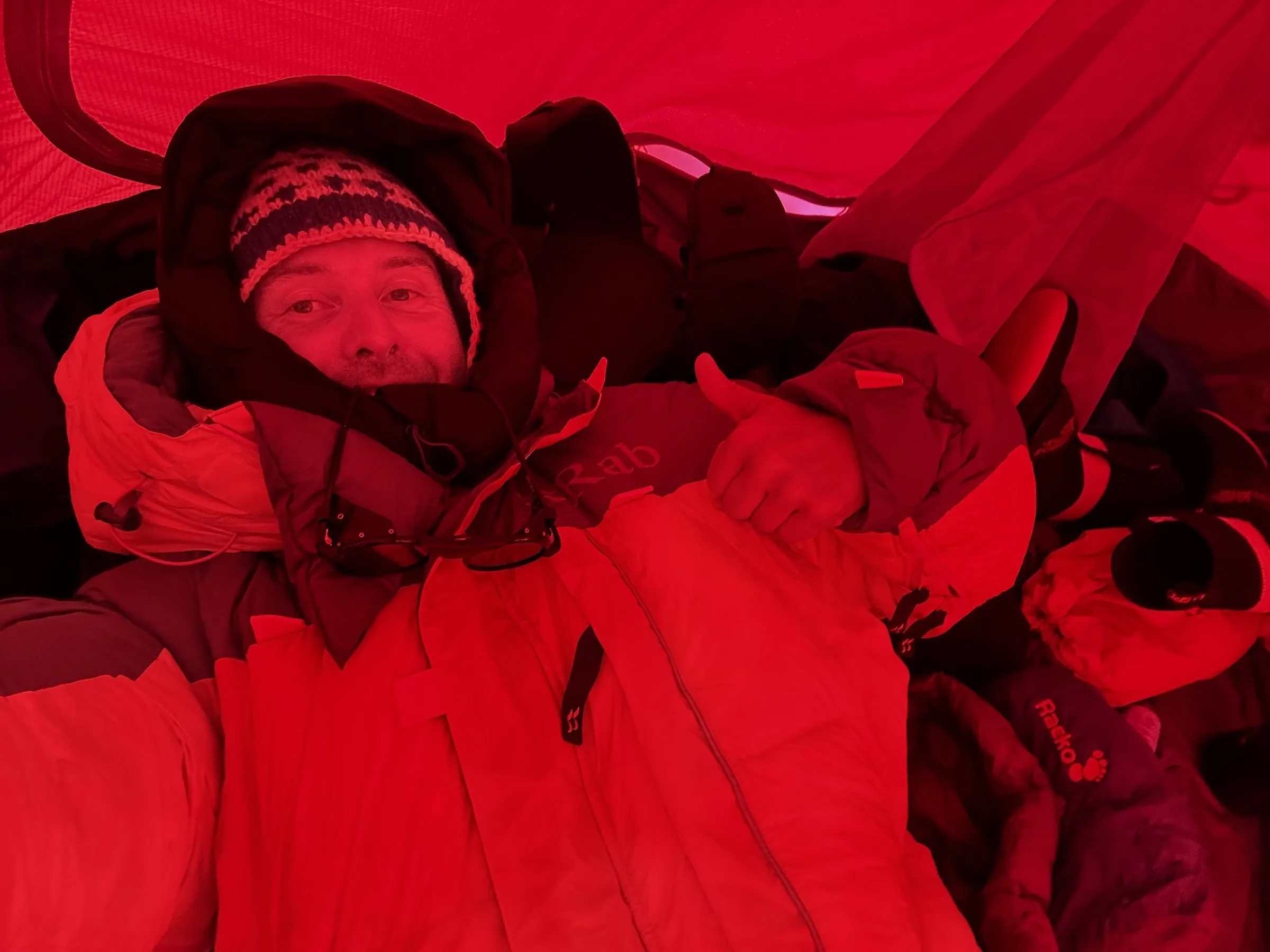
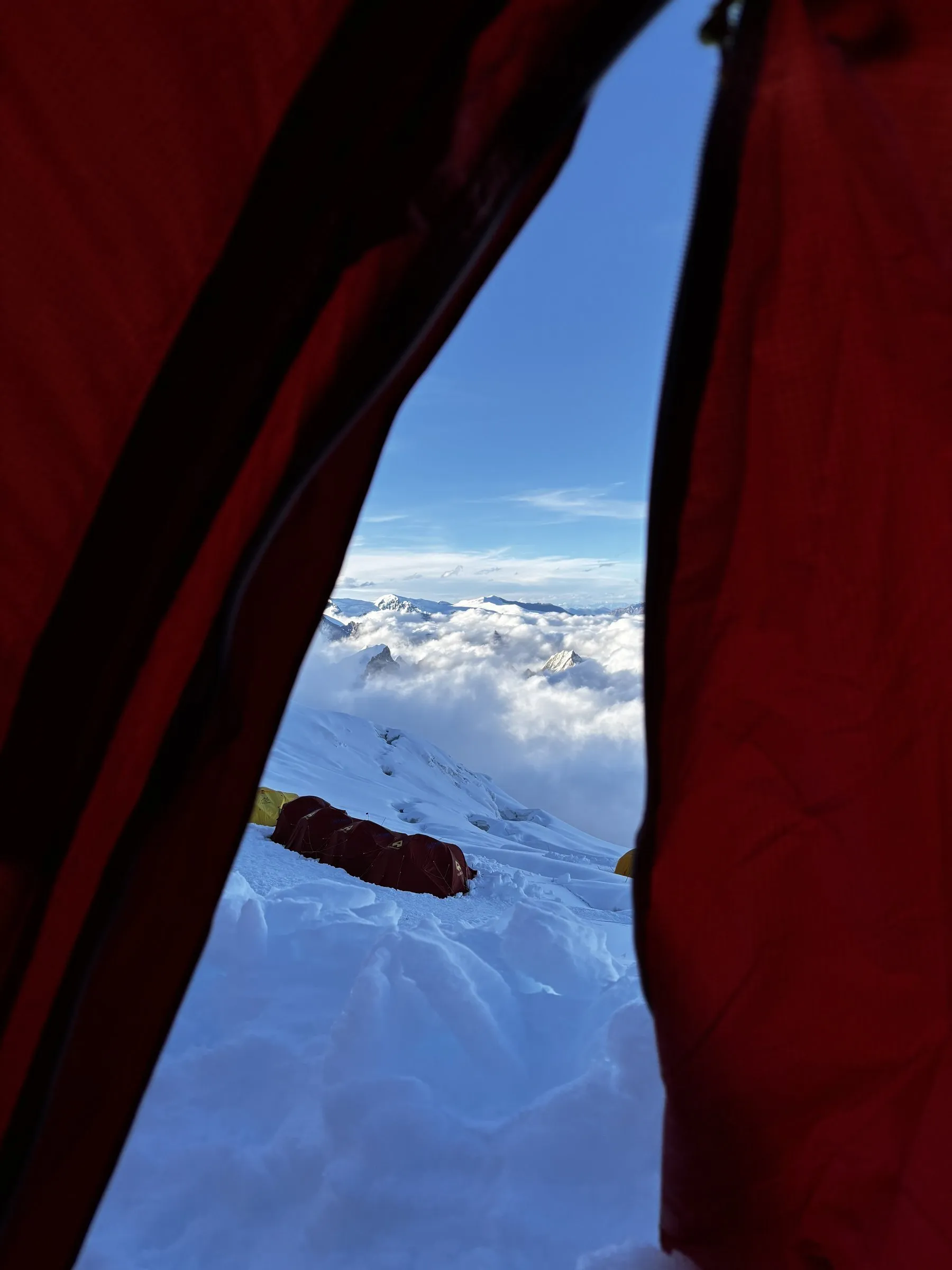
Inside the tent at Camp 2, and the view from the door
At 6pm the brief came. We would push from Camp 2 the next morning, rest at Camp 3, then go on oxygen through Camp 4 to the summit. It could take up to 15 hours if there was traffic on the ropes.
I slept six broken hours. At 6,400m you wake up gasping for air. In the morning heavy snow and strong wind cancelled the push, and honestly it was a relief. Most of us needed another day to acclimatise. We climbed to Camp 3 at 6,800m, waited there for a while, and came back down to Camp 2. It was the highest I reached on Manaslu.
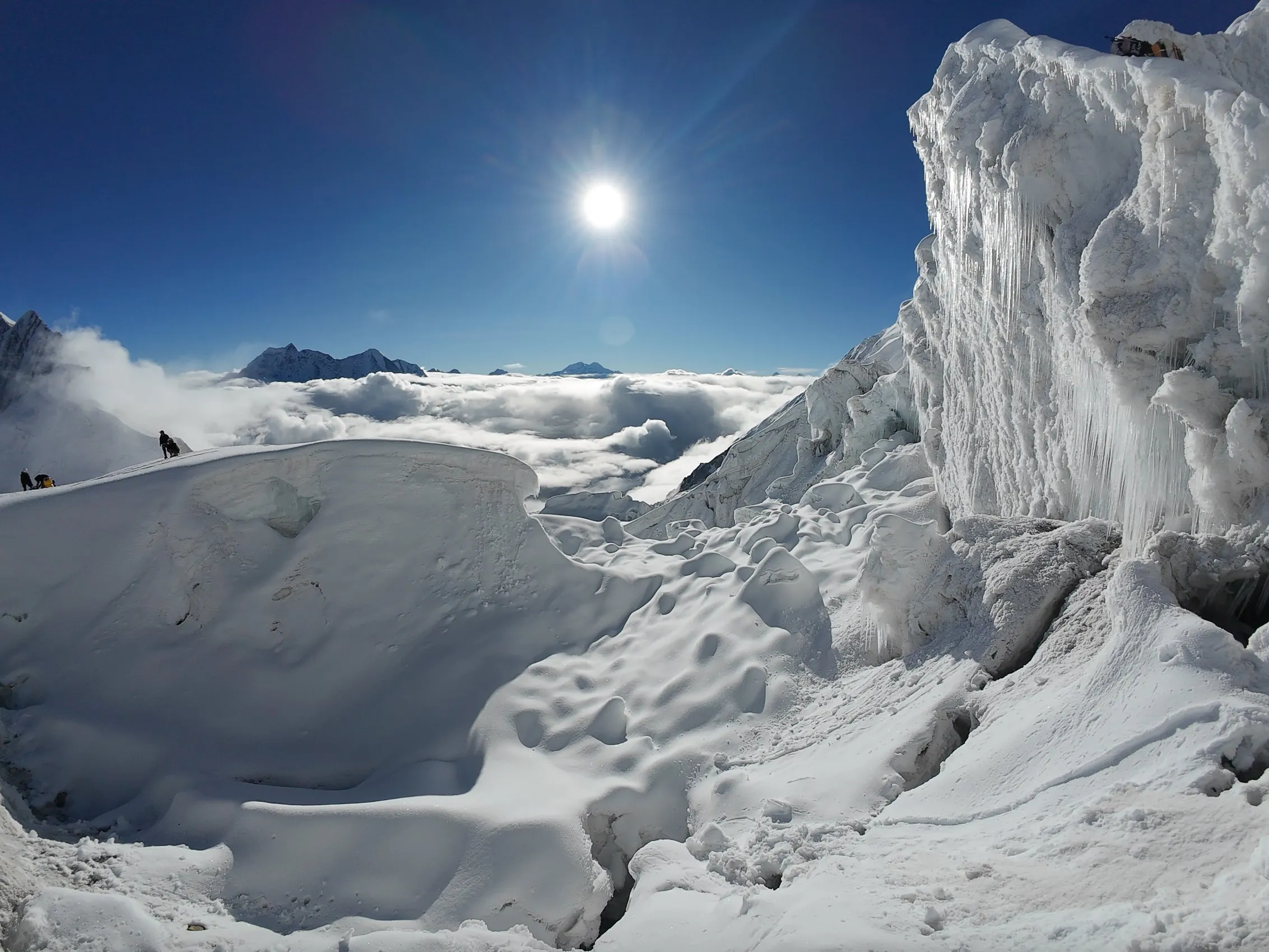
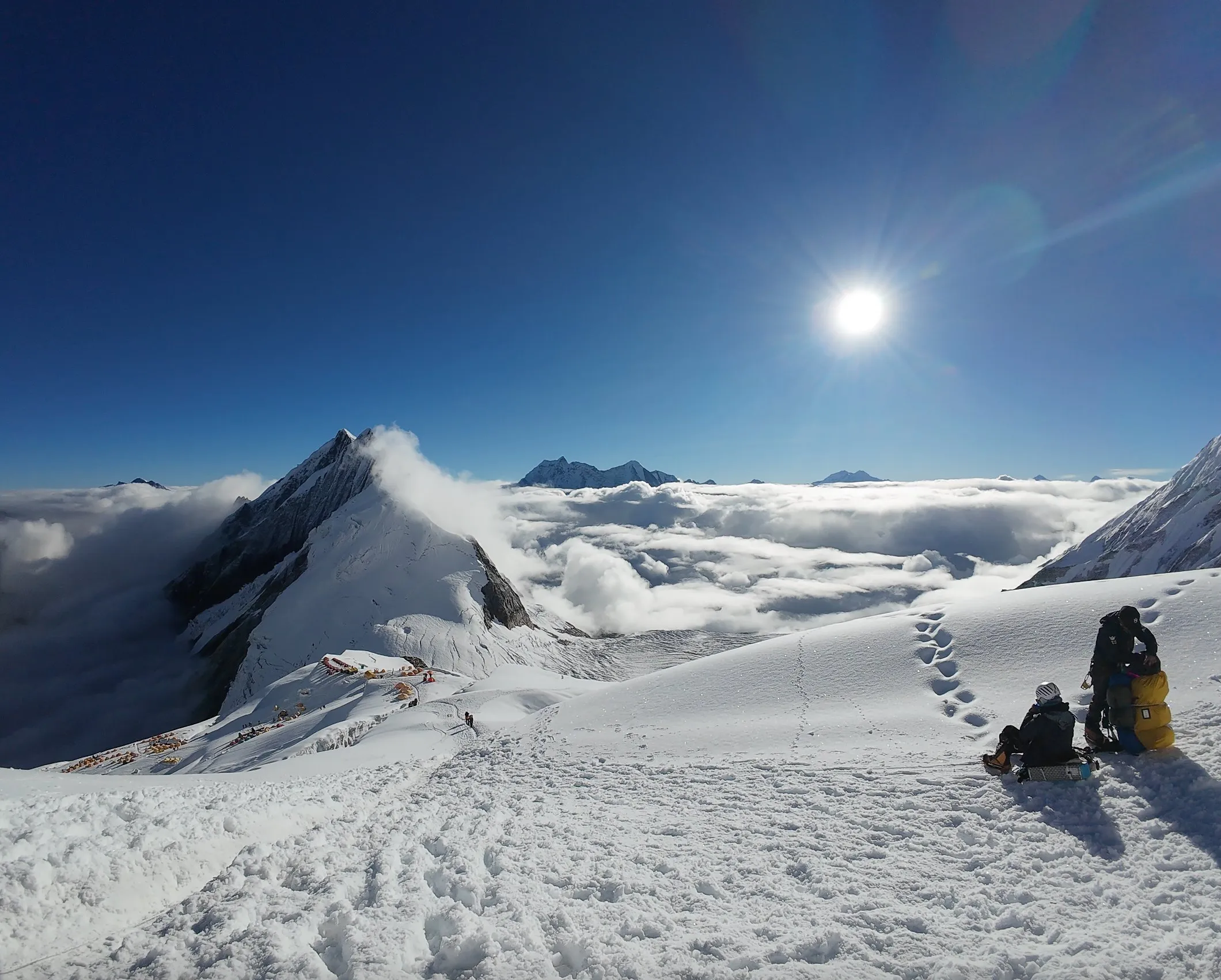
Above the clouds near Camp 2
By evening Camp 2 was crowded and noisy as more teams arrived from below. Temba’s new plan was to try again the next morning.
Evacuation and the decision not to go back up (Days 18 to 21)
Get everyone down (19 September)
It snowed heavily all night across every camp. I woke to a tent covered in snow and Lakpa on the radio to all the Sherpas: get everyone down to Base Camp immediately, there is a huge avalanche risk at Camp 3 and Camp 2.
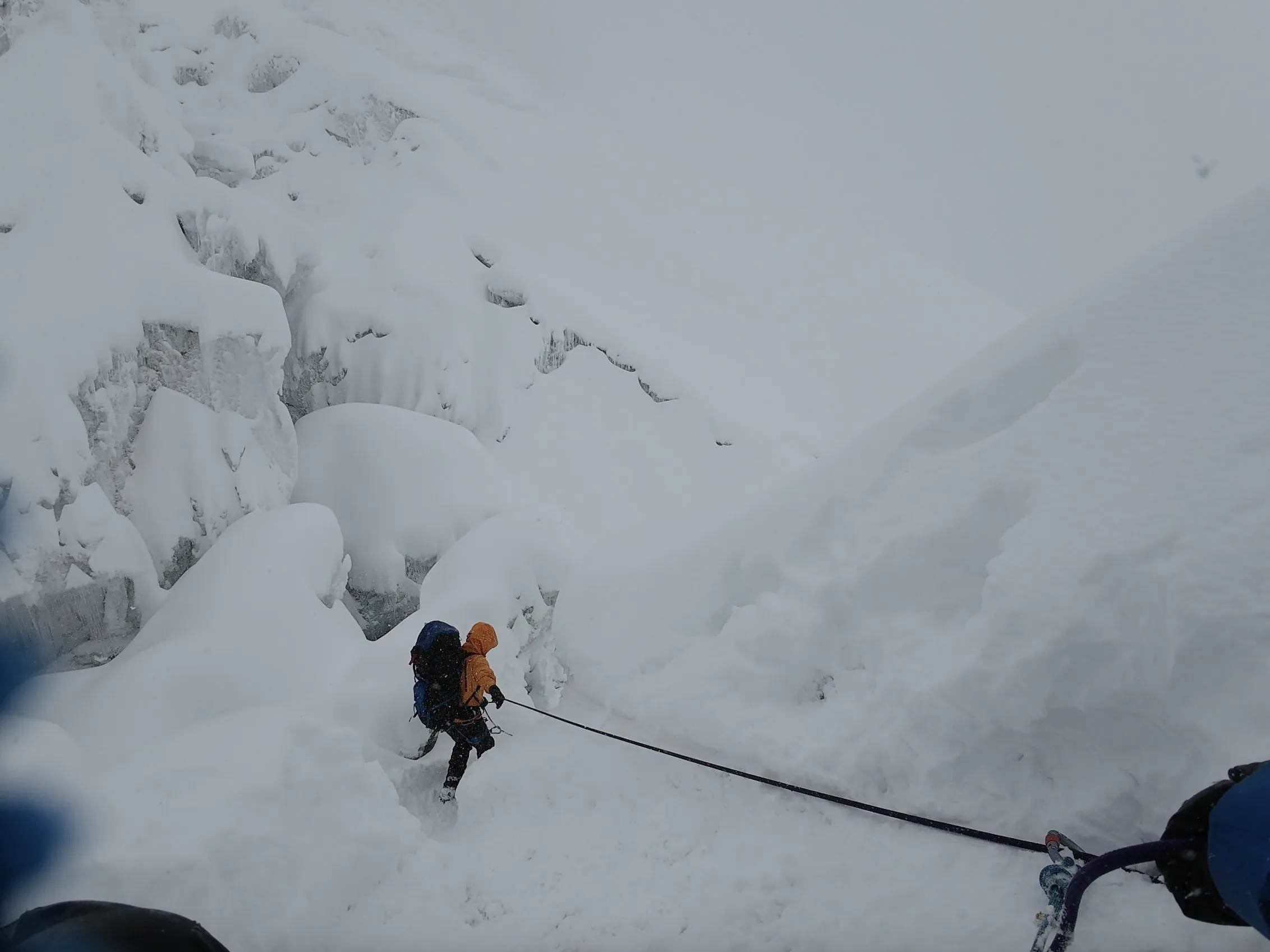
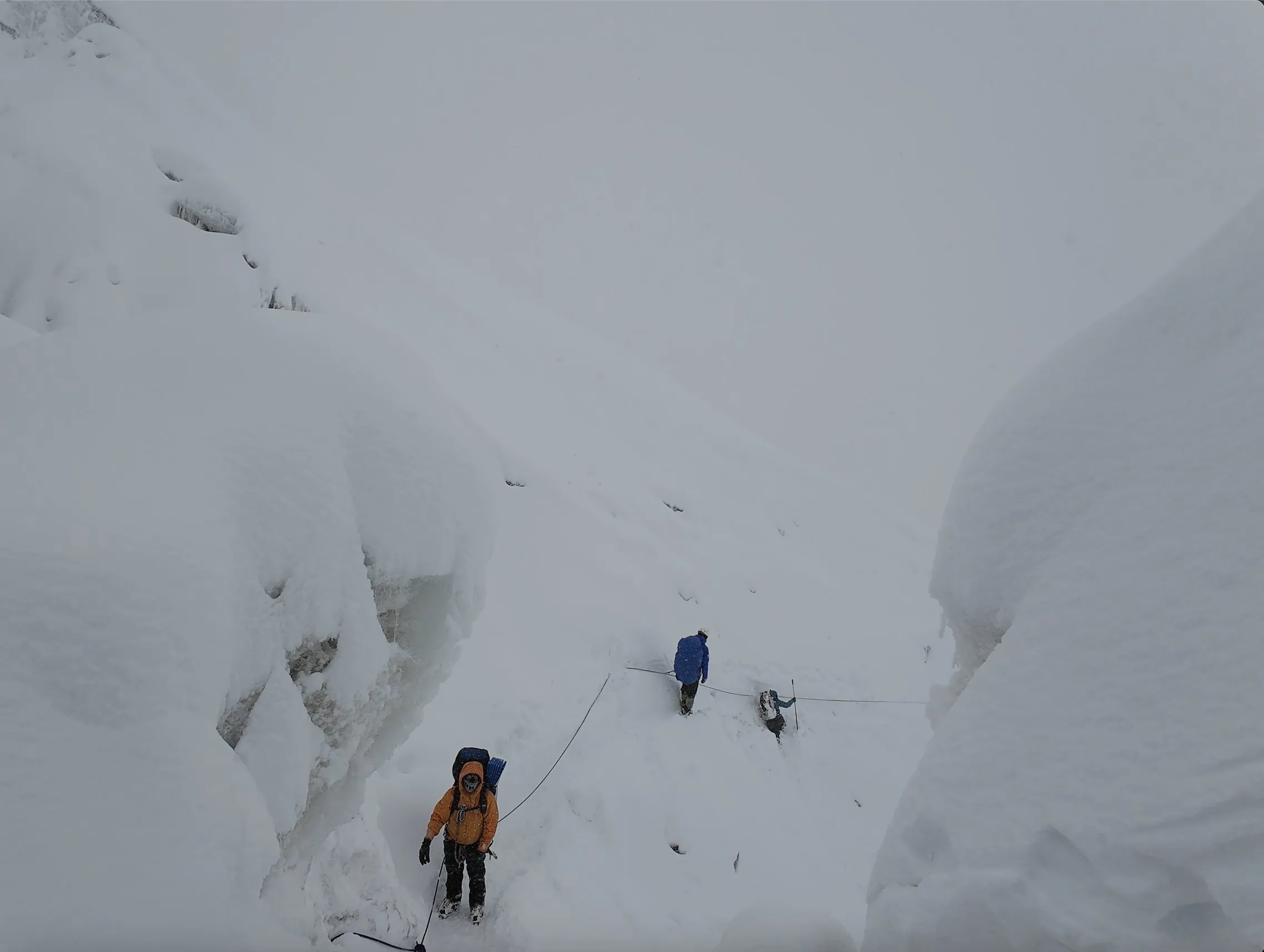
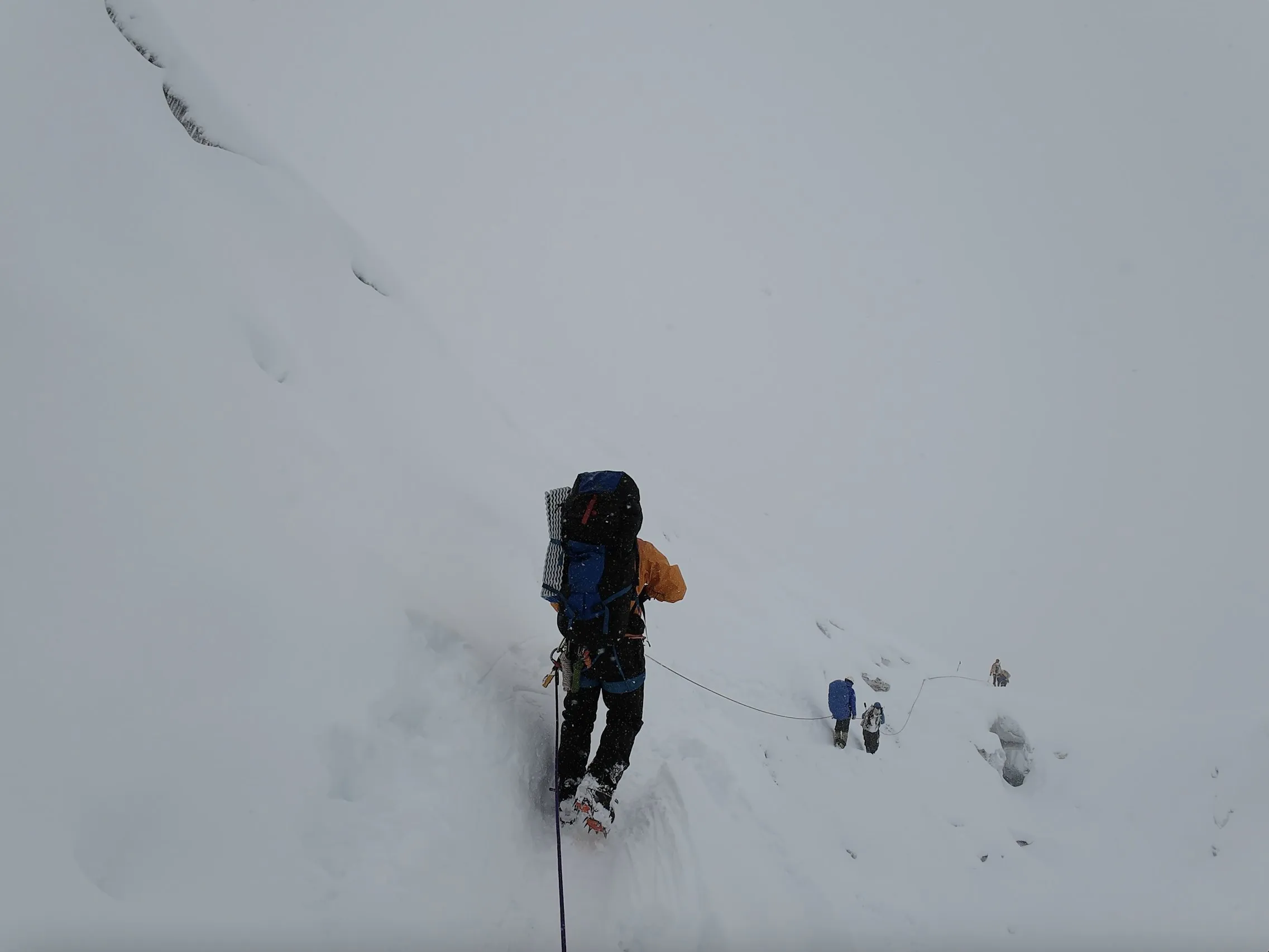
Coming down in the whiteout on 19 September
Every team packed up at once and rushed down the technical section between Camp 2 and Camp 1. There were queues of what looked like hundreds of climbers on the abseils. Temba moved us through quickly and helped others down on the way. The snow was more than a metre deep in places, including at Camp 1.
It was a strong reminder that everyone on an 8,000m peak needs real technical skills. When conditions turn, you have to get yourself down the ropes.
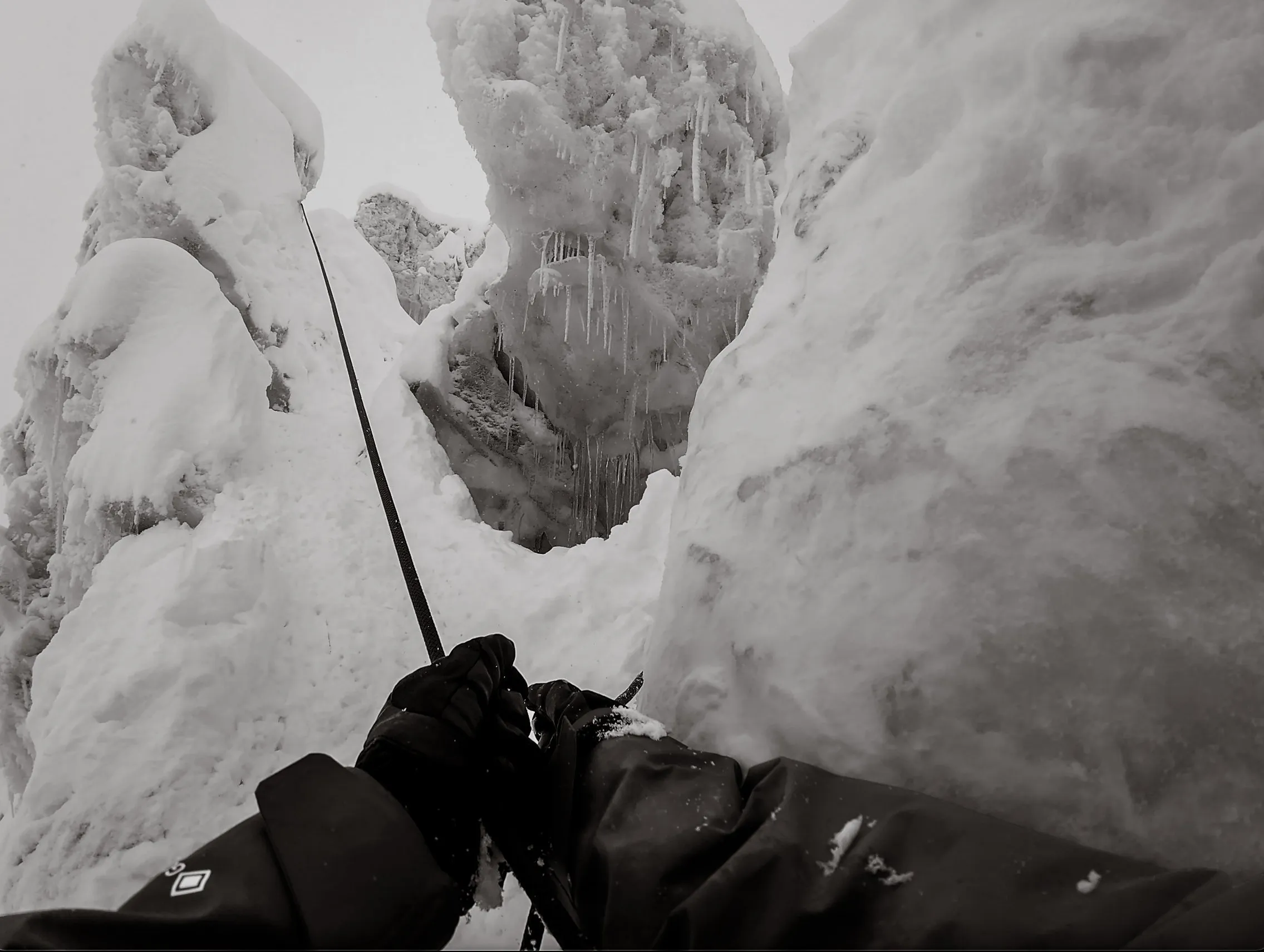
Abseiling down the ropes
Back at Base Camp we heard the news. Overnight, an avalanche had buried two tents at Camp 3, killing a climber and his Sherpa guide. We had left Camp 3 a few hours before. Bringing everyone down had been the right call.
A tense few days at Base Camp (20 to 21 September)
Base Camp was full of questions. Did we make the right decision? Would anyone summit? How could anyone still be up there? Several of the big operators pulled all their climbers back and postponed until a possible window in early October. Some of them were already back in Kathmandu. Simone Moro, on his seventh Manaslu expedition, urged climbers to put safety first and be ready to wait weeks, and Reinhold Messner publicly backed him (ExplorersWeb).
I had some risk and reward thinking to do. With fresh snow sitting on the mountain, warm spells in between and avalanches running all around, I decided not to go back up for now. I planned to wait for the next window if I had time, and to move to Ama Dablam if not. Some climbers did go back up. As conditions worsened on 22 September, everyone was called down, and as far as I know no one else was hurt.
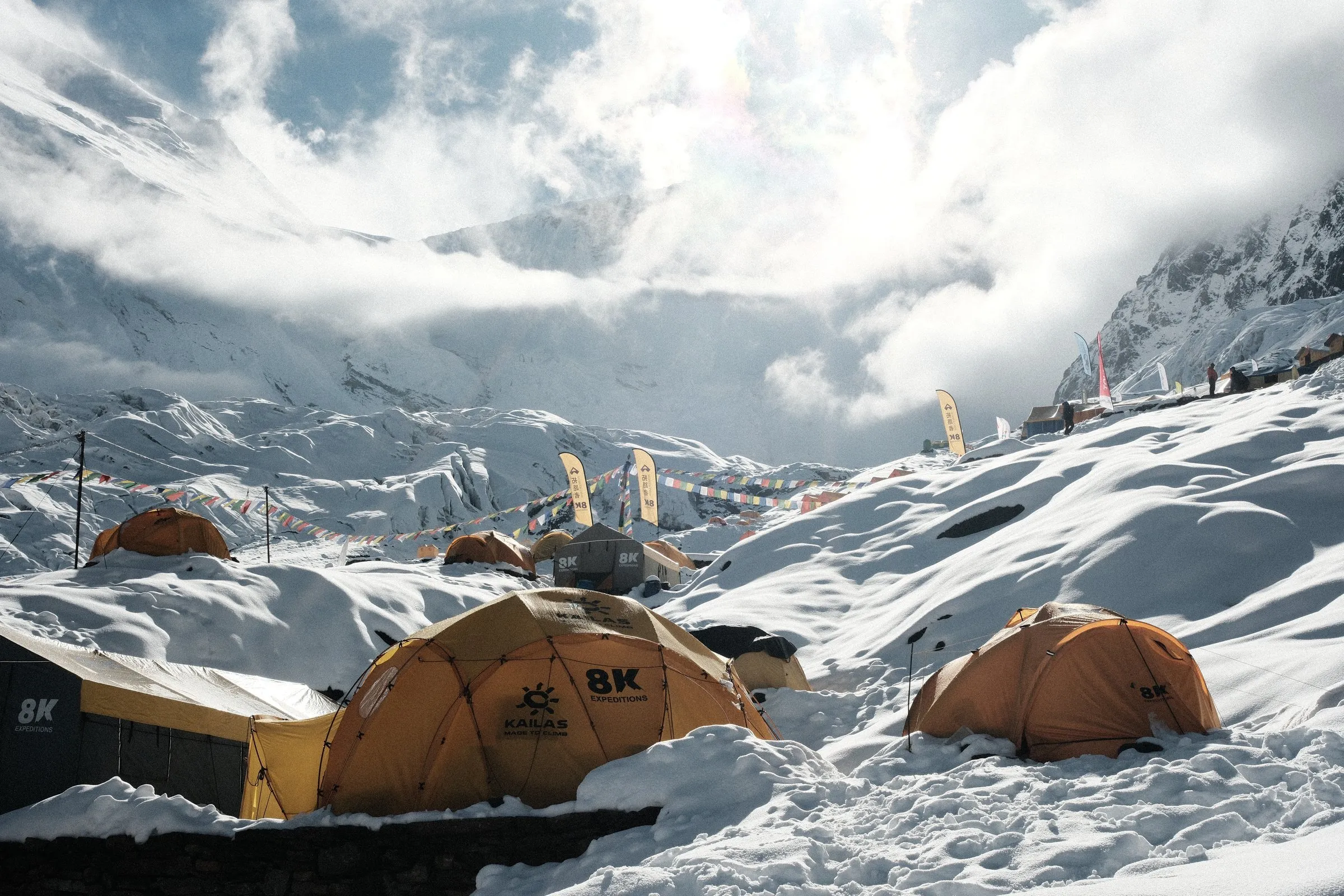
Base Camp after the heavy snowfall
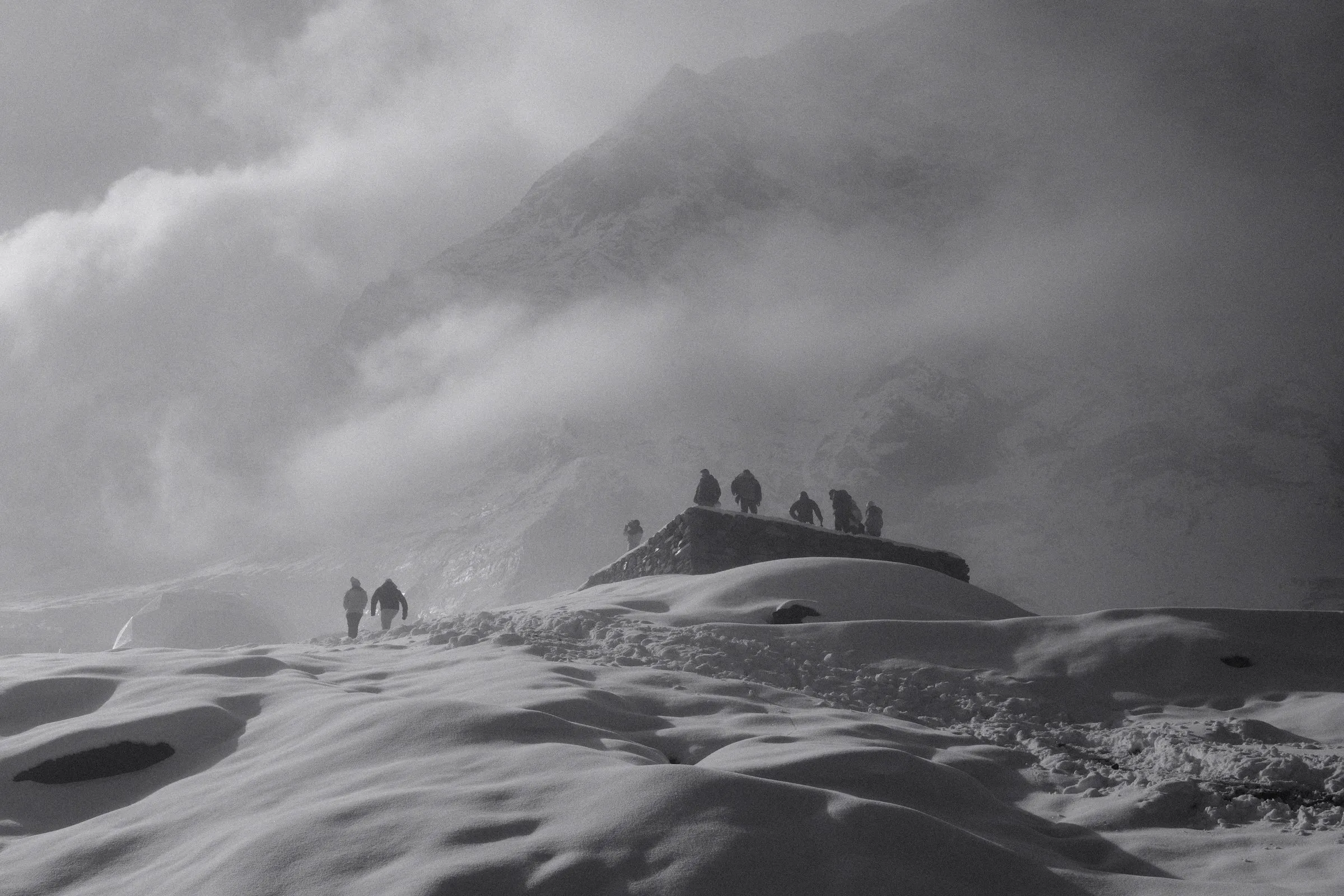
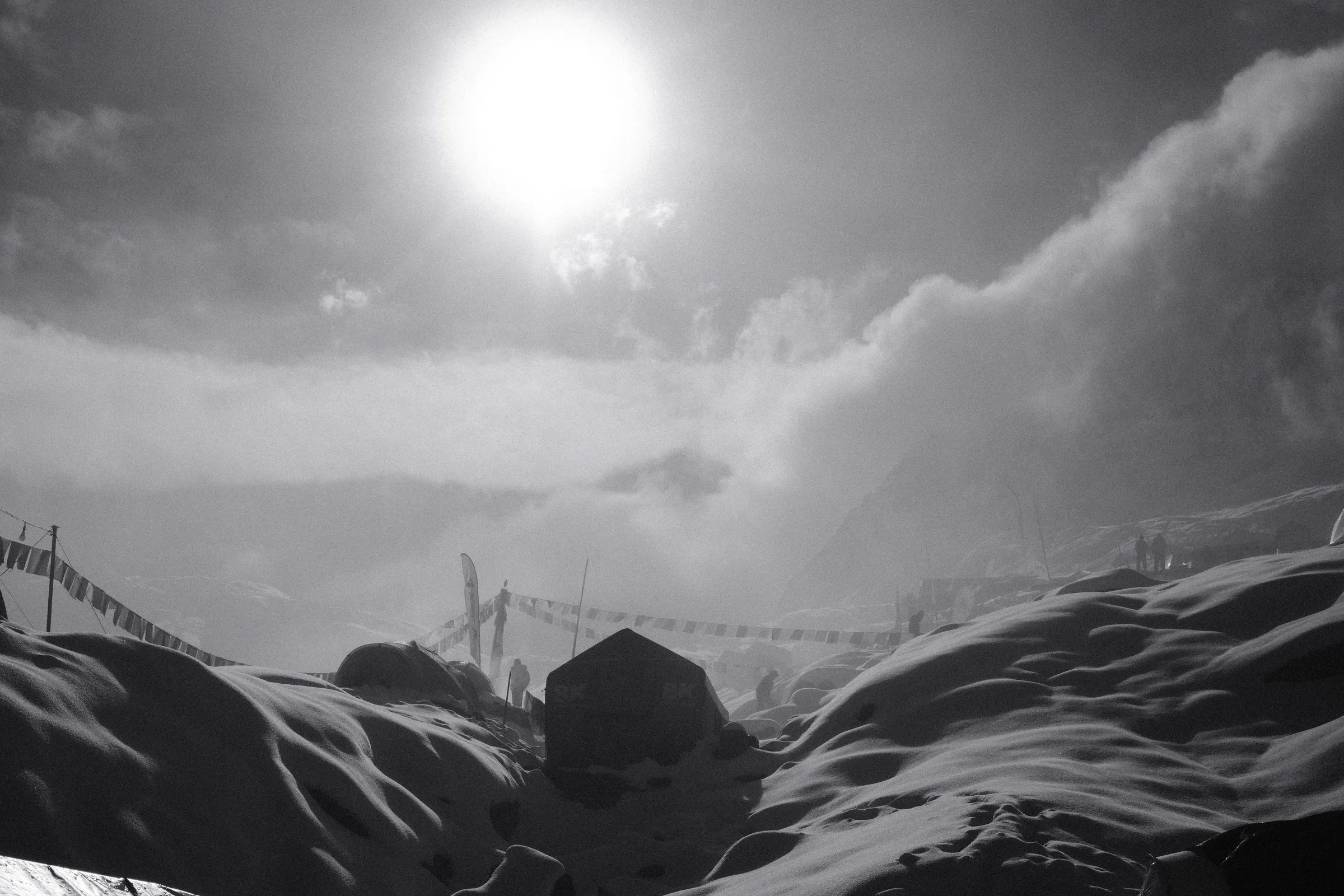
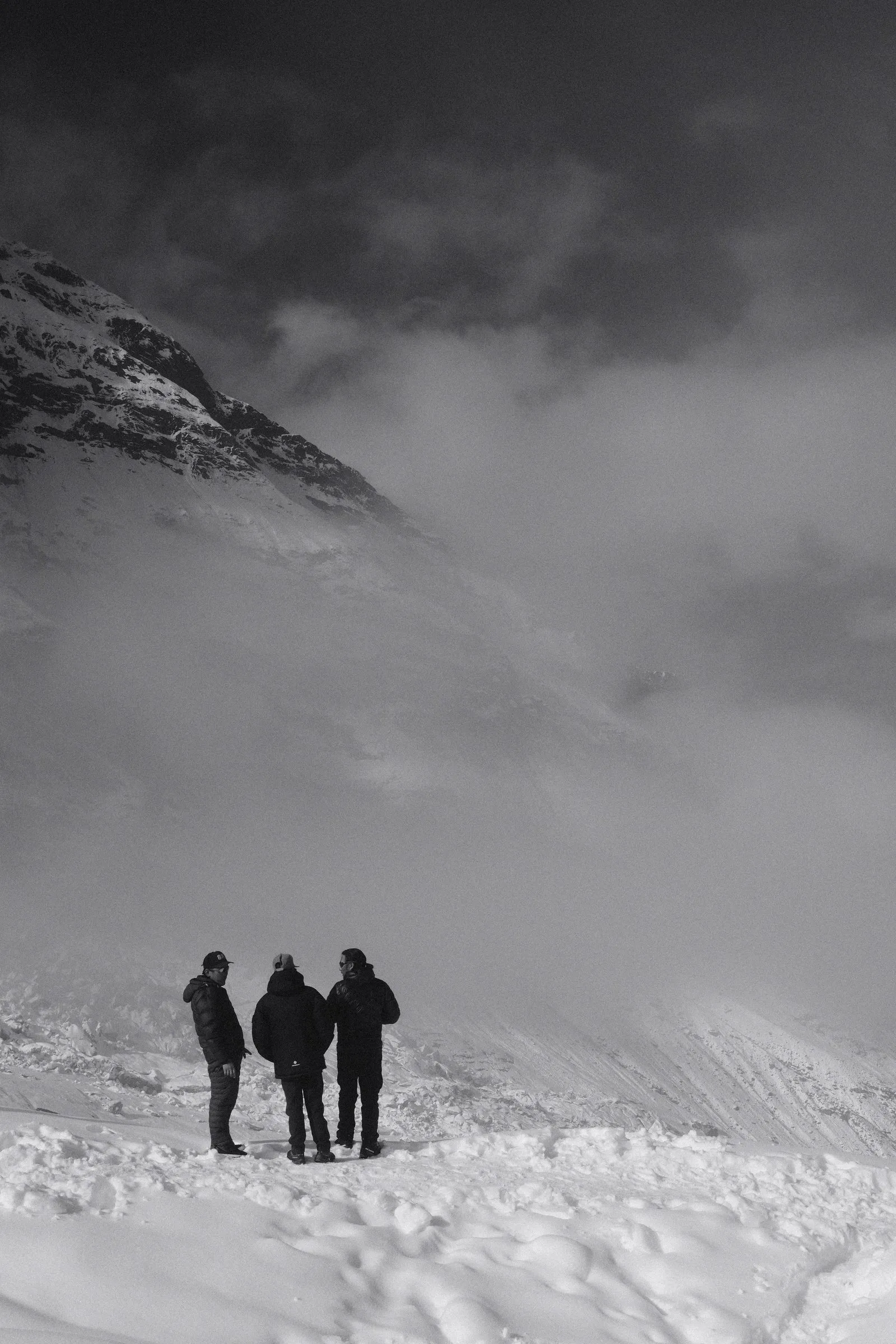
Snow and cloud over camp
Down to Samagaun (22 September)
I woke after eight good hours of sleep, still uneasy about the news from the high camps. Lorenzo, Jasmin, Korina, Panagiotis, Selva, Andrew, Annette and I had already made our decision, so we packed and walked the 2.5 hours down to Samagaun ahead of the crowd. We had rooms early, played pool and snooker in the evening, and enjoyed the warmth of the teahouse.
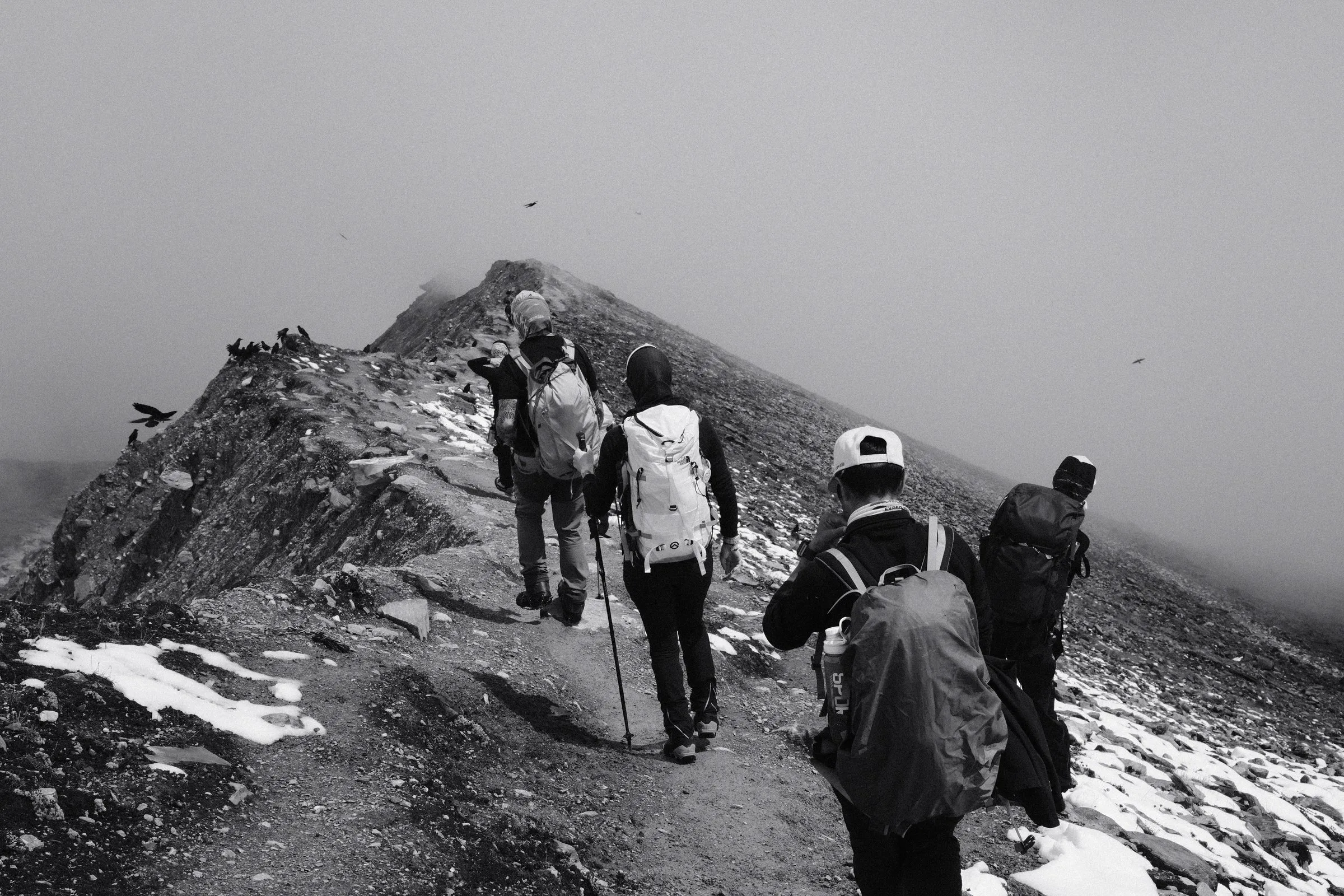
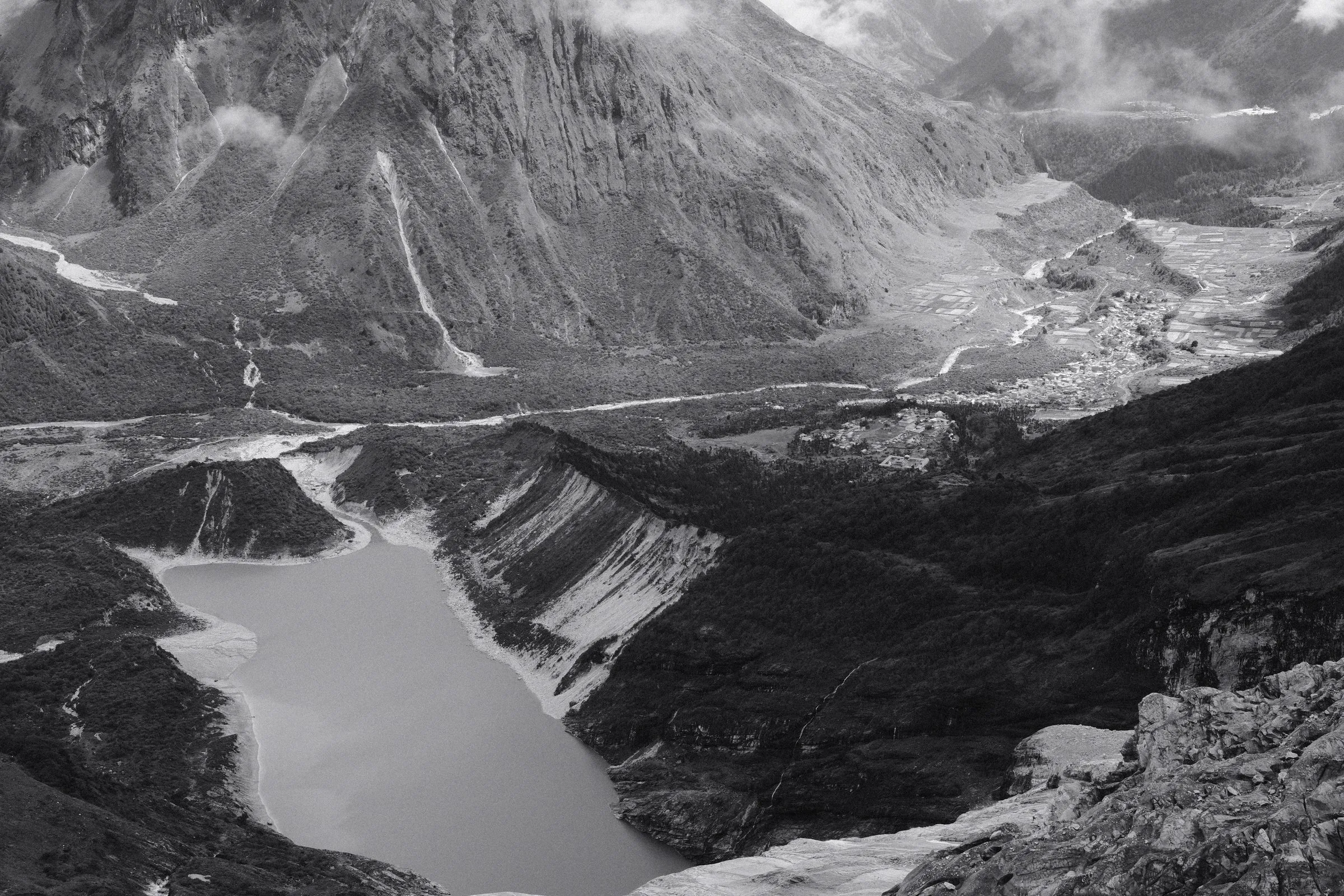
Walking down to Samagaun
By the end of September, Seven Summit Treks had officially closed the season. No one summited. Four people died on Manaslu that autumn.
Out by helicopter, and the aftermath
On 23 September Niklas, Diana, Annette and I flew out of Samagaun at about 11:45, after a long morning of waiting. The helicopter followed the Manaslu Circuit in reverse, down steep valleys past large villages on the hillsides. Sunlight lay across the green slopes, the river ran below us, and the wind pushed the helicopter around as it cut through the valley.
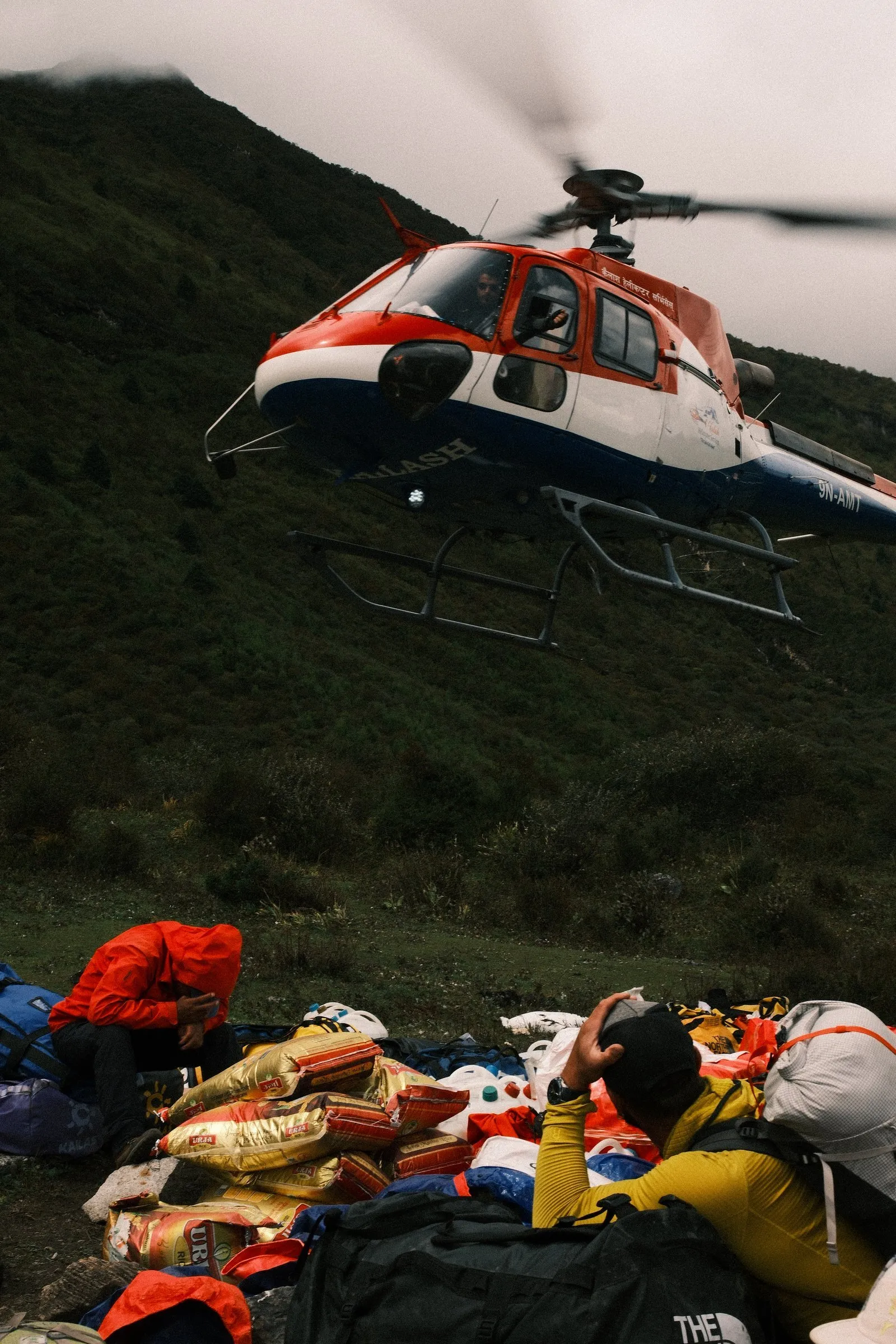
The helicopter coming in to Samagaun
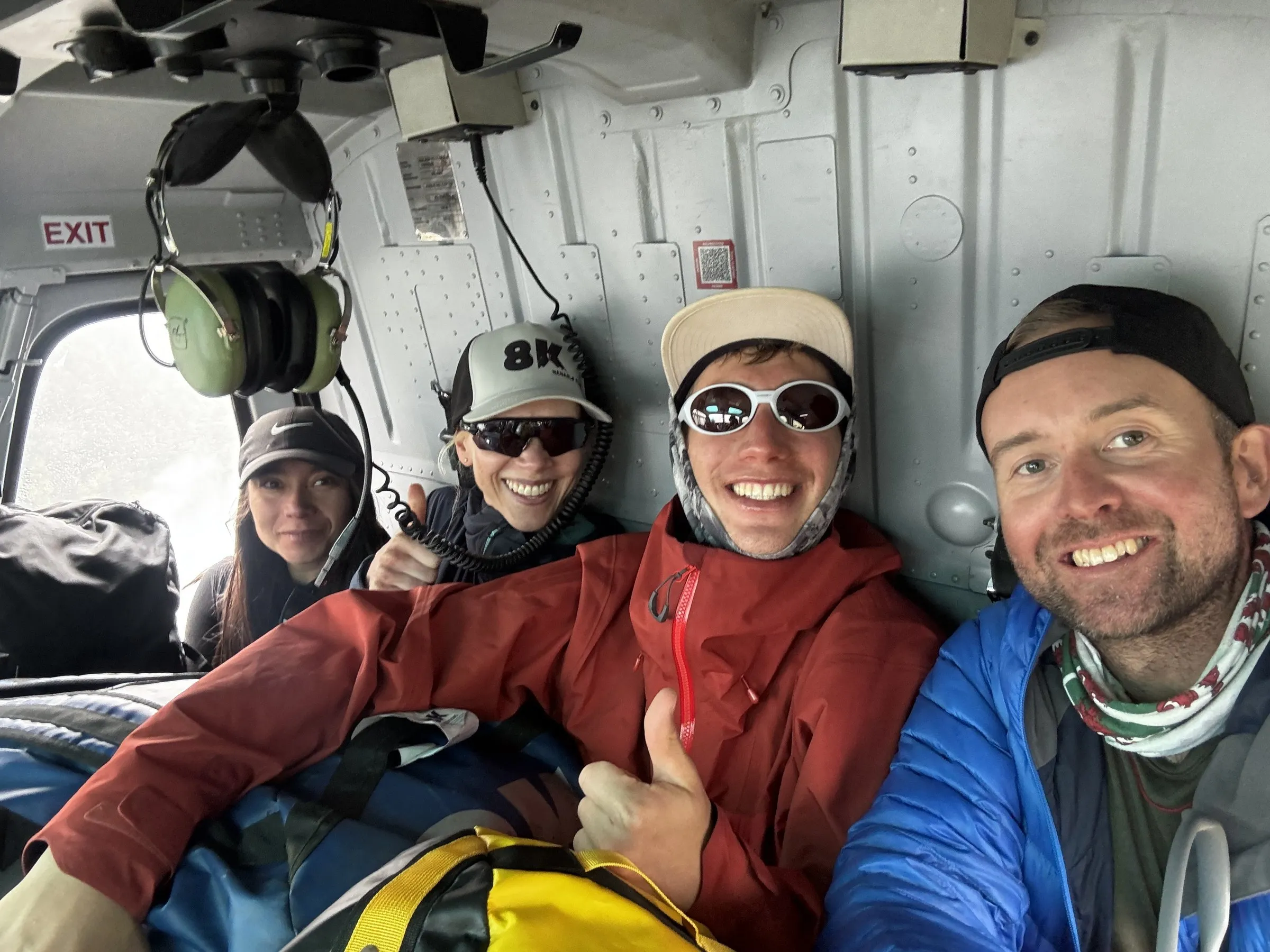
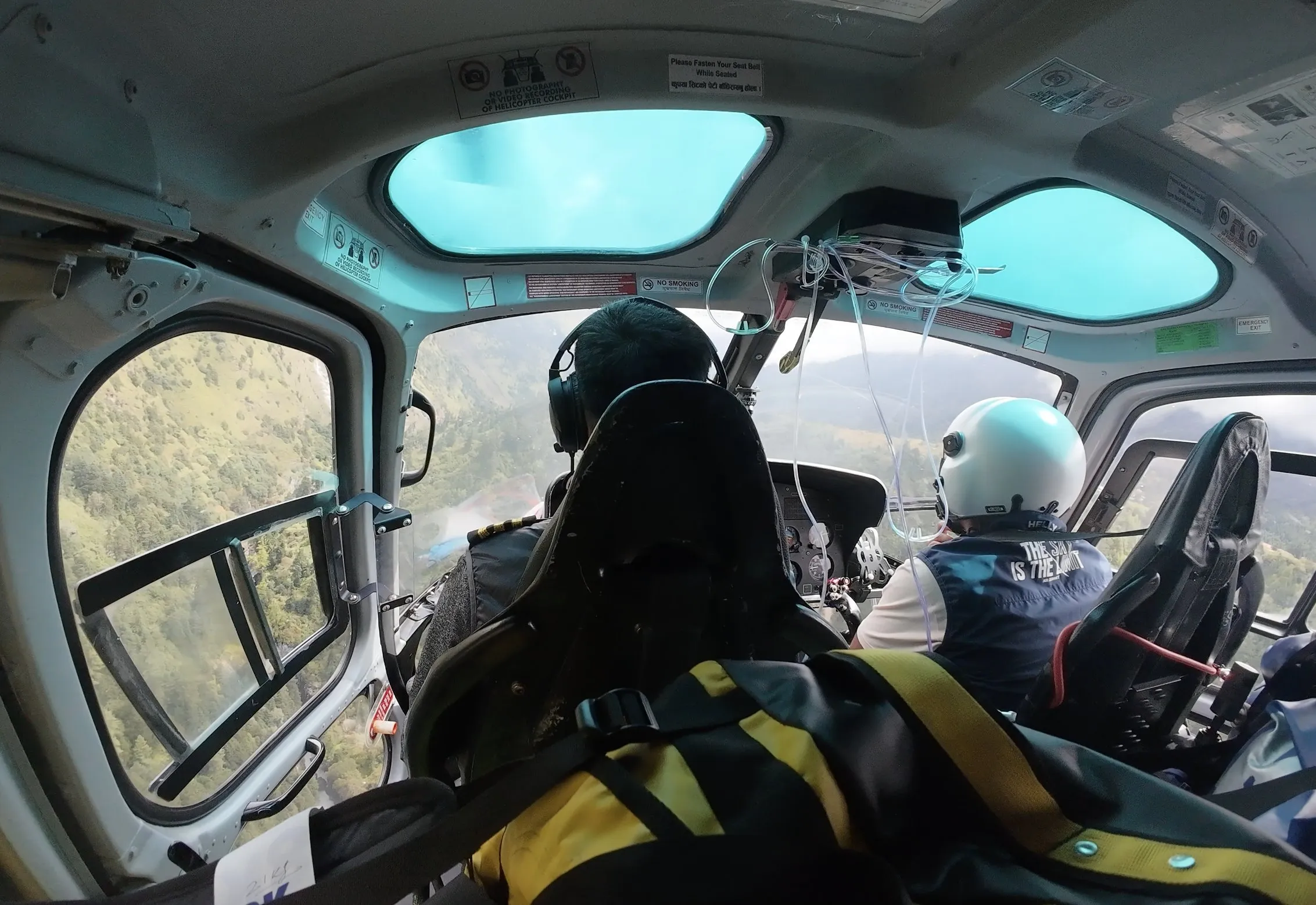
Flying out
From Arughat it was about eight hours by jeep to Kathmandu. We played music on the JBL, stopped for food, talked with people along the way, and Niklas found the pani puri he loves. After weeks above the tree line, the warmth, greenery and smells of the lowlands felt new again.
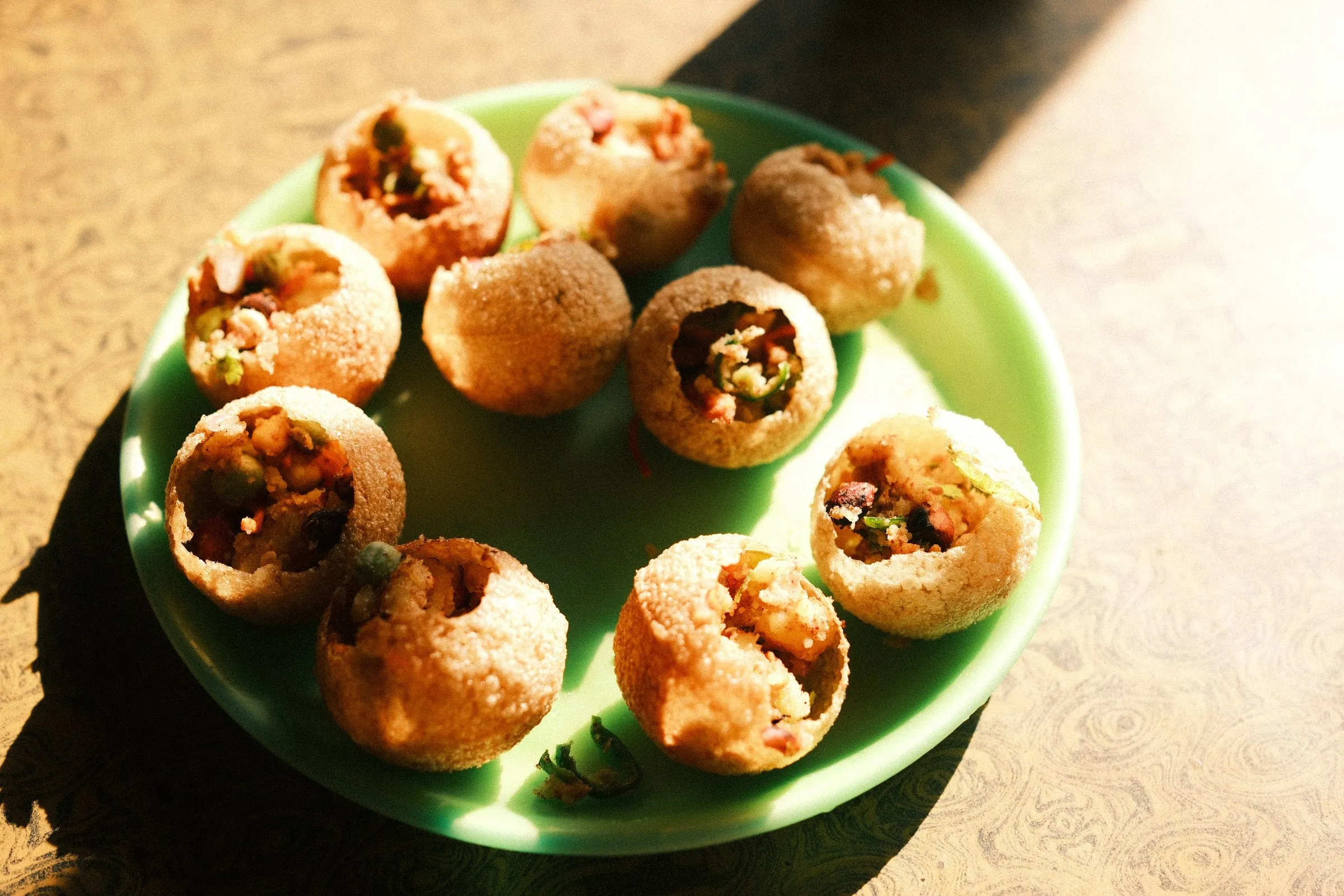
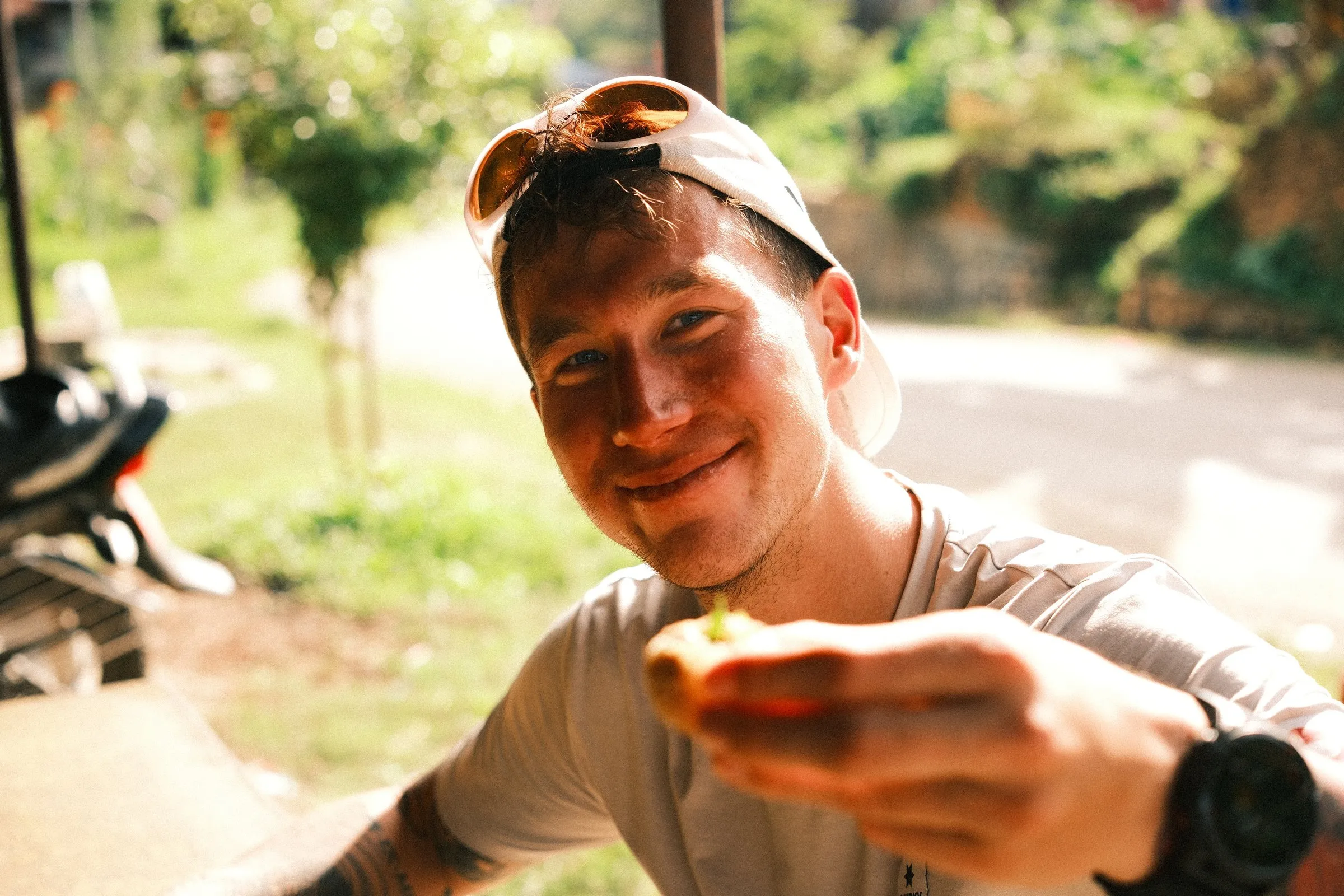
Pani puri on the road back to Kathmandu
That night I wrote: “The expedition is now over. The anticlimax is that there was no summit, but my gosh have I learned a lot.”
Most of the climbers ended up back in Kathmandu over the following days, some delayed in Samagaun by the weather.
The expedition ended too early, with no summit, and I felt low during the delays that followed. But I also felt very proud of having made it that far, and of the decisions I made along the way. A summit day is one day, but living at high altitude happens over many weeks.
Photographing an 8,000m expedition
I shot the trek in and Base Camp on a Fujifilm X-T5, mostly with the XF 33mm f/1.4. The XF 23mm f/2 was in the bag too, but it rarely came out. I prefer the 33mm for its sharpness, though I’m thinking of moving to the XF 23mm f/1.4 to consolidate both into one lens.
Above Base Camp it was my iPhone and a DJI Osmo Action 4. The plan was to take the X-T5 and 33mm up on the summit push, photograph Camps 1, 2 and 3, leave the camera at Camp 3 and collect it on the way down. The expedition ended before that could happen.
- The trek in is where the people are. Samagaun gave me the most time with local people, from the monastery to the weavers and the family who invited us in for butter tea. Ask first, and agree a price if someone asks for one.
- Ceremonies reward patience. At the puja I photographed for a while, then put the camera away. Being part of it first made the candid frames easier when I picked the camera back up.
- Cold is the main problem high on the mountain. At 5,800m the mornings were cold enough that just fixing crampons and packing bags took careful management of hands and feet. Plan which shots matter before you take your gloves off.
- Light changes fast above the clouds. Sunrise and sunset at Camp 1 lasted only a few minutes on the peaks. Have the camera ready before the light arrives.
- On technical ground, the camera stays in the bag. Even if I’d carried the X-T5 between Camp 1 and Camp 2, it would have stayed packed. The Osmo Action captured the most interesting footage up there.
Manaslu FAQs
What happened on Manaslu in 2026?
Around 480 permits were issued for the autumn 2026 season. Heavy snow, warm spells and repeated avalanches closed the mountain before anyone reached the summit. Four people died on the mountain that autumn. Seven Summit Treks, the biggest operator, officially closed the season (ExplorersWeb, The Himalayan Times).
Is Manaslu a good first 8,000m peak?
It is often sold as one. Operators such as Adventure Peaks describe it as a good first 8,000er. My experience is that “easier” is relative. The section from Camp 1 to Camp 2 was the most technical climbing I’ve done, and when the weather turned everyone had to get themselves down the ropes. Come with experience on 6,000m peaks and solid rope skills.
How hard is climbing Manaslu?
The walk to Camp 1 is a long, steady glacier climb. Camp 1 to Camp 2 is technical, with crevasses, overhangs and fixed ropes. Above that, the altitude is the main challenge: at Camp 2 (6,400m) I woke up gasping for air. Avalanche risk depends heavily on the season.
When is the Manaslu climbing season?
Most expeditions climb in September and October, after the monsoon. The 2026 season showed how much a heavy monsoon and unsettled weather can change things.
How much does a Manaslu expedition cost?
It varies a lot by operator and level of support. As one example, Adventure Peaks lists Manaslu from £17,250. If you’d like to know what my expedition cost and what was included, get in touch and I’ll share the details.
What should I pack for Manaslu?
You’ll need 8,000m boots, a down suit and a full layering system, and your operator will send a kit list. I’m happy to share my own packing and equipment list, including what I’d change next time. Get in touch and ask.
What is Manaslu Base Camp like?
Comfortable, if your operator invests in it. Ours had heated dining tents, a café and good food. It also sat in cloud most days, and avalanches ran all around it.
What training do you get at Base Camp?
We had a glacier refresher on ascending, traversing and descending fixed ropes, a puja ceremony, and oxygen training on the cylinder, mask and regulator.
Final thoughts
I left Nepal on 5 October, after ten days in Thamel and three weeks in the mountains.
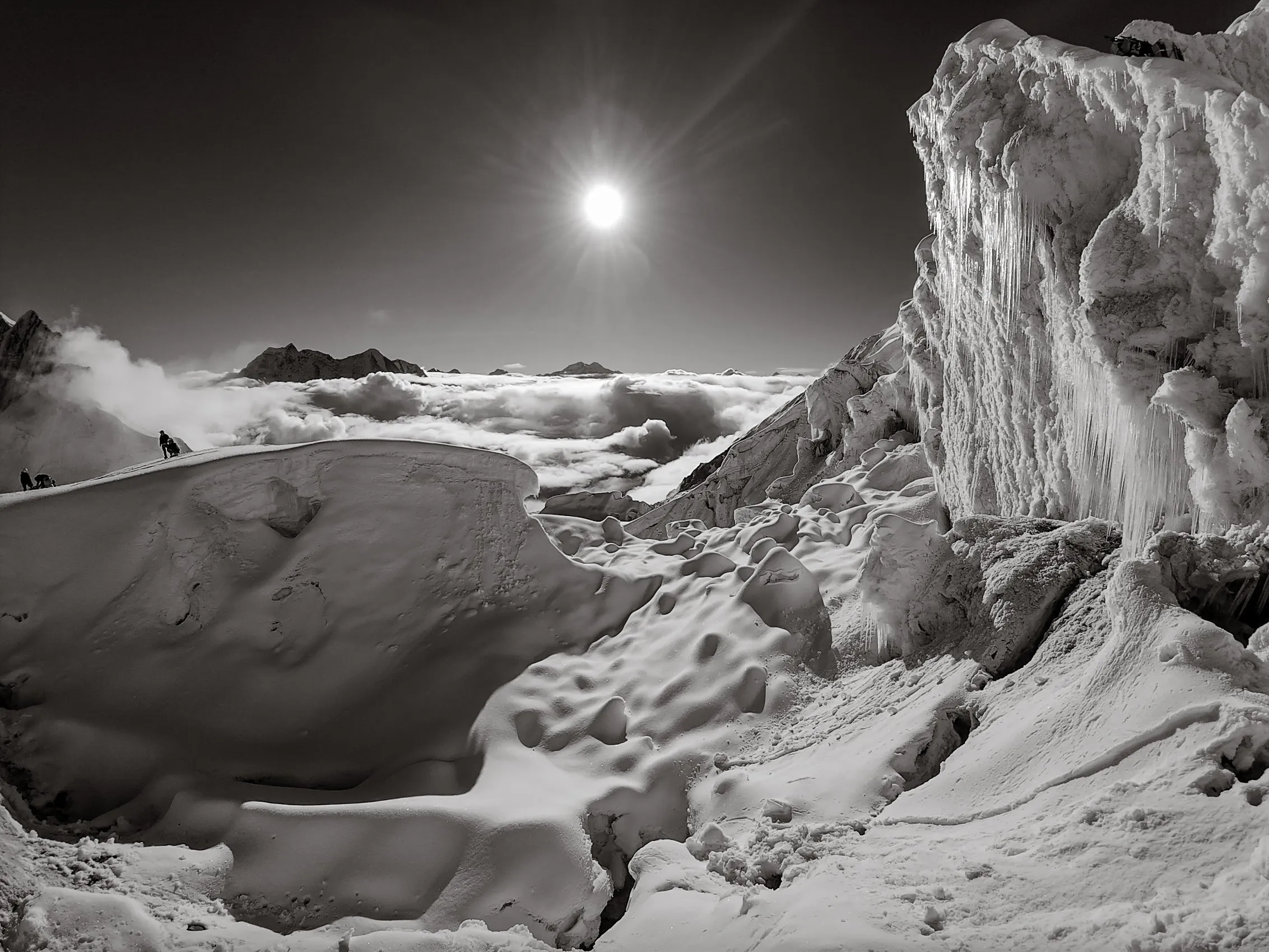
A big part of an expedition is the everyday effort of acclimatising and sustaining yourself up there. Manaslu ended without a summit, but it was a teaser, and it’s made me want more. It’s also made me realise how much I love this kind of adventure, one of the purest forms of adventure a person can have.
What should I climb next? Send me your suggestions, or message me on Instagram.
More from the Himalaya
- Living with Sherpas at Everest Base Camp
- Manaslu Circuit trek photography
- Kang Yatse II expedition diary, Ladakh
- Langtang Valley trek and Tserko Ri
- The Photographer’s Guide to Upper Mustang
If you’re planning Manaslu or your first 8,000m peak, get in touch. I’m happy to share my costs, my packing and equipment list, and anything else I learned. You can also follow my climbs on Instagram.
Sources
- Game Over on Manaslu: Outfitters Send Everyone Home, ExplorersWeb
- Manaslu summit route open as Autumn 2026 climbing season begins, The Himalayan Times
- Manaslu death toll reaches four as hundreds retreat, The Himalayan Times
- Manaslu expedition, Adventure Peaks
- Nepal-Tibet floods: what happened, what caused them and who is missing?, Al Jazeera
- High Risk on Manaslu: Two Die in Avalanche; Summit Push Continues, ExplorersWeb
- Puja at Base Camp, Alan Arnette